“How vain it is to sit down to write when you have not stood up to live! Methinks that the moment my legs begin to move, my thoughts begin to flow, as if I had given vent to the stream at the lower end and consequently new fountains flowed into it at the upper. A thousand rills which have their rise in the sources of thought burst forth and fertilize my brain. You need to increase the draught below, as the owners of meadows on Concord River say of the Billerica Dam. Only while we are in action is the circulation perfect. The writing which consists with habitual sitting is mechanical, wooden, dull to read.” Thoreau’s Journal: 19-Aug-1851
This blog was created in 2011, the month I turned 16 — 24 March 2011, exactly 12 years and 6 months ago, as I write this piece. I was an aspiring illustrator for most of my childhood, but I slowly came to enjoy writing because I liked reading. And I liked reading because I liked wondering, always did, the particular type of thrill that you get out of the potential of spiralling that comes with every move of the freedom of the mind, it has always been a personal favourite. Perhaps because I felt so restrained growing up? I had very little room to exercise the liberties of being myself, except in my head (and then on the internet). Blaming over-controlling parents is the easy way out; deep inside, I think that my mum and dad believed that I could not be trusted with a private world, because I didn’t seem like a child who could be trusted with becoming the person they thought I should be, with the values they thought I should champion.
On the outside, I was a smart, hardworking and polite young girl, but I was disgustingly curious, annoyingly talkative, visibly proud and extremely greedy. I was happy to be rewarded by the systematic benefits of being me, but just as prone to flipping the table and voicing out ambiguous thoughts. I wanted to be respected really badly. I was very selfish, and I had to be intentionally taught to share my things, to think twice, to control the imp of the perverse and be kind, and to love my family. I gave authorities the benefit of doubt and I was the favourite student in every class, but I learned to take it away easily, and provoke conflict where it was due — I remember having discussions with my Bible school teachers as early as 7 years of age. I have clear memories of being asked invasive questions about my inner thoughts, since I was young, both by parents and church leaders. Those who paid attention to what I was saying knew that I was a problem to solve, because I longed for a life of adventures and discoveries that were not aligned with the lifestyle I was expected to cultivate. Unsurprisingly, I was bad at bonding with other kids, to my absolute horror, because I was taught by my favourite TV shows that no amount of hard work matters if you don’t have friends.
The saving grace was that I am, and I have always been, extremely sensitive. At some point of my teenage years, I realised that this was the reason I had developed a sense of empathy and understanding towards others, and a reasonable idea of the type of person I wanted to become. Life had its ways of teaching me about what it meant to have a humble, loving heart. Still, even into my late teens, many horrors persisted. I felt really misunderstood in my curiosity, and the things that I liked, but nothing hurt more than being misunderstood in my sensitivity, especially when I cried. It was not something I could control, but it made people question everything else about me. The thing I hated the most (maybe I still do) was being treated as someone less intelligent due to my sensitivity. The silver living was realising that, when I was open about my struggles, I could form bonds with others, even those with whom I had previously found nothing in common to talk about. Oversharing helped me navigate the struggle of making myself understood, of showing my parents and leaders that there was nothing to worry about, that I wasn’t hiding anything serious. It’s not that hard to understand why — nothing speaks louder, to a believer, than the act of confession; admitting to my faults in a loud voice was the way to convince other of my radical commitment to being truthful. Crying all the time without shame made people question my intelligence, but it never made them question my honesty. And that sounded like a good start.
Becoming a writer gave me power over my thoughts and feelings. The stories I read enabled the freedom to imagine the life that I wanted to live; writing my own gave me full control over the fate of characters that represented different sides of me. Multiple novels were started, but never finished; I lacked the interest to go until the end because, at some point, I would realised I was only writing to make sense of something, not to complete the story. This blog was born out of the need to keep track of what I was doing, and it proved to be the right venue to put out shorter projects, and experience people’s responses to my thoughts and feelings; my poems and short stories articulated the difficult things about how my brain worked. The obsession with details and figuring out how they related to the full picture of things I wanted to understand, the appeal of darkness, the unresolved ambiguity of joy, my simultaneous distrust of and longing for peace.
Making things absurdly clear, even through fiction, was the easiest way out of the constant state of fear that, over the years, accumulated into generalised anxiety. The first miracle was to find out that others felt the same; experiencing that sort of feedback was the closest I had ever been to hope that the struggle of living inside my head could amount to something else, other than stress and late night fights about my inability to come out of my shell and experience the world like the normal person I was supposed to be. Of the many horrible memories I keep, I remember the terrifying, pressing threat of silence. Nothing scares me more than the fear that I cannot chill because, if I don’t always look closely enough, I will blink and miss out on how things are quietly aligning to bring about chaos. And there is so much chaos, there is so much drama, it seems to follow me wherever I go, and I don’t know if it’s just bad luck, or if I’m the bad luck myself.
Moving towards essays was a result of the process of moving away from fiction and closer to non-fiction — which, in turn, was a result of the process of moving out of my own shell, and starting to experience the world for myself. To each their own, but, all things considered, I have learned to find real life more appealing than the world of imagination, even when things don’t go as well as I would have plotted them to. Surprisingly, I still read as much poetry as I did before, but I don’t remember the last time I felt comfortable articulating something in a verse form. Maybe because poetry thrives on the things that are left unsaid in-between, and I am desperate to elucidate every single thought that’s plaguing me right now. This is a season, I am sure, but it’s the one in which we have been, for a few years now, overthinking things in their raw state, regurgitating and then taking them in again, exactly as they came. It’s disgusting, and it might not end anytime soon. It surprises me how easily I used to wrap ideas up in a few paragraphs, and now I cannot do without a handful of very long ones, too much contained in each sentence, way too personal not to be uncomfortable unless I make a conscious effort to sound less burdensome.
Why do I do it, then? I mean writing as I do it these days. The second miracle is love; in spite of all the misery, my life is overflowing with love, from all the people in my life who have witnessed the mess of me, every single thing about me which is not likeable, every vulnerability that makes me an easy target to be deemed unloveable. This is where I stand right now, because I am not particularly fond of this season; if I’m being very honest (which I usually am), I don’t publish as much as I used to nowadays because I don’t feel as okay with my unfiltered thoughts, not as I used to. I ran out of some of the brave attitude of writing down things before I had made total sense of the best way to put them out, the right way they made sense together; I hate rereading something and realising I could have said something better if I had waited as little as a day, or a few hours, before deciding to put it out for everyone to read. Not that a lot of people read it, but I like the praise of having said the right thing, and it takes a lot of thought to say even a small thing that could sound right to someone.
This piece started as a simple journal entry to think away the things I was overthinking after my weekly therapy session. I journal three to four times a day these days, and I am writing so much because I am hurting so bad, I lose sleep and I waste precious mental space overthinking every decision and incident that has led me to this moment, and writing the mess down is the only thing that helps. I am thinking about the reasons why I do the things I do, the reasons why I became the person I am, and there are so many other things that I could have said to make this entry make better sense, there are so many sentences that can come across the wrong way if someone is willing to misunderstand what I’m trying to say, and this is precisely the side of me that I hate the most these days — the confusing, verbose, messy, disorganised person that I am without a filter. Like a thunderstorm. One of the biggest illusions I had back when I was just an imaginative child was that, as an adult, I would simply know who I was, once I had the freedom of experimenting more to figure it out. I am not that old, but it’s safe to say that the process has not been as enlightening as I wish it had, at 28 years of age, but I have a lot to be grateful to my habit of registering everything in written form.
When I look back, I experience the anguish of realising I still haven’t moved on from some of the same issues that have been plaguing my stubborn little head. The inner child, the melancholic teenager, the anxious adult, they are all one and the same, every difference between one and the other just makes it more obvious that they all stem from the same self. I think of Henry David Thoreau’s words, that some of us were not born to be forced; I wonder if things would have been easier if I had not been so resolved to breathe after my own fashion. My biggest crime, since I was just a child, has always been the imp of disobedience; for the most of it, I am at peace with being unwise, if that’s the price I pay for doing what I want, what I feel like I can afford doing. And I am still terrified of myself most of the time, because of the losses that come with every choice, because most of them do not seem worth the risk, but I still push some buttons and go for the ride. And then I cry about what’s been lost, I cry myself to sleep, but I will do it again.
If my love for making sense of the details that make up History has taught me anything, it’s that there is no amount of past that could ever convince us not to make the same mistakes when experiencing the world for the first and only time, at every single moment of our life. And it is not that I am making a joke out of God’s Grace, but it’s only that I have seen enough of the world to be assured that there is more than one righteous way of walking down the path of Truth, and I must find the one that’s meant for me. I am nothing but the unreliable narrator of this unfiltered account of a stream of thoughts that might, or might not, go well with the rest of the story that I will not stop telling, not until I’ve figured out the one thing I can’t stop thinking about: how to stop thinking, and go to sleep.
This speech was presented as part of the Founding Lab Forum of Ars Electronica 2023. As one of the students of the Founding Lab Summer School, a partnership between IT:U and Ars Electronica, I joined the Conference Task Force. We were in charge of preparing a keynote speech for the conference day, to introduce the students and our own vision for the University of the Future. I was given the opportunity to talk about our values. You can watch the full session on YouTube, my part is between 15:12 and 22:34. Special thanks to all the friends from the Conference Task Force.
The text of the speech was slightly edited for a prose format.
For the last two weeks, at the Founding Lab, we have spent all of our time together, sitting through lectures and working and discussing in the workshop rooms with our facilitators and workshop hosts, or just having meals, having a drink, catching the tram, going back to the dorm, walking through Linz. I must say that, when I got here, I was a bit insecure about how much I could really contribute. But, as the days went by, we shared about ourselves and our experiences, our journey and the things that have gone well and the things that have gone wrong, what excites us about what’s coming, but also what frustrates us. And I slowly realised I did have something to add.
Maybe my sampling is biassed, but it seems like many of us came here with the desire to look for insight into what we should do next. I certainly did. We are all adults of a certain age, with so much to learn, but some of us are still coming to the realisation that the uncertainty of life doesn’t end with your teenage years. What we all have in common is that we are people who have chosen to stay in-between the imaginary boundaries of what our practices should be. And this sounds beautiful, but it’s complicated in practice, particularly for the Digital Sciences. They are collaborative by nature, they cannot be sustained on the shoulders of individual efforts, they are born collective, not just inter, trans or cross-disciplinarian, but post-disciplinarian.
I have been a church leader for many years. One useful thing I’ve learned from the religious context is that we should always be thinking about the intentions, motivations and values at the root of the things that we do. And I’m talking about affections and intimate beliefs, what drives us, what kind of inner world we are cultivating in our own journey. The starting point of the things that we do, and making sure that they are coherent with the outcomes we want to see. I care a lot about the practicalities of the work, but I wanted to give a speech about the type of heart and mind that you should have, if you want to be a part of the people who will build the future of which we are dreaming, right now. Shaking the structures of a world that thrives on exclusion and exploitation, to build our post-disciplinary table, where everyone gets a seat and a say in the conversation, with justice, equality, accessibility, care.
But, I have got to be honest. Recently, I had to admit to myself that I am still not as understanding, open and reasonable with differences, not as I thought I was. Of course, I am not talking about tolerating differences that threaten the core values of the university that we want to help bring forth. I’m talking about the things that we bring to the table when we take our seat — the way we talk to and about others, our beliefs about life and work, priorities, methodologies, manners, facilities, equipment, skills, vision, willingness, hard work, funding. I study Social Sciences in an Engineering school, which is just as hard as it sounds, and I am constantly challenged by my peers, because I still have a bunch of hierarchies in my head, about the ways of living and working that are good and valid, and the ones that are not. Maybe some of you relate to what I’m saying, but I hope that there are more of you who can teach something about the type of respect, compassion and flexibility we should have to meet others exactly where they are, for who they are, and do something together.
The bottom line is that we want to work not just for personal gain, but to bring about change. The frustrations and limitations are multiple, there are so many things that we aren’t happy about, but we will achieve very little if our good intentions don’t match the nature of the things that we are trying to build, and if our actions don’t follow our intentions. It’s in the big things but it’s also in the details—how we see each other, and how we treat each other—, which influence the dynamics of everyday life in our shared spaces. The way we negotiate how much we are willing to give, and how much we are willing to lose, who is willing to compromise, and give up some of their resources, in the name of others. Communicating for resolve, and not for conflict, being open about what works and what doesn’t work, standing strong on your ground of what you think is fair, and being open to being wrong, or recognising that not all disagreements will have a clear answer. Dealing with different ways of expressing ideas and thoughts, respecting that some people need more space than others. Acknowledging each other’s hard work. Being less judgemental, more patient in figuring out other people’s boundaries, and being mutually open to negotiate them. I don’t believe in good or bad matches, I think that anything is possible, as long we want to see it work out.
I am very people-centred, I care about the connections we make the most, but the thing I loved the most about being here was watching how us, as students, and the Founding Lab team, adapted to each other. How the Austrian punctuality made room for other approaches to being on time, and the students who were late at first made the effort to leave the dorm a bit earlier. The team’s commitment to being transparent about the limitations, and what were the things that mattered the most. It wasn’t all perfect, but it was sufficient, and it filled me with the right kind of hope. As such, I wholeheartedly believe that there is a way for all of the challenging things that we want to work on from now on. Let’s be even more specific, ten years from now, in the Summer of 2033, I want to be able to look back to this exact moment, the Founding Lab, and have the clarity of a decade to be so glad that I came, and proud of the things that will come to exist because we have come together. Some results will take longer than that, some experiments will fail, not all strategies will thrive, but I hope that, as founders, we will be patient, without losing our passion, and the hope that the things that we want to build will be possible one day because, today, we have chosen to sit and listen, and act.
in honour of Taylor’s Version of “Speak Now” coming out today.
I started a playlist the day we got together for the first time. We had just met the day before. I had known who you were for maybe three weeks, but I had not given myself the space to think or feel anything besides curiosity, and attraction to how pretty your smile was. From afar, you were like a picture-perfect image of something I might as well have imagined while drawing plots of love stories I could be a character in. It seemed so out of my reach, though – until that night when we walked back together after class, and found out we were neighbours. I saw sparks fly all the way home and, as I went upstairs, I called my best friend, and told her that I thought you had seen them, too.
To be honest, at that point, I don’t think I could fathom the thought that you hadn’t felt something as well. My brain was moving faster than the speed of sound, supersonically connecting dots until I could convince myself to fall asleep — which I didn’t, by the way. I navigated that day on a 2-hour nap, trying not to pay attention to you in the classroom, unaware that I was on my way to another sleepless night. We talked until dawn like it was the easiest thing in the world. You told me we should dive into one another, I told you “let’s fall slowly.” I was holding you close, with your head on my chest, and I loved how it felt. I didn’t want to rush it, and ruin it. I wanted the slow burn, I wanted to take my time, I swear to God I did, but I gave into hurry too easily, and it was all Taylor Swift’s fault, when I listened to “Snow on the Beach”, a few hours after we parted ways. It came out last year just a few days before I got my heart broken for the first time in years. I was so upset by all the frustrated expectations I allowed myself to nurture, and the song became a symbol of all the things it seemed that I couldn’t have at the time – someone that I wanted, wanting me just the same. But it happened to you, somehow. It had felt so impossible, and, on my way back home, later that day, I think I could barely believe it was really happening. So I made that playlist.
And it would have been an okay thing for starters, but I kept adding other songs to it, I kept having ideas about what you could mean to me. That’s when it got out of control. Those songs became projections of who I wanted you to be – but I barely knew who you were! I don’t want to ask you yet, but I wonder if you could tell, during those first few weeks, that I was not taking it slow, like I had said we should, like I had asked you to do. I was much more eagerly looking forward to my imaginary plot, but these first few weeks were not like the perfect beginning I had envisioned, and you didn’t play along the lines of my story, and I panicked when I couldn’t read you as easily as I thought I would. I kept listening to those songs, and thinking of made-up memories of times I expected we would come to live together, and I got increasingly frustrated with how slowly time was moving. And you weren’t every single definition of the person I had imagined you would be — and I was convinced you had to be like that, because the person in my imagination would never break my heart, and I couldn’t stand the thought of getting hurt again.
I’m glad I took the wise advice of the people around me, aware of my anxious habits, who care to let me know when I’m about to let the voices in my head break apart something that could be good, just because I have no chill. I was so infatuated, and so, so scared, with a tempestuous mind that pours down like a cloudburst. But you made your way, through the lightning and thunder, and you met me there. Doing your best, and being so kind to me, with your peaceful, steady voice, you helped me weather through the storm in my head. And, as the sense of urgency stopped pounding, and I could breathe properly, I could finally appreciate how the appropriate measure of the time we had spent together could be enough for the day.
Today, when you texted me in the morning, I felt a shift that I hadn’t known in a long time – when an infatuation turns into a little seed of a feeling. It felt good. Without the magnifying glass of anxiety, I can feel everything more clearly, including the pleasure of realising a picture of you, but also how I honestly still feel so scared. I have no idea how you feel, even though I can tell that you like me, and that you respect me, and that you think about me when we’re not together (which is a silly thought, but one that means a lot to me). Honestly, I don’t want to say it out loud yet, but I do think I could love you, but I know there’s a lot of waves I must sail through first – because, if this seed grows into love, I want to love you and who you are, and I don’t think I’ve seen enough of you to get there. I’m scared but I want you to see me, too, and I want you to feel like you could love me, too. I overthink too much, but I’m aware of the mess, and I hope you can see through the cloudy skies when I’m gloomy and struggling to find the right words. Gosh, I still feel so silly around you, so worried about impressing you, wondering what you think of everything. I am still learning to read you, and trust you.
That playlist I started on day 1 looks much smaller now, which is only fitting for what this little time represents. It’s short, but it’s meaningful, because it doesn’t stem from my ideas of who you should be, but from the things I got to see, hear and touch with my own eyes, ears, hands and lips. The thoughts in my head spiral out of control with ease, but the feelings all through my body will keep my cool for the whole of us (I mean, all the different parts of me). But I feel safe, like I can finally take a small step back, and let it be. There are no guarantees, there is no assurance that things will end well, and that none of us will leave with a broken heart, but I feel less and less concerned about how it will end, and more and more appreciative of today, the time we get to spend together, the memories I get to keep – the way you laugh when we’re talking about something stupid, or the way you look when you open the door for me to walk in, and the fact that you care that I like it when you hug me, even though I don’t like hugs. I think I’m falling for you, so things are, indeed, going according to plan.
Abstract: This review examines how studies on cognitive and emotional responses to music, particularly those related to social bonding, can shed light on the function of fan-dedicated songs within global K-pop fandoms. By analysing five recent studies on the social and affective dimensions of music in the brain, the paper argues that fan songs play a crucial role in maintaining group cohesion across the diverse and expansive communities that constitute contemporary K-pop fandom. The discussion underscores the significance of intentionality and source-sensitivity in these musical interactions, suggesting avenues for future research into the role of songs in music fandom.
Keywords: K-pop fandom, fan songs, cognitive responses to music, emotional responses, social bonding, group cohesion, intentionality in music, source-sensitivity, music fandom studies, social and affective neuroscience.
NOTE: This was written as a term paper for a course I took at KAIST CT during Spring 2023, GCT563 Cognitive Science of Music (음악 인지과학) with Professor Kyung Myun Lee from the Music and Brain Lab. It turned out a lot more social than cognitive, but I still managed to finish this course with an A+.
This review investigates whether studies on cognitive responses to music, especially emotional responses, and the suggested roles of music in social bonding can provide insight into the role that songs play in music fandom, particularly global K-pop fandom. The driving premise is focused on the specific role played by fan songs — the songs that are specially dedicated to the fans. Through the analysis of five recent studies on different social and affective dimensions of music in the brain, I argue that, in the complex structure of K-pop fandom, fan songs are one of the fundamental elements of the maintenance of group cohesion across the large, diverse communities that make up contemporary fan communities of Korean idol music. By drawing theorisations, the goal is to point towards future research on the topic of the role of songs in music fandom.
Variables in Music Fandom Studies
Fandom studies scholar Matt Hills calls “discursive mantra” the discourse that fans employ to justify their passions and attachments — in his own words, an attempt to “ward off the sense that the fan is ‘irrational’.” In his book “Fan Cultures” (2002), when discussing how fans react when questioned about their attachment to particular texts, he recommends that the justifications that fans offer for their attachment aren’t taken at face value (in context, he refers especially to those conducting ethnographic research on fandom). He claims that the reason multiple fans of the same text would provide similar answers when questioned is more a question of the construction of their own fandom discourse, than a question of how they have made sense of their fandom experience for themselves.
Hill’s recommendation to fan ethnographers highlights one of the difficult aspects of assessing the reasons for fan attachment through strictly qualitative approaches. Multiple studies of the sort have been conducted; in music fandom, for example, a study published in 2019 in the Journal of Consumer Behavior conducted in-depth interviews with long-term music fans in France and Belgium, to retrieve patterns and categories that explained different types of interactions and mode of engagement of fans with their favourite musicians (Derbaix & Korchia, 2019). But, if we consider Hills’s position that personal statements from fans should be approached with extra care, it’s important to consider other studies employing different types of data and methods to gain more qualified insight into the dynamics of attachment, and how music fans interact with their texts in fandom. To begin this review, I refer to a representative study that successfully employs large samples of subjects, and quantitative methods, to assess fandom affiliation in music fandom, by Greenberg et al (2021). With a combined number of over 85,000 subjects, they found that people tend to prefer the work of musicians whose public personas are similar to their own personality traits, which they call “the self-congruity effect of music”.
Greenberg et al (2021) conducted three studies (N = 6,279 + N = 75,296 + N = 4,995) to assess the degree of correlation between fans and their personality, and the personality and work of their favourite artists, according to the Big Five personality traits — agreeableness, openness, conscientiousness, neuroticism and extraversion (Goldberg, 1992) —, whose high correlation with preferences for musical features, genres and styles had been demonstrated in prior research (p. 1). In Study 2, the team used a combination of LDA, PCA and ridge regression model to extract personality traits from the artists, according to the lyrics of their 10 most popular songs. They found a high correlation between certain personality traits found in their fans, and the personality of artists that were learned from songs.
In Study 3, they employed the ESSENTIA software library to extract high-level music features (such as happy or relaxing), and low-level audio features (such as loudness or speed) from popular songs of the same artists. From participants, they assessed their musical preferences by having them listen to 15 music excerpts (15s each) by largely unknown musicians, and registering their opinions and preferences related to those excerpts. The features extracted from the songs, and the participants preferences, were aligned to the dimensions of arousal, valence and depth. They found that the fit between the depth level of an artist’s work and the general preference of the participant for depth-related features was a “highly significant predictor” of the participant’s liking of the artist’s music (p. 9). Taken together, the results show that musical preferences can be predicted with similar accuracy by a match between the participant’s personality and the persona of the musician, demographics and preference for certain music features.
The authors take these findings to be robust evidence for the self-congruity effect of music. They theorise three mechanisms that might be behind this phenomenon, and two are relevant to this review. First, the possibility that people do seek out the work of musicians with similar characteristics to themselves, which might also follow that, in choosing to like a particular artist, people are after the possibility of connecting to other like-minded people. Second, and conversely, affiliation to an artist’s social following, and listening to their music (considering both lyrics and musical features) might also affect the individual’s personality over time — theorising that people might, indeed, become fans of certain artists for reasons that are not related to personality traits, but socialising into their fan culture might create room for their personality to align to those around them.
The findings of Greenberg et al (2021) are aligned with a large body of research in the social dimensions of music, approaching the reasons why music is made, shared, appreciated and celebrated in human societies, both from endogenous and exogenous perspectives. Taken together, these studies offer some insight into more nuanced, case-specific aspects of the role that music plays within social groups, especially in the case of music fandom, where it is meant to be the central text of the bonding, along with the musicians that make/perform it. Based on this study, we will assume that, from a music preference perspective, within a certain fandom, certain personality traits are expected to be shared by most of the fans, owing both to processes of homophilic-oriented bonding and group assimilation. In that sense, we consider the specific songs produced by an artist both as an element to bring people together (at a first encounter), and as an element that brings people closer, while creating/maintaining some level of cohesion within said fan community.
Songs in K-pop Fandom
One of the aspects that makes the idol fandom unlike other fan experiences is the intentional creation of a transmedia alternate universe, which creates the illusion of a world of intimacy between an idol of their fans. Galbraith (2012) borrows from John Fiske and describes this world of intimacy as “inescapable intertextuality” (2012, p. 186), a realm in which all parts of the narrative point back to one another. Throughout the wide variety of contents that idols produce for their fans, the same story is told using various media outlets, such as variety shows, live broadcasts, concerts, backstage clips, vlogs, daily pictures and updates shared in social media — but, most importantly, through their music.
The uniqueness to participatory culture in idol fandom has been discussed by many authors, who have focused on different aspects of the architecture of this alternate reality. For instance, in K-pop, there is an emphasis on the fact that fans are also expected to play a role in performance, through fanchants and lightsticks and banner events, to the extent that Jungwon Kim (2017) argues that K-pop can be understood as an action, rather than simply as a cultural product, because of the participatory nature of performance. She proposed the idea of K-pop as a verb, and coined “K-popping”, based on Christopher Small’s idea of “musicking”:
To music is to take part, in any capacity, in a musical performance. That means not only to perform but also to listen, […] or to take part in any activity that can affect the nature of that style of human encounter which is a musical performance (1999, p. 12)
Specifically about the songs, this emphasis on the joint performance that fans are expected to carry out results in a stronger emphasis placed on memorising lyrics, along with their fanchants. In this sense, Kim (2017) says that the structure of K-pop music is characterised by repetition, which not only makes the songs catchier, and more appealing to the public, but also makes it easier for fans to remember and sing along. Even so, hook-based danceable songs aren’t the only type of music released by K-pop idols, whose albums include a variety of genres, such as hip hop, r&b and slow ballads, resulting from the process of hybridisation that Western and Asian genres that is said to characterise K-pop (pp 19-22).
The perceived simplicity of lyrics attributed to the hook-based pop tunes, which are the main drive of K-pop, doesn’t completely deplete the significance of what K-pop stars sing about. In that sense, we have two approaches; firstly, as noticed by Jin and Ryoo (2014), in their analysis of Girls’ Generation’s “Gee” and Kara’s “Jumping” (released in 2009 and 2010, respectively), pop lyrics in Korean idol music portray “the secularism of modernity” (commercialism and individualism) (pp 126-27). On the other hand, one of the biggest changes brought forth by BTS’s unprecedented global popularity was a stronger importance placed on K-pop groups having songs with meaningful lyrics. Both global media and BTS fans have often emphasised the relevance of their lyricism to their popularity — for example, in a 2018 article written by Tamar Herman for Billboard, “[K-pop] songs typically revolve around romance, partying and, on occasion, friendship and daily life.” BTS is presented as being a counterpoint — “the group manages to frequently reference the struggles that young people go through and draw on their own experiences within South Korean youth culture.” She also goes on to highlight that “many of BTS’s fans (…) have said that the boy band’s lyrics have inspired them”, because “Many of BTS’ songs are rife with meaning” (2018).
On the role played by lyrics in the experience of musical pleasure, Nummenmaa et al (2021) mention that the high popularity of vocal music, as opposed to instrumental music, might be explained by the ability that vocals have of communicating emotional states more effectively, as well as from the idea of ‘social stimulation’ evoked by text content (which they extent from literature into music). As they mention, such extension is validated by large-scale analysis which suggest a close link between the emotional meanings of lyrics, and the emotional load of musical features, such as major/minor chords (p 198).
Going beyond the craving for social communication, Nummenmaa et al (2021) also discuss the role of lyrics in how music pieces activate autobiographical memories. This autobiographical element is central to the music appreciation framework brought forth by Thompson et al (2023). In their paper, they describe the central hypothesis of their framework as follows:
Three forms of music appreciation have been identified that may occur simultaneously with varying degrees of prominence: one form involves perceiving and internalizing musical structure; another involves activating networks of personal significance, identity, and autobiographical memories; a third—called source sensitivity—involves identifying and engaging with the causes and contexts of music making, including the personal attributes of musicians, and the sociopolitical, historical, and cultural contexts of music-making. (2023, p. 261, emphasis added)
According to the authors, autobiographical experiences and identity affirmation are forms of appreciation that arise from personal, self-oriented associations, as opposed to forms that arise from structural characteristics of the music (the musical features), and what they call “source sensitivity,” the appreciation that stems from contextual cognition of musical sources. The interplay between these self-oriented and source-oriented forms of appreciation can be well-exemplified, in the K-pop context, by “fan songs,” “idol’s sweet serenade dedicated to their fans” (Kim, 2019). These songs have been part of the K-pop landscape for a long time – for example, SHINee’s song titled “The SHINee World (Doo-bop)” (a reference to the complete name of their fandom, shawols — short for “SHINee world”) was a part of their first album, released in 2008. VIXX (2012) and Seventeen (2015) also had special fan songs in their debut releases — “Starlight,” a b-side in VIXX’s first single album “SUPER HERO”, and “Shining Diamond” in Seventeen’s first mini-album “17 Carat.” Another important aspect is that these fan songs aren’t a one-time event — some groups would go as far as release one special fan song with every mini-album/album.
Much like what Thompson et al (2023) call “Couple-defining songs,” these fan songs trigger positive memories, specifically associated to the perceived relationship between artists and fans, reinforcing and maintaining the feelings of intimacy and cohesion within the relationship (p. 266). Over the years, these songs become triggers for shared memories; in his large-scale review of BTS’s entire discography, Kim Youngdae (2019) describes “2! 3!,” the special fan song in their 2016 ‘Wings’ album, as “one of the best songs of the album, which is both unusual and meaningful [for a song dedicated to fans]” (p. 138). He highlights the lyrics which say “In the shadow behind the stage // I didn’t wanna show you all the pain in the darkness”, to highlight the central message of the song — “Bad memories will be forgotten and only good days are ahead of us.” A connection is intentionally established between the heartwarming song, and the journey that has brought fans and artists until this point, linking their victory over past hardships, and present success, to the support of their fans.
These associations between songs and intimate memories, in the context of the parasocial relationship between idols and fans, sit right at the intersection between self-oriented and source-oriented music appreciation, to the extent that the special personal association fans collectively have to that song is a consequence of the “detailed knowledge of the causal and contextual sources surrounding these songs” (Thompson et al, 2023, p. 266). In other words, the fact that fans know the song was written for them, or about them, or that it was dedicated to them. In his review of BTS’s 2018 album ‘Love Yourself: Tear,’ Kim (2019) describes “Magic Shop,” the special fan song of the album, as “the obvious choice for best track”, to the extent that it elevates “the tight bond between BTS and their fans to a whole new dimension”, due to the “warm sentimentality” and “impeccable quality of songwriting” (p. 198-99).
Intentionality and Source-sensitivity
In an interview with Time Magazine, published in June, 2017, RM, leader of K-pop group BTS, said that he believed the reason why BTS had built such a massive following online was because of their dedication to communicating with their fans through social media. He specifically mentioned his own music-sharing habit, using the hashtag #RMusic, to introduce or recommend songs he liked, and then went on to say “Music transcends language.”
The idea that music is “the universal language of mankind,” expressed in RM’s saying, has been around at least since the 19th century. In their research article about universality and diversity in music, Mehr et al (2019) mention that this idea, albeit regarded as “conventional wisdom,” is very hard to prove — few, if any, universals exist in music.
Even so, their study found that societies’ musical behaviours are mostly similar, and the differences within a society are greater than the differences between societies. For example, all societies considered have songs that are calming (exemplified by lullabies), songs that are exciting (such as dance tunes), and songs that are inspiring (like prayers). After running a test with almost 30,000 subjects, to see if people could accurately identify the category of a song from contextual cues, they found the highest accuracy for dance songs, followed by lullabies, healing songs, and love songs (despite being the lowest, the rate was still higher than chance) (p. 8).
These results are a good indicator of the reason why, in spite of the vagueness behind the idea of music as some sort of “universal language,” it still has enough universalities to make it a powerful communication tool, particularly in the context being considered, which is songs written by artists specifically to address their fans. Even more specifically in the context of K-pop for global audiences, with the language barrier that exists between Korean artists and their international fans.
As Thompson et al (2023) put it, behind the idea of source-sensitivity, there is an important layer of intentionality (on the performer’s end). In that sense, as one of the most straightforward, non-ambiguous channels of communication between artists and fandom, we can argue that fan songs are an important tool to help create the world of intimacy between artist and fans, to the extent that it can be used as a tool to achieve group cohesion. From existing literature, this idea of group cohesion can be considered from two perspectives; one, which has been discussed already, as demonstrated by Greenberg et al (2021), is through the values and personality traits communicated by artists through their persona and lyrics.
However, when bringing forth their Music as Social Bonding (MSB) Theory, Savage et al (2021) discuss the role of music in promoting social cohesion from the observed effects on the brain. In the idea that social bonding is the “ultimate, functional explanation of the evolution of musicality” (p. 14), the study proposes specific hypotheses about neurological proximate mechanisms related to the social effects of music. The authors describe a cycle in which learning to predict musical features activates the brain’s reward system, and synchronises brain activity between people, creating a “neural resonance” that facilitates social bonding. This bonding is thought to be due to “facilitates social bonding through shared experience, joint intentionality, and “self-other merging”” that occurs when people listen to music together. Additionally, the rewarding experience of listening to music may be associated with specific individuals, as co-experiencers (Savage et al, 2021). In that sense, the paper supports the idea that, while musicality did not necessarily originate as a biological adaptation for social bonding, musical abilities might have evolved due to how musical behaviours helped signal decisions to socialise and cooperate (pp 20-21).
This is in line with what is concluded by Nummenmaa et al (2021) — that one of the reasons why music is so rewarding is how it’s linked with interpersonal synchrony and affiliation, which signalise its role in human sociability (p. 200). In their paper, they describe the “neural resonance” as a trick of “simulated synchrony,” giving the illusion of being in sync with other people, which, associated to opioid release, promote the feeling of social contact (and are also known to elevate pain thresholds, as noted by Savage et al (2021)).
It is important not to forget that these neurobiological mechanisms are simply another side of the social mechanisms being described so far. Nummenmaa et al (2021) mention studies that have found that, the more emotionally salient the autobiographical memories recalled when listening to music, the more activity was seen in the mPFC, the brain region that is involved in social cognition (p. 199). This system is believed to be centrally involved in social bonding through the connecting role of retrieving and sharing personal memories, another evidence suggesting how music and lyrics support social attachment functions (2021).
Conclusion
Five studies on the role of music in social bonding were analysed in this review. By focusing on fan songs, we were able to consider their effect on what fans think about themselves as members of their fan community, and what they think about their own idols. We found indicators that these songs might serve as important communication tools between an artist and their fans, creating and maintaining intra-group cohesion. This can be done by attracting certain types of people through value-signalling, and by inducing changes in the members themselves through processes of group assimilation.
This review also showed opportunities for future research. For example, future studies could measure different brain responses of fans to specific songs according to how they are categorised in the artist’s discography. This would include not only fan songs, but also the distinction between title tracks and B-sides. There is also some opportunity to study the extent to which lyrics of fan songs influence the social imagination and the lexicon of fans as members of their fan communities. Another possibility is a study analysing different samples of fan songs, testing for musical features and lyrics, controlling for fandom size. This would look for patterns that might be more predictive of efficient communication of intention between artists and fans. A final point, which was only superficially explored in this review, is the aspect of language in K-pop fandom. This includes the role of translation, more specifically the work of fan translators, in helping manage the collective understanding of messages shared through lyrics in the context of global fandom.
Overall, this review shows that studies in cognitive musicology offer rich insight into the specific functions that songs can play inside music fandom. In the context of fandom studies, which has been mostly ethnography-driven over the years, we provide directions that could take studies on the dynamics of fan attachment beyond self-reported fan perceptions. This is based on the well-established cognitive understanding of how music affects the brain, or at least, evidence-abundant suggestions of how music influences social bonding.
References
Derbaix, Maud & Korchia, Michaël. (2019). Individual celebration of pop music icons: A study of music fans relationships with their object of fandom and associated practices. Journal of Consumer Behaviour. 18. 10.1002/cb.1751.
Fiske, John. 1992. “The Cultural Economy of Fandom.” In The Adoring Audience: Fan Culture and Popular Media, edited by Lisa A. Lewis, 256. New York: Routledge.
Galbraith, P. W. (2016). “The Labor of Love: On the Convergence of Fan and Corporate Interests in Contemporary Idol Culture in Japan”. In Media Convergence in Japan, edited by Patrick W. Galbraith and Jason G. Karlin: 232-64. Tokyo: Kinema Club.
Greenberg, D. M., Matz, S. C., Schwartz, H. A., & Fricke, K. R. (2021). The self-congruity effect of music. Journal of Personality and Social Psychology, 121(1), 137–150. https://doi.org/10.1037/pspp0000293
Hills, Matt. Fan Cultures. London: Routledge, 2002.
Jin, Dal Yong, and Woongjae Ryoo. 2014. “Critical Interpretation of Hybrid K-Pop: The Global-Local Paradigm of English Mixing in Lyrics.” Popular Music and Society 37 (2): 113–31.
Kim, J. (2017). K- Popping: Korean Women, K-Pop, and Fandom. UC Riverside.
Kim, Youngdae. 2019. BTS The Review: A Comprehensive Look at the Music of BTS. First Edition. Seoul: RH Korea Co., Ltd.
Mehr, S. A., Singh, M., Knox, D., Ketter, D. M., Pickens-Jones, D., Atwood, S., … & Glowacki, L. (2019). Universality and diversity in human song. Science, 366(6468), eaax0868.
Nummenmaa, Lauri & Vesa, Putkinen & Sams, Mikko. (2021). Social pleasures of music. Current Opinion in Behavioral Sciences. 39. 196-202. 10.1016/j.cobeha.2021.03.026.
Savage, P. E., Loui, P., Tarr, B., Schachner, A., Glowacki, L., Mithen, S., & Fitch, W. T. (2021). Music as a coevolved system for social bonding. Behavioral and Brain Sciences, 44.
Small, C. (1999). “Musicking — the meanings of performing and listening.” A lecture, Music Education Research, 1:1, 9-22, DOI: 10.1080/1461380990010102
Thompson, W. F., Bullot, N. J., & Margulis, E. H. (2023). The psychological basis of music appreciation: Structure, self, source. Psychological Review, 130(1), 260–284.
10 years ago, a month after turning 18 years of age, I published a text on this blog, called “‘30 of 18’, or ‘why I’m disappointed with myself’” (not translated). It’s a frustrated account of everything I expected to become before I turned 18, and how I felt at the time about not having accomplished any of that. I’m pretty sure I had just watched a clip of a brilliant young boy, around 13 years of age, which reminded me that I was no longer a teenager, too much of a grown up to keep sustaining my single personality trait as a try-hard brilliant young girl.
My belated 28th birthday playlist.
I cringe with profound embarrassment whenever I reread that text — not without feeling some compassion for 18-year-and-1-month-old Luisa, who still felt extremely lonely, lost and misunderstood most of the time. And I admit that I find the “response” I wrote four years later, “‘30 of 22’, or ‘why I am no longer disappointed with myself’”, even worse. 18-year-old Luisa wrote with the heartfelt frustration of someone whose dreams and plans had all failed, but 22-year-old Luisa wrote with the confidence of someone who thought she’d just cornered the Lord, and snatched from His hands the textbook of Eternity. The Luisa of early 2017 would go on to have a meltdown once she learned that all of that confidence about the future that had been holding her together would also break apart. Even worse — six years later, we are still working to erase the remains of all the hurt we got from the future we thought we were building and working towards.
It was only recently — literally a few weeks ago — that the penny dropped: all of these years, I had been going on as if I was living the wrong life, completely incapable of truly embracing the life I had been given, the life that I hadn’t anticipated, that I hadn’t expected to get. It was a difficult conclusion to get to, but surprisingly easy to forgive. I look around, and I get it; I get it that people might simply find themselves stuck in ideal ideas about life, about others, about everything, because time goes by so quickly, and we can’t afford to pay attention to every single corner of our cortex, and it’s precisely in these little dark corners that dangerous thoughts take root and grow quietly. No amount of coaches, therapists, counsellors, assistants, juice-cleanse-influencers and all would be enough to handle all of the hidden, unseen depths of one’s soul. Getting lost in yourself is so, so easy.
I came across a funny little sentence a few weeks ago, as I read a paper — “One might hope that 20 years of research would enhance the credibility of some theories and reduce that of others. But this does not seem to have happened”[1]. I giggled, thinking about everything I thought I would have learned by the time I turned 28. One might have hoped that 10 years of adult life would have helped me figure out my biggest issues, but that doesn’t seem to have happened. On the contrary, I seem to have gotten myself plenty of new challenges — the unseens depths, you know. Life kept happening even as I tried to clean the house; the wind brought dust through the cracks, the soles of my shoes are full of mud, the clothes I put on and take off cover the ground in feathers, and rain comes in through the window if I leave it open by accident.
One of the few remaining pictures of my 18th birthday party, in the 24-hour study room of the Architecture building (RIP my hacked Facebook account) + the only picture I have from my 22nd birthday, having dinner with my family, from my sister’s instagram stories + a picture of the little celebration I got at KAIST Church, the Sunday after my birthday. The most important thing about these pictures is that, on the first and second ones, I could still eat gluten; on the third one, my lovely friends got me rice flour scones to wish me a happy birthday.
The biggest challenge, as I turn 28, is reconciling the different parts of me. It’s sure to be a long way, but I can’t afford not to believe that, one day, all of my thoughts, feelings and actions can get as close as possible to coming together in here, now. Though I must say, reflecting about the person I am today is quite amusing, especially considering how both Luisas — the 18-year-old one, and the 22-year old one — would have never imagined that, in the month of March when we turned 28, instead of the rainy end of Summer, we witnessed as Winter turned into a beautiful, albeit cold, early Spring, covered in cherry blossoms. I feel particularly about the me of ten years ago, who thought her time to go live out her dreams was already up (how innocent), because she would be the most surprised about what we do these days. Even so, accomplishing dreams and feeling successful is not what this text is about — achievements would be too shallow of a measure of everything that changed within me throughout this decade. Being human is something of a loud, dramatic experience of living every single day for the first, last, only time, and amassing way too many years before you can tell how many are too many, or too little. Wherever I turned out to be, in this big year of 2023, the only thing I would have liked to have accomplished would have been the same heart, going after the same things, pursuing the same goals.
There’s this thought that has the power of eating up all of my energy to keep going, which is the idea of how many more frustrations still remain for me to endure, as I keep walking down my path. Wondering if there’s another pandemic coming, or one more great war, or if technology will have finally gone too far, and contemporary society will finally self-implode, just as I was trying to find the perfect work-life balance. You never can tell. The only medicine seems to be a resolution to live slow and steady. Figuring out how to get my head somewhere I can make plans without trying to outsmart God, and how to find myself across the multiple juxtapositions of time and space that have made me who I am, with the assurance that there’s still a great deal of change awaiting. That’s all I can do — trying to live wisely, working, little by little, towards eventually getting there, sooner or later. I want to find contentment that doesn’t depend on the illusion of having control over my fate. I want to live with a little more peace today.
My official song for this birthday. There’s a lot of longing, but some good hope, going around these days.
[1] One might hope that 20 years of research would enhance the credibility of some theories and reduce that of others. But this does not seem to have happened, partly for a reason rarely discussed: researchers regularly describe their conclusions in terms too vague to be very useful. (p. 30).
Burstein, P. (2003). The Impact of Public Opinion on Public Policy: A Review and an Agenda. Political Research Quarterly, 56(1), 29–40. https://doi.org/10.2307/3219881
There are multiple ways to measure time. Besides the minutes and seconds, hours, days, weeks, there are mornings, evenings and late nights, and seasons, and school terms, and the four years between elections, the Summer Olympic games and the World Cup. How many family meals, how many coffees we had with friends, how many times we took the same bus going the same way, leaving at the same time. How many times we opened and closed the same front door. There’s also something to be said about the direction of how we choose to measure — if the cycles are always starting over (like every month, which never goes any further than 31), if we add it up indefinitely, or if it’s a countdown, and what we expect to find when have counted it down to zero.
A playlist of songs I’ve been listening to since late November. I could write a whole new text just about what each of them has meant during this time.
I had many different ideas about how to make sense of the time I’d spend here. I anticipated the end of August, which had started somewhere else. Then, I counted every week until my first full month, and the second, third, and then, with two more weeks (fourteen weeks and two days), I reached the 100th day milestone of every meaningful date — 100 days in Korea, in Daejeon, or as a KAIST student. Between the Equinox that announced the end of Summer, and the Winter Solstice just a few days ago, my first full season passed me by as well. A beautiful Autumn, freezing cold and full of that special type of mixed feeling that exudes from the red, orange and yellow trees. I saw myself in the bareness of their trunks, in the gardens that had been so densely full of leaves, and which seemed to be keeping so many secrets, before the cold stripped them naked, all while I layered jumpers and coats and jackets, trying to keep myself from the cold and from the helplessness of being outside my comfort zone.
It might sound silly, but I thought a lot about how to measure and make sense of my time in Korea, because I was anxiously looking forward to writing about everything. I have written a lot since I got here, but none of it seemed worthy of being made public, everything read like broken pieces of my desire to find a single thread of gold that could tie all of my experiences together. I entertain the thought that 18-year-old me would have found a narrative faster than the 27-year-old; it’s not that my imagination has shrinked that badly, but it’s just that I can no longer sustain that hurry which drives those who do not care about the consequences of what kind of ideas they’re letting grow. 27-year-old Luisa still makes up stories about everything all the time, but she’s just as passionate about them as she is scared, because she knows she’s addicted to believing she has finally cracked the code of her own reality, that she really knows what’s going on right now, and then, once again, she finds out she didn’t know shit. And she really, really hates the feeling of going back to zero, reorganising all the facts and playing the numbers game to find a way to say that, actually, the situation has always been under (my) control.
The changing of the seasons at KAIST, from August to December.
This is probably one of the dangers of insisting on making sense of time — the piling up leads us to expect way too much of what all this time could possibly amount to, the anxiety of waiting until the facts confirm that it has, indeed, served the higher purpose of making us grow, and it wasn’t all just a waste. Like a certificate that we’re still moving, but it’s not always clear what the starting point is, the reference of where we left to where we have gotten so far. To all Believers (like me), the assurance that all things “work together for our good” only works to the extent of how much we’re willing to embrace the abstraction of what “our good” means. In that sense, I think therapy helps me with bridging what’s concrete, and what’s an abstraction. On the other hand, my nearly empty Instagram feed tells me that I am really struggling to find images that can tell people about the deeper layers of what my new life, which I longed so deeply for, means to me. I no longer have that same urgency to share myself on the internet — not like I used to. Even so, I admit that I’ve kept so many photos, of people and things and places, because I was eagerly awaiting the 100th day mark, when I would make a huge, single post of “all” that this new season had given me so far. In the back of my head — right where we leave the thoughts we are not willing to acknowledge yet — , that was where I let myself wonder what this huge, single Instagram post would look like, what pictures could represent the dear people I had met, the ones who made my days beautiful and meaningful.
Thinking about what I would post to represent my first months was only an expression of my desire to solemnise the time spent here, but it also showed me that, maybe, I wasn’t that wrong in being too scared of my own thoughts and narratives. Even though it’s been such a short time, the twists and turns have been enough to drastically change the mental image I had in mind at a given time, almost weekly. Could this be proof that I’m still moving? Perhaps not the kind of proof I wanted, because it was also proof that things change a lot faster than I can foresee. Moments like this make me realise, time and time again, that my life here still looks so small, almost pathetic, when compared to how big one would expect life to be at their late twenty-somethings. It still means something, though — especially to me, the one who’s living it every single day — but it’s still quite a challenge to fill an empty jar with memories, continuities and consistencies that satisfy the need to remember that this is my home, my timezone, and not a summer retreat, or a long daydream I had over a cup of coffee.
Pictures of the Stray Kids concert I attended back in September, which I never posted, because I was waiting for my big photo dump.
In the midst of the twists and turns of the clock, fruits were the most appropriate scale I found to measure my time so far. After moving to Korea, my relationship with them had to change a bit; for example, the multiple apples I ate a day became an expensive, much harder to acquire item in my groceries. In Korean markets, they are often sold in units, looking perfect in wrappings that make them look like gifts. Even though I have yet to receive fruits wrapped with a ribbon, every single one that I got so far came decorated with ordinary affections, the type that comes from those who are happy to share whatever little they got.
We can tell exactly what hits the hardest when our illusion of stability is shaken. My biggest fear was never feeling at home here, whatsoever, and this was the root of all the anxiety and despair that took over my mind and body, in between the lines of this academic term. My relationship with belonging (or lack thereof) has been one of struggle since childhood; even with all the changing and learning over the years, whenever I walk into a new place, the same old trauma comes back to haunt me again — and it wasn’t different this time. The first draft for this text focused solely on the suffocating panic I felt whenever I walked outside, and couldn’t find anything familiar, anything that could bring me any measure of safety or comfort; I spent several days, long days, sewing perceptions together until my body and mind could reach an agreement on where our feet were standing. These were the two sides of the same coin of everything that scared the hell out of me — how long it would take for me to be at peace with myself, on my own, and how long it would take for me to be at peace with the world around me. I could imagine that it was going to be hard, but, still, my imagination was convinced that it would be much easier than it was (or has been).
I missed weightlessness, almost paradoxically, because I realised that having no bonds or roots tying me to the ground weighed me down. Acknowledging the existence of this burden was surprising and tough, and it sent me spiralling. Because of that, I remember well the ordinary, but very meaningful, joy I felt when I got tangerines as a gift for the first time, from a friend who had just returned from Jeju. Three small ones, a thin, glossy skin, and they told me we had a bond that could last longer than the team project we had done together. A few days later, I got another one, from one of my labmates, and then a full bag, from one of the lovely ladies that work at the convenience store in my dormitory, who likes me very much and lets me call her “aunt”. Whenever I go to church, I leave with one, or two — it might be even three, if you refuse even once. This is how, after a few weeks of walking on eggshells, not quite sure if I meant anything to the people who treated me well, I seemed to be collecting more and more little testimonies of the nature of the connections I was making here, and I could feel some little weightlessness, at last.
I had to generate images on DALL-E 2 for an assignment and I chose to do something discussing weightlessness (or lack thereof). The prompt was “weightlessness, low-exposure photograph, bw”, generated on 8 October, 2022. I used #2. It was one of 3 that got 2nd place in a voting to pick favourites.
My fruit bowl has received and given quite a lot over these four months — several tangerines, the juiciest grapes I’ve ever had, persimmons, kiwis, strawberries — , always sharing everything with someone else, because even a pair might be too much for a single, simple student to manage, in between the endless meetings and lab hours and takeout meals we have, always at inappropriate times, doing our best to manage being a twenty-something whose life is thriving and moving forward. Besides the fruits, there have been a handful of snack packs, chocolate, lunches and dinners at the school cafeterias, cups of coffee and iced americano, car rides, and multiple walks to the nearest convenience stores, and the way I can tell when one of my labmates is about to suggest that by the way they move their chairs or change the rhythm of their breath. And every single thing says something about the willingness to share and care that the people around me have shown, and what I could offer in return.
Through these small gestures, I felt as if I was slowly transitioning from a decal floating on the landscape, to having my own body and presence in this new reality. This is why the fruit basket became my favourite metaphor, and narrative device, to make sense of the beginning of my life in Korea. For the price, for the cultural significance, for the feeling of anticipating the changing of the seasons, and the specific flavours that each one brings. And the part that forces me to talk about differences. Jesus Christ, how cliche it is to talk about what’s different between one half of the world and the other, but how impossible it is not to do so, when not even the fruits that we call by the same name are really the same. One of these days, we went to this delicious restaurant, and got a persimmon as a treat from the owner; it was my second time there, and he still remembered what I had ordered on my first visit, almost two months before. It was my first time trying an oriental persimmon; the skin was thin, like the ones I had in Brazil, but it wasn’t as juicy, and it didn’t fall apart in my hands. The flavour was astringent; different, and more to my taste.
Some of the fruits of this semester, that one day when a friend was feeling sick at Seoul’s Express Bus Terminal and I managed to get her a lemon, and the first time I went to my favourite restaurant (invited by my sweet labmate).
The tangerines I’ve had here are also different — more delicate, smaller than the ones my mum would put on the table after we were done having lunch, but their thin skin requires a lot more ability to make sure you won’t hurt the slices, or spray yourself with juice. One of my church friends always asks me to peel them for him, because he thinks he can’t do it well. And I think a lot about all of these things — for the jokes I cracked, but no one laughed, for the hand waves that went unanswered, for the times when my usual sarcasm sounded rude by accident, for how weird it seemed to some that I could talk about myself so easily, while I struggled to understand that they could not. I think a lot about all of these things, for all the times I did something wrong, or thought I did, and blamed myself for issues that weren’t necessarily misdeeds. Wouldn’t it be too much to expect one to get it all right from the get-go, especially when trying to peel such a thin, delicate skin for the first time?
And I think a lot about how we should be careful when holding and handling today the skin of the fruit we want to eat tomorrow, to keep its bright texture and sweet smell, a reminder that we’re holding something that’s fresh from the orchard. But this fresh fruit scent, which fills my room and stamps my hands, has an expiration date, and it must be enjoyed fast, before it stops being a gift, and it becomes a liability. And then we can raise and sustain the expectation of getting more once we’re done with this bunch, and I close this analogy with the promise that everything that happens to me here is good to the extent that it’s meaningfully unexceptional, filled with the most trivial measure of love, the right amount to make the time between sunrises and sunsets more bearable, and the moments alone feel less like loneliness, and more like solitude. It doesn’t have to last forever, but it’s sweet, a sight for sore eyes (and good for your health, if we want to take it that far).
Even so, I’d be lying if I said I am not upset because of the things that came and left so quickly, with no replacement, in my life as a wegugin (외국인), a foreigner in this land. Time and time again, the unfulfilled expectation of reciprocity makes me think too much about what I am to others. In this graduate programme, I will stay longer than the tangerines, persimmons and grapes can resist in my fruit bowl, so I understand that I must keep receiving and giving new demonstrations of what people mean to me, and what I mean to them, so that we can keep building bridges. I’d love to never again realise I was wrong about what I meant to someone, even though I know this will always be a possibility, because risk and uncertainty are integral parts of the equation of opening up to others. But the most important point of everything I’ve written so far is that, even before I decided that this was the country I was going to try to move to, I already knew my next journey would only amount to something if I wasn’t scared of getting my heart broken. Like my friend Dora Sanches said, “those who are scared of getting sad are also scared of love”. Without love — or the hope, and expectation of love — there are no exchanges; the hearts never open, the ties cannot be sustained, the weight of unfamiliarity lingers on, and body and mind can never reach an agreement about where the feet seem to stand.
Another bunch of memories I made with my special friends.
As I write, I talk to my friend Ashley — Korean-American, known as Jinkyung to her family, a Master’s student at Yonsei, who’s currently back in the US for the Holidays. She’s a singer-songwriter, one of the most sensitive people I’ve ever met, and all of our conversations eventually get to the same point — what would it be like to live with a heart that doesn’t overthink every single detail of every single thing? I don’t know if there is, or if there will ever be, an answer. But that’s the reason why I like metaphors — they force us to think less about the things they cannot explain well. If I wanted to, I could still squeeze a bunch of other meanings out of the fruits I got, but I could have also told this story from the perspective of this habit that I have of carrying gum with me, and asking everyone around me if they want some. In both cases, we see two outstretched hands — one for giving, one for receiving. My sweet fruit basket and I will be fine as long as we keep giving and receiving, and as long as I can make myself capable of suffering less for what’s lost, or never came back. This is the structure of relationships that makes room for us to put down roots — the process is uneven and uncertain, but every exchange reminds me that I’m not the only one trying to find myself out there.
The bright side is that I can feel my heart being renewed, inside my chest. Even under the lingering threat of everything that has terrified me for years, I keep myself sensitive to the small ordinary blessings, and I let them heal a bit more of my fear of moving on. Talks that pain is also a comfort zone are proof that our instincts are able to fail us; our perceptions, between mind, and the surfaces and windows of our body, are able to send mixed signals, too hard for us to get them all right. But, to this day, I don’t remember ever being unsure about the taste of fruit when I took a bite, and felt it on my tongue, and was assured that my mind and body were standing on the same ground. Maybe this is the taste of freedom people talk so much about.
All of these pictures mean a lot to me but it would take too long to contextualise all of them so I’ll leave it up to the readers’ imagination.
People rarely get the chance to acknowledge when something life-changing is about to happen, but somehow, when I picked up “Down and Out in Paris and London” for the first time a few years ago, I knew I wouldn’t be the same after reading it. I had just returned from the UK, and I was hurting, because I missed the feeling of being home I had experienced there – a feeling that just wasn’t the way I felt at that moment, lying in bed, holding the book, in my own bedroom, in my own house. It’s been a while now, and I still remember how it made me feel, although I can’t remember a single word or passage. I was completely drunk in longing.
If I think seriously about it, I have not lived an entire year without some radical change in my life for at least 13 years now. I’m not sure if it’s the same for everyone, or the majority, but I am sure I know a handful who have been hanging out with the same people, at the same places, doing the same things, for at least half a decade. I don’t mean to paint that as a negative thing, though, and how could I even do that in the first place, since I have no idea how it feels like. I know how constant change feels like, though; tiring. I’m exhausted.
On the other hand, I’m the type that gets bored easily. Not everything that’s ever changed has been on me, but God, who’s got His hands all over everything, knows how much can be blamed on me. I’m not a fan of speculating about unrealised timelines but perhaps I would feel even worse than I do now if I hadn’t seen so many friends come and go endlessly. Perhaps I’ve been online for too long and my body and soul have become one and the same with the space of flows that I have made my own. Still, in spite of all the changes, I think I am just as boring as the things that make me bored.
Fast-backward to the person I was in 2016. I had never been abroad before I moved to another continent as a student, but I had always enjoyed the concept of being a person who keeps coming and going around. People have argued greatly about the reasons why travelling changes you; you can always wonder about the world that is much larger than the space between the tips of your middle fingers if you open your arms as wide as possible, but to stare into the void is something else (I am strongly against the idea of tourism, though, so I hope you don’t mix things up). You don’t have to go far to realise how deep is the abyss of the thought of the world. So I’m comfortable with downsizing when I can’t fight something that feels way too big.
The extent of the world is scary, but I take refuge in the memories from travelling that I keep, such as the several different rooms I’ve ever slept in. I still remember how each one of them made me feel, and how each one of them felt like my own place, or how it did not. The feeling of spending the night in my grandma’s bedroom was uncomfortable, because I was scared of the picture hanging on her wall – but I was not brave enough to tell her. The first time you sleep in a new house always leaves that weird feeling of believing you’re somewhere else before realising you actually moved places. But not when I travel. I don’t remember my body ever forgetting I was in a new place when I left what I called home to make myself at home somewhere else for a short time.
I remember the shape of each of these rooms. My go-to strategy to fall asleep is following the ceiling lines until I know their corners well enough to peacefully zone out. After I became an Architecture student, that habit became a skill. Once, in 2016, I tried to redraw every single room I remembered sleeping in from memory, and I did it well. Two years later, the person I was in 2018 is lying in bed alone, in a tiny, ugly hotel room that I remember all too well, waiting until the clock struck the time she was supposed to shower and get ready to go out. I was listening to Faces on repeat. “I wish that I knew what I know now when I was younger”. The way we always do, but we never learn. The song in itself doesn’t mean anything to me, but I can still remember that ugly bedroom down to how it smelled whenever I go back to “Ooh La La”’s haunting chorus. The person I was in 2018 listened to that song a hundred and too many fucking times before she realised the chorus was about her.
I enjoy music that I can cry to as much as music that I can dance and vibe to, but I absolutely adore love songs the most. I adore them because, of all the different types of songs, they’re the ones that always feel right and desirable, like there’s a good reason they exist. I always keep a bunch inside my heart, even when I don’t feel anywhere near feeling anything, because some of them can make my heart flutter for no particular reason. I remember feeling like I was the main character in a love song only twice in my life – once in 2013, then in 2017 (the same year I read “Down and Out in Paris and London”). I longed to be back where I felt at home and reading the book made me feel like I could accomplish it anytime soon. And I wanted to believe it so bad. I was happy to dream about the life I was about to build. But it was not about the place anymore. Damn, I was so foolishly in love. Someone hugged me in a way that tricked me so deeply I believed I had found home. It wasn’t the land. I was so foolish, and it’s even hard to acknowledge just how foolish, because, looking back, I have no idea how I felt safe and sound where I didn’t belong. Like a lonely piece of garlic trying to fit into an orange missing a bite. I was so foolish, and I was so blind.
That’s the most fucked up thing about everything. I felt safe where I didn’t belong. How am I supposed to find a safe place, especially now that I realise I don’t know what it looks or feels like? I try to think about the things that have come and gone over the years, and my uncertain ways through the world, and what remained, and I wonder if that’s the direction I’m supposed to take. I try to recap every single bedroom I’ve ever been into to see if how each one of them felt like my own, or how it did not, can help me figure out the answer. I think about my family, and the friends I love the most, and the songs that I enjoy dancing or crying to, and I still don’t know if I’ve ever been anywhere near as close to home as I suppose I should have by now. How can I even tell that I’m a part of the world besides the fact that I have a body, and an incarnated conscience, and that air gets out of the way whenever I move back and forth trying to figure out where the hell I belong?
I wish that I knew what I know now when I was younger; as she read that book, the person that I was in 2017 felt transported to the invented memories of where she wanted to be. That’s creepy, but that’s how impatient, bored, nomad hearts figure out how desperate they are to find a place to rest. Sadly, it took me long to grow out of my desperation, just enough to see the red flags first. I feel like I’ve been hanging for a long time, because something so small left me stuck in a room with a puzzle instead of a door lock. All my life I’ve seen people come and go out of their trauma and move on without ever cleaning up the room in the first place so why did it have to be me the one taking turns to find out what’s wrong for years? I’m desperate about making all wrongs right by all standards of righteousness, and I’ve never shied away from seeing my mistakes for what they were.
But it wasn’t only my mistake. It wasn’t. For the longest, I tried to take responsibility for my own life by not attributing fault to others. I thought THIS was a righteous choice, but it’s not, because, when I started spitting all the things I was keeping inside, I blamed myself when he chose not to say anything in return. And, even as I write now, years after I closed that page and burned it to the ground, I still feel the gutting punch of bitterness of all the things I wanted to say so badly, but that I couldn’t. He made me feel like I was just about to take off and I never unlearned it, but it’s been so long, long enough that I honestly don’t even care about him anymore. I had to think deeply, and for years, before I realised that I could only easen my broken heart if I got rid of the weight of all the words I kept locked inside. That was unthinkable; I was desperate because they had no place to go. How could I simply let them fall to the ground?
Then, one day, I read that the number one reason why love songs exist is because there are volumes of things about love that might end up written anyway, but which are better left unsaid. It was something that simple, almost stupid, if you say it out loud. But I think the mental image of all the love songs I had been keeping inside of me being anything other than a love song made the whole thing seem very silly (but I was glad to have a laugh). Something shifted inside of me, something that made all of the things in the deepest pits of my numbed-down heart light up so that I could finally come to terms with all the words I had been choking on as I hung, high and dry. Words that had no place they could get to were better left to fall and melt into the ground. Being content with their fate, trusting these silly little outcomes might mean that downsizing was the right choice from the get-go. It’s a weird feeling but I think it’s the closest to home I must have ever been. I still don’t know how to describe it, though, so perhaps it’s an open-ended resolution, but if I can make my way out of this mess, it should be enough.
Abstract: This essay examines the concept of ‘space’ within ‘cyberspace,’ challenging the notion that digital environments are merely metaphorical. Drawing on theories from Manuel Castells and Henri Lefebvre, it explores how digital communication technologies and information flows constitute a ‘space of flows’ that redefines social practices and spatial perceptions. The discussion extends to the role of ‘bridges’—both as physical structures and symbolic constructs—in facilitating connections and mediating interactions within these networked spaces. By integrating perspectives from architecture, sociology, and digital culture, the piece seeks to understand how cyberspace serves as both a product and a medium of social production, embodying complex relationships that transcend traditional physical boundaries.
Keywords: cyberspace, space of flows, digital communication, social production, spatial theory, manuel castells, henri lefebvre, network society, bridging metaphors, architecture and sociology, online interaction, digital culture, symbolic structures, human geography, mediated connections
This past week, news of Elon Musk’s impending acquisition of Twitter threw me into a bunch of readings, and conversations, regarding the platform. All of these eventually made me realise that it was about time I published something about my own work. I’ve been poring over the intersection of Twitter, Fan Communities and Place-making since early 2019, shortly after I finished my degree in Architecture and Urbanism. Back then, I used to say I was an Architect trying to look into ‘cyberspace’. This word, ‘cyberspace’, however, wacky, was my best shot at getting people to understand I was interested in alternative ideas of space, as an architect.
Most people outside my field would stumble upon first hearing about it, but the way I worded things was enough for them to figure out there should be some sort of connection to be made there. That is because there is, indeed, a connection to be made there — and I am not even the first Architect who brought forth such an analysis. Moreso, none of the Architects to whom I’ve talked about my research so far, however removed from this context, has found it hard to understand the point, even without much explanation — It might sound unexpected, but surely not impractical.
Starting without proper supervision meant that I had to cover a lot of ground on my own. The present text was put together from multiple drafts and notes I wrote over the years, as I made my way through years’ worth of material to establish the foundation of what I was trying to do — use my original body of knowledge to guide me into the new fields I was interested in. A lot has changed since I took my first notes, three years or so ago. I, too, have changed, and I surely feel more ready to publish this now than I did before. I hope that my own investigations can help others who might be interested in getting started down the same path.
In very general terms, Architecture is concerned with framing the human experience, being the appropriate mediator between the world and ourselves (Pallasmaa, 2015, 17), to the extent of humanity’s own dimension. This expertise is hard to fathom; architects’ distinguishing claim is the ability to order space through design, and realise a vision of ordered space (Quek, 2012, vi). Even though other design professions can also claim the sort of articulated vision that is required to achieve the realisation of design projects – from product design to landscape architecture -, not all of them encompass the same range of different scales of interaction as the architect & urbanist. In fact, architects have been found to develop a very particular point of view in regards to the physical world that surrounds us and with which we interact (Dana, 2016, 2-3), because, since we are trained to design buildings, we are trained to notice the invisible qualities of spaces — namely, how they are built, and how the different parts work to achieve their purpose upon use.
In the introduction of his 2006 collection of essays “Fans, Bloggers, and Gamers: Exploring Participatory Culture”, Henry Jenkins says that “the essence of being methodologically conscious is to be honest about how you know what you know” (2006, 6); as an architect, K-pop fan, and intense Twitter user over a decade, my study started from observation. I noticed, from daily interactions with fans, that the branch of International English language-based ARMY on Twitter had developed a very strong, unique, sense of identity, which I believed was intensely location-based. In other terms, I believed that the intense interaction between I-ARMY and Twitter had generated a sense of place, something that emerges when a specific location in space is invested with particular meaning, which might occur at many different scales. I believe that this interaction had spatial analogous qualities, since ‘place’ is a territory whose boundaries are defined by a sense of being “inside”, “being somewhere” as opposed to “anywhere”, due to an intensity that connects sociality to spatiality in everyday life (Kalay, and Marx, 2003, 20) (Dovey, 2010, 3).
At first, my biggest challenge was figuring out the appropriate framework and method that could help me move beyond my initial observations. Even though my body of knowledge made me capable of identifying the phenomenon being considered, my lack of previous experience with the fields related to Digital Media forced me to focus on expanding my theoretical understanding. As previously mentioned, the present text is the result of my investigations to develop the understanding of digital spaces and spatialities that would later allow me to interpret the phenomenon that gave rise to my study.
The starting point that sparked my insight is the understanding that social behaviour is often subject to the architecture that houses it (Anders, 2004, 398). The underlying premise is that, to understand the occupation and maintenance of a digitally-based community of shared taste, we should analyse how the platform which hosts them affords a sense of place, and how this sense of place interacts with their individual and community-generated sense of presence and belonging, and what this interaction brings about. In future writings, I hope to unpack the specifics of the nature of these spaces.
Architects have been indulging in figuring out the spatial nature of the internet, according to the idea of the ‘space’ in ‘cyberspace’, for at least 30 years. Scholars from other fields, such as Law and Geography, have also engaged in such studies. The amount of available work meant that there was a lot to consider and learn from, but my readings made me realise that this matter wasn’t a settled affair.
‘Space’ in itself is a concept hard to grasp that demands different definitions, from different fields, to account for its complexity. According to social theorists, for example, ‘space’ is the fabric of reality, but also the expression of society, being both a product of society but also a means of production of society (Lefebvre, 1991, 26-27). For example, as Manuel Castells (1990; 2010) defines it, the ‘space of flows’ is the “spatial form characteristic of social practices that dominate and shape the network society … the material organization of time-sharing social practices that work through flows” (2010, 442), also defined as “the material arrangements that allow for simultaneity of social practises without territorial contiguity” (1990, 1).
Italian architect Bruno Zevi frames it differently – he conceptualises ‘space’ from the perspective of ‘the void’, the infinite, continuous substance of existence, whose contiguity is disrupted to delimit and create the setting that affords the unravelment of life. Sounds overly poetic, but, according to Pérez-Gómez (2006), this is exactly the poiesis of Architecture – the possibility of making. Zevi believed that the matter of space was indeed the main, leading concern of Architecture, as it’s been since the late 18th Century (being first properly articulated in the works of August Schmarsow).
According to Stalder (2003), the space of flows consists of three elements: the medium through which things flow, the things that flow, and the nodes among which the flows circulate. This flow is defined by ‘movement’ and ‘human action’, more specifically movement that takes place through human action and creates the “specific social conditions for our everyday life” (2003, 2). This understanding of space considers digital communication technology and information as part of the material arrangement of social practises, however different in nature they might be. For example, the dimensions in electronically mediated flows are not fixed, because space can expand and contract very quickly according to volume and speed of flow, like an intangible bridge that bends time and space upon bridging. The ‘space of flows’ would then be the expression (not a reflection) of the networked society (‘society’ meaning ‘mode of production’); it’s a social product, but also a means of social production, to the extent that it embodies social relationships (Lefebvre, 1991, 26-27).
Lefebvre’s theory understands the production of space as a dialectic process conceptualised in three dimensions: spatial practise (material production), representations of space (production of knowledge), representational space (production of symbols and signs). Each of these moments represents an experience mediated by the body, summarised in the triad perceived-conceived-lived (1991, 11-40). Cohen proposes that this triad could also apply to the production of ‘cyberspace’ (2007, 236). Understanding that the space of flows of the networked society comprises all that is offline and online, I work from the premise that the perceived-conceived-lived triad of the production of space already covers this extension. Therefore, what we call ‘cyberspace’ is a networked extension of space that we call ‘physical’, and an expression of the networked society. As previously stated, this definition informs that all material instances, tangible or not, are at play in the production of this space.
But what is ‘cyberspace’? Ottis & Lorents (2011) defined it as being a “time-dependent set of interconnected information systems and the human users that interact with these systems” (2010, 267). The inclusion of the idea of ‘time-dependence’ highlights the increased complexity of the electronic networks that make up cyberspace over extremely short time, in comparison to other time-dependent systems (ibid., 269). This definition, however, does very little in defining the ‘space’ aspect in question, which is my first main concern as an Architect. This investigation will thread into the metaphorical aspect of using the word ‘space’, so it’s important to point out from the start that the concept of space is far expanded beyond the limits of the built environment. According to American Architect Peter Anders, space can be regarded as “the coherent, internally generated display of sensory information conditioned by body, mind and memory” (2004). This “psychosomatic definition of space” stresses the cognitive nature of space, instead of the architectural emphasis on the built environment.
I was able to acknowledge this cognitive aspect early on in my research, not just through Anders’s work, but also due to the fact that, initially, I considered a pursuit of ‘cyberspace’ to be an investigation into the character of ‘virtual’ space. I quickly learned that the word ‘virtual’ had a range that, at first, seemed to extend beyond my intended scope of research. According to Dr Or Ettlinger (2007), ‘virtual space’ is intangible, but it’s spatially visible (such as in paintings or movies, for example), whereas the Internet is a conceptual space — one that can be perceived, conceived, experienced, but not touched nor directly seen (regardless of the visible features that the Internet possesses, or the material conditions that make it possible). We can’t ask ourselves “Where is cyberspace?” and figure out an exact Cartesian location (2005, 9), but it can’t exist outside of given materialisations, however immaterial it seems to be (Blanchette, 2011).
In fact, the materiality of the internet is evident in that it can’t even be accessed or experienced without the mediation of electronic devices (Kalay, and Marx, 2003, 20). Moreso, It is an experience with which we can relate upon symbols; Cohen (2007), for example, says that it is experienced in terms of distances measured in clicks or retrieval times rather than in walking or driving times, but which are distances nonetheless (2007, 229). To Cicognani (1998), it is a linguistic construction, since any ‘object’ found in cyberspace is a result of some sort of language (since information is structured on language) (1998, 19).
Nonetheless, according to Cohen (2007):
. . . The important question is not what kind of space cyberspace is, but what kind of space a world that includes cyberspace is and will become. Cyberspace is part of lived space, and it is through its connections to lived space that cyberspace must be comprehended and, as necessary, regulated. In particular, a theory of cyberspace and space must consider the rise of networked space, the emergent and contested relationship between networked space and embodied space, and the ways in which networked space alters, instantiates, and disrupts geographies of power. (2007, 213)
However, the ‘cyberspace’ terminology, even though still present in certain contexts such as discussions of national sovereignty, and popular imagination, is outdated. Other words emerged over time, in attempts to describe, or conceive, new ideas about what digital space was supposed to be or look like (such as the 2022 buzzword ‘Web3’, coined by computer scientist Gavin Wood in 2014, which describes a vision for decentralised internet). ‘Web 2.0’, our present environment, became current in late 2004, representing the shift between an information-oriented web, consisting mainly of static web pages with little opportunities for interaction, to a system of Web-based applications (or platforms, such as blogs, wikis, social networkings services, multimedia sharing sites) centred around developing online communities based on greater degrees of interactivity, inclusion, collaboration, authentic materials and digital literacy skills (Harrison and Thomas, 2009, 112).
Arora (2012) states that the replacement of ‘cyberspace’ by ‘web 2.0’ is evidence of how common understandings of online spaces have changed over time (2012, 2). We can say that the ‘web 2.0’ terminology conceptualises the internet from a network approach, focusing on the interaction between people, rather than what individuals do on their own (Haythornthwaite, 2005, 127) — and might even account for an understanding of the flow of information that navigates through physical and digital space — while the ‘cyberspace’ metaphor conceives the existence of a ‘space’ that is experienced mediated by embodied human cognition (Cohen, 2007, 226), in a monolithic sense, where interactions are carried out.
These and other metaphors have been useful to help facilitate cognition of the internet’s structure and characteristics, providing visible cues that helped mapping tools, such as the Internet Crawler — the ‘Web’, the ‘Net’, the digital ‘public sphere’, ‘hyperspace’ or ‘cyberspace’. For instance, in 1998, visualisation maps were conceived like astronomical charts, due to an understanding of the Web as hyperspace (Rogers, 2009, 120). But they are limited, due to the nature of metaphors — they highlight the features of the thing being described that are more aligned with the metaphor while necessarily hiding the ones that are inconsistent with that metaphor (Lakoff and Johnson, 2003, 10). Even so, our scale of abstraction does help us understand the connections from these symbolic objects to our physical world, in a way that aids cognition (Anders, 1999, 47). Internet users don’t experience this perception of space and sociability only because of how we call it, but because the other metaphors and symbols that are encountered online describe the experience as such, upon mediation by our embodied cognition (Cohen, 2007, 230). That happens because spatialisation operates in the realm of language, at an entirely unconscious level (ibid., 229). We can’t pinpoint the Cartesian location of Twitter, for example, but we can recognise the experience of a shared social reality that resembles a spatial one.
An example from Anders (1996) provides a practical illustration. In an attempt to create models of the spatiality provided by Multi-user Domains (MUDs), Anders and his students noticed that users couldn’t provide specific details of how they envisioned these domains — not in a way that could help researchers build models of their text-based environments. On a collective scale, users weren’t concerned with the dimensions or the shape of these spatial metaphors, not as much as they cared if these layouts allowed the sort of interaction they thought to have experienced (1996, 60-61). In other words, even though users drew from the physical space to conceive the environment, their perception was more related to how they conceived the sociability afforded by these environments, interpreted in spatial, or geometrical terms, following their own set of references. Harrison and Dourish (1996) support this claim by arguing that this happens because it is a shared sense of place that is the actual behavioural framing for how users behave online. The affordability of this sense of place is the point that allows different types of experience of space to be considered in relation to one another.
Ultimately, the question of place rests on the relation between spatiality and sociality (Dovey, 2010, 6). In Architecture practice, the sense of ‘place’ is something hard to achieve, because architects can’t control all aspects of the interaction between people and the built environment. The intention behind the conception of the design doesn’t amount to anything unless users of that space can perceive the proposal (Holl, 2006). It is, however, easier to identify upon analysis of a space; places emerge as a function of experience, and from practice (Cohen, 2007, 231). In Architecture theory, it has been normally associated with definitions such as ‘stable’, ‘timeless’, ‘essential’, or even ‘eternal’, stemming from the heideggerian tradition interpreted in the works of architectural theorists such as Christian Norberg-Schulz (1926-2000), who theorised the ‘genius loci’ — the ‘spirit of place’.
Contemporary architectural theorists such as Christopher Alexander or Juhani Pallasmaa support the idea that the sense of place is connected to timeless qualities of human existence in space. Others, like Dovey (2010), favour approaches that are less grounded in ‘being’ and more grounded in ‘becoming’; this view allows for the sense of place to go beyond the stabilised modes of dwelling, such as homeland and history (2010, 4). Saar and Palang (2009) identify several different scales of place making, such as supranational, national, local and individual, but also other dimensions that are harder to group under one specific scale, like meaning attached because of events, or ownership, among others (2009, 7-13). It is in place-making that we discuss the emotional dimension of spaces, like attachment, exclusion or belonging.
The shared notion of belonging is vital to the development of this study — as Kalay and Marx (2003) put it, place is a territory whose boundaries are defined by a sense of being ‘inside’, “being somewhere” as opposed to anywhere” (2003, 20). This is ultimately what defines the nature of the space being considered — if, and how, it is delimited. Bruno Zevi (1978) says that every architectural object constitutes a limit in itself, a border, a disruption in the continuity of space. So, when two non-architectural objects contribute to build the separation between one space and another space, inside and outside, even if these objects can’t be accounted as architecture, they still shape space (1978, 25).
The production of space, according to Lefebvre (1991), is a dialectic process conceptualised in three dimensions: spatial practise (material production), representations of space (production of knowledge), representational space (production of symbols and signs). Each of these represents an experience mediated by the body, summarised in the triad perceived-conceived-lived (1991, 11-40). The dialectic aspect is a reminder that it is impossible to separate the production of space (and, consequently, the making of place) from time. As Dovey puts it, what distinguishes ‘place’ from ‘space’ is the connection between sociality and spatiality in everyday life (Dovey, 2010, 3). Place-making, then, is an affordance of the fourth dimension, where movement can come about.
How should we define digital movement? This is precisely the difference between ‘virtual’ and ‘digital’ notions. Or Ettlinger (2007) calls “virtual space” the space that we perceive from images, or visual cues, which can be seen, but not touched. One of the underlying premises is that we cannot interact with it in a way that affords us to perceive a wholesome spatial notion, due to the nature of the sort of media mediating the viewer’s perspective and experience of space. On the other hand, according to Virtual Space and Place Theory (VSP), because 3D environments (such as VR) have what they call ‘directionality’ — the possibility of movement —, users can experience notions of familiarity and the sense of true digital presence. In relation to SNS, we can think of the aspect of ‘navigability’ of a website or platform.
It’s important to point out that this type of analysis is possible because, as stated before, we can regard space for its psychosomatic aspects, beyond the built environment. In VSP, Saunders et al. (2011) develop a framework for the design of space in virtual worlds (VW), in a manner that makes room for the emergence of meaning-invested virtual places. Even though it builds up from Second Life — a 3D environment that literally mimics complex physical spaces —, it contains important insight into how we should analyse the construction of digital sociability through design, in a way that provides users with a sense of place and the experience of presence, analogous to intention in architectural practice.
The sense of place is defined in many ways in VSP, but all definitions are centred around four points, as follows:
Place is a “container” in space, with dynamic and fluid boundaries, that holds a mental representation of experiences that are derived from social interactions and interactions with objects;
There is no place without the meaning;
The view of place is tied to mental representations formed through repeated interactions;
The experience of place is linked to the concept of presence.
I will add another dimension of place in digital settings, as pointed by Harrison and Dourish (1996) and supported by Anders (2004):
The sense of place frames interactive behaviour, given that social behaviour is often subject to the architecture that houses it.
In point 3, the affirmation that places emerge through repeated interactions emphasises the layer of experience, over time. It is from an idea of recurring social interactions and interactions with objects that they propose that users develop ‘familiarity’ and experience ‘presence’, perceptions that support the emergence of a sense of place. ‘Familiarity’ is grounded in the past and provides understanding and recognition of current actions of other people or of objects. It also encompasses the process of experiencing and learning how to use the interface. The concept of ‘presence’ is more complex, as it’s expanded into different perspectives and descriptions.
Saunders et al. (2011) describe in VSP two types of social presence: presence as social richness (or social presence) and presence as immersion (or simply immersion), as described by Lombard and Ditton (1997). ‘Social presence’ is the perception that there is personal, sociable, and sensitive human contact in the medium, afforded by the social cues transmitted by the platform. ‘Immersion’ is the user’s compelling sense of being in a mediated space, and not where their physical body is located; it is presence as a result of the sensory cues transmitted by the platform, instead of the social ones. All senses are obviously involved when users make use of platforms, but only sight, hearing and touch are directly provided by the platform and its interface. I argue that an individual’s perception of immersion depends on their conditions of access, their patterns of use, and the platform’s structure of interaction and experience. On the platform’s end, it would revolve mostly around the structure of how (what, when, where, why) content is presented.
Still about the concept of presence, some points are worth noting; first, that the illusion of presence is unstable; relationships online are conceived at-a-distance, “stretched out too far for linearity” (Lash, 2001). Even so, instability doesn’t erase the fact that this presence is an embodied experience, not just for avatars in VW but also for profiles in social networking services (as we regard them as a form of ‘digital body’, where individuals write their identities into being (boyd (2007)) (Mennecke et al., 2009, 4; 7). These experiences described are possible because using platforms is an ongoing process of perception-cognition-practise; senses of familiarity, presence and place emerge from the ways through which users move through these interfaces and repeatedly recognise their spatiality.
It is a process of cognitive adaptation: users assimilate their experiences on the platforms and create a mental representation which helps them accommodate their old cognition into new experiences. At this point, we can describe experience in digital space as the practical aspects of media use: the interaction with objects — content, other users, tools and the platform itself — and navigability — the extent to which movement is possible across a range of motion —; it’s the result of how the structural clues and social markers on the platform work to afford navigation between its different parts. Through this process, users can attach meaning to the multitude of signs and signals being thrown their way, and something new emerges at the interface of the sense-maker and their environment (Lash, 2001). For example, for a digital community, their experience of place is where, over time, continuities and consistencies are given rise in the way that allows that group of people to perceive certain expressions as traditional, local, or community generated (Howard, 2008, 201), going as far as expressing, or representing, a sense of collective memory.
Considering all of these aspects, we can return to the definition of ‘cyberspace’ proposed by Ottis & Lorents (2011) — a “time-dependent set of interconnected information systems and the human users that interact with these systems.” Aware of the implications of the dimension of ‘place’, we can affirm that, in ‘cyberspace’, the ‘space’ is, in fact, the affordability of action in the distance between two nodes in a network. This ‘distance’ is grounded on the fact that these two nodes are real and exist as physical beings — individual human beings are irreducible to bits and remain localised in the physical realm (Cohen, 2007, 244). This is the ground on which all sorts of networks exist — the existence of the possibility of the establishment of connection between two or more parts.
In “Building, Dwelling, Thinking”, Heidegger (1971) proposes an analogy about the emergence of place across building and dwelling, known as “Heidegger’s Bridge” or “the bridge in Heidelberg”. The banks of the river only emerge as banks, or, as opposite sides, upon bridging (or linking) — “The bridge gathers the earth as landscape around the stream […] lets the stream run its course and at the same time grants their way to mortals so that they may come and go from shore to shore” (1971, 150). If we think about this analogy in relation to the ties in digital networks, we can appreciate the unfathomable complexity of the worlds brought about through the bridges that are built and burnt online on a daily basis, as multiple different worlds gather, shape the digital environment, and connect with way more people than they would probably ever do in their strictly physical lives.
This unthinkable complexity is, ultimately, what the internet was always meant to be. When William Gibson (2003) coined the term ‘cyberspace’ In “Neuromancer”, first published in 1984, he used these exact same words to describe the phenomenon:
“Cyberspace. A consensual hallucination experienced daily by billions of legitimate operators, in every nation, by children being taught mathematical concepts…A graphic representation of data abstracted from the banks of every computer in the human system. Unthinkable complexity. Lines of light ranged in the nonspace of the mind, clusters and constellations of data. Like city lights, receding…” (p. 51)
And yet, how could we not try to fathom it? This is the foundation of my study: the belief that an architect’s best contribution is a sharp eye to acknowledge the Architecture of Serendipity. Borrowing from Heidegger, what I call ‘The Sociability of the Bridge’ is an analysis of how the actors and elements at play in establishing a digital environment afford the development of communities-at-a-distance. I believe the Heideggerian analogy is valuable, especially because of the idea of gathering through Heidegger’s Fourfold. However, it is unclear whether all the unfoldings of the Fourfold are the best fit for future investigations. For reference, a similar study by Neill (2018), which examined interaction on Tumblr according to the platform’s “singular architecture”, employed Social Construction of Technology and Actor-Network Theory as method and framework.
Even so, so far, the bridge serves well as an anchor back to the material properties of the hierarchies and structures that seem to be invisible in digital environments — or else, made increasingly invisible. By looking into rather abstract phenomena such as the construction of memory, and a collective sense of shared space, all the actors at play in and through the platform and the community, have got to be considered. This is particularly relevant for fan communities, as the corporate interests are also actively working in nurturing fan loyalty. In this sense, I believe there’s value in considering the effect of cognising virtual spaces through moving images in the construction of community identity.
An illustration of the Bridge and its gathering properties, as presented by me at BTS: A Global Interdisciplinary Conference Project at Kingston University, London, 4-5 Jan 2020
To put all of these aspects being mentioned in order:
I first consider the platform/website’s singular architecture, or the structures behind how information is presented and circulated. Second, the construction of identity and their collective imagination in communities of shared interest, emphasising the effect of moving images in shaping their cognition. Lastly, I consider the construction of memory and the emergence of lore and traditions perceived to be community-generated in digital communities, from a shared sense of collective experience. I believe that, with these points, we can reach a qualified analysis of the ways through which perceptual and cognitive space can be perceived and cognised in the bridge, as well as an examination of the bridge itself, and its material properties.
To conclude, I’d like to touch on how I approach the Sociability of the Bridge as a technological form of social life, as described by Scott Lash (2001). There are several aspects to be considered, but I want to focus on the idea of stretched-out non-linearity, aforementioned in relation to the idea of presence; these are relationships that are navigated at-a-distance by man-machine interfaces, where presence and experience tend to the realm of illusion, and bonds tear apart with ease (2001). Citing Bruno Latour, he calls the links in a network “so thin that they occupy almost no breadth at all. They are ‘topological’ rather than ‘topographical’. They are connected not by the social bond per se, but by socio-technical ties.” (2001).
The relevant argument at play here is the understanding that, ultimately, the object being considered isn’t the community in itself, but the gathering, exactly where it gathers, and the tension between their own bonds and the weak link which holds them together — which, all in all, is simply communications. I opened this piece mentioning Elon Musk’s Twitter bid, during which he expressed a desire to impose user identity authentication. This would pose a risk to the viability of fan communities on the website — fan accounts are often one of multiple held by fans, who often choose to keep their real identities anonymous. However I feel about whether this will come to fruition or not, it surely exposes, and serves as a warning, of the fragility of the local element in these communities.
A science fiction writer coined the useful term “cyberspace” in 1982. But the territory in question, the electronic frontier, is about a hundred and thirty years old. Cyberspace is the “place” where a telephone conversation appears to occur. Not inside your actual phone, the plastic device on your desk. Not inside the other person’s phone, in some other city. The place between the phones. The indefinite place out there, where the two of you, two human beings, actually meet and communicate.
Anders, Peter. 1996. “Envisioning cyberspace: The design of on-line communities.” P. McIntosh & F.Ozel, (Eds.), ACADIA ’96: 55-67. Tucson, AZ: Impression Makers.
Anders, Peter. 1999. Envisioning Cyberspace: Designing 3D Electronic Spaces. New York: McGraw-Hill.
Anders, Peter. 2004. “Cybrid Principles: Guidelines for Merging Physical and Cyber Spaces.” Technoetic Arts: A Journal of Speculative Research. 2004, Vol. 2 Issue 3, p133-145. 13p. 3 Diagrams.
Arora, Payal. 2012. “Typology of Web 2.0 Spheres: Understanding the Cultural Dimensions of Social Media Spaces.” In Current Sociology, 60: 599-618.
Blanchette, Jean-François. 2011. “A Material History of Bits.” Journal of the American Society for Information Science and Technology, Volume 62, Issue 6: 1042-1057.
Castells, Manuel. 1999. “Grassrooting the Space of Flows.” Urban Geography, 20:4, 294-302.
Castells, Manuel. 2010. The Rise of the Network Society. Oxford: Wiley-Blackwell.
Cicognani, A. 1998. “On the Linguistic Nature of Cyberspace and Virtual Communities.” In Virtual Reality 3: 16-24. London: Springer-Verlag.
Cohen, Julie E.. 2007. “Cyberspace As/And Space.” Columbia Law Review, Vol. 107, No. 1, pp. 210-256, Jan. 2007, Georgetown Public Law Research Paper No. 898260.
Dovey, Kim. 2009. Becoming Places. London and New York: Routledge.
Ettlinger, Or. 2007. “In Search of Architecture in Virtual Space: An introduction to The Virtual Space Theory.” South African Journal of Art History, Volume 22.
Gibson, William. 1984. Neuromancer. New York: Ace Books.
Harrison, Steve, and Dourish, Paul. 1996. “Re-place-ing Space: the Roles of Place and Space in Collaborative Systems.”CSCW ’96: Proceedings of the 1996 ACM conference on Computer supported cooperative work. New York: Association for Computing Machinery.
Harrison, Richard, and Thomas, Michael. 2009. “Identity in Online Communities: Social Networking Sites and Language Learning.” In Australian Journal of Emerging Technologies and Society, Vol. 7, No. 2, 2009: 109-124.
Haythornthwaite, Caroline. 2005. “Social networks and Internet connectivity effects.” Information, Communication & Society, 8 (2): 125-147.
Heidegger, Martin. 1971. Poetry, Language, Thought. New York: Harper and Row.
Howard, Robert Glenn. 2008. “Electronic Hybridity: The Persistent Processes of the Vernacular Web.” Journal of American Folklore121: 192–218.
Jenkins, Henry. 2006. Fans, Bloggers, and Gamers: Exploring Participatory Culture. New York: NYU Press.
Julean, Dana. 2016. “Why Architects See Things Differently. An Architectural Approach On Teaching Space Perception.” European Scientific Journal, ESJ, 12.
Kalay, Yehuda, and Marx, John. 2003. “Changing the Metaphor: Cyberspace as a Place.” Digital Design – Research and Practice [Proceedings of the 10th International Conference on Computer Aided Architectural Design Futures] Tainan, 13–15 October 2003, pp. 19-28.
Lakoff, George, and Johnson, Mark. 2003. Metaphors we live by. Chicago: The University of Chicago Press.
Lash, Scott. 2001. “Technological Forms of Life.” Theory, Culture & Society 18, no. 1 (February 2001): 105–20.
Lefebvre, Henri. 1991. The Production of Space. Oxford and Cambridge: Blackwell.
Lombard, Matthew, and Ditton, Theresa. 1997. “At the Heart of It All: The Concept of Presence.” In Journal of Computer Mediated Communication (1997) 3.
Neill, Indira J.C. 2018. “Tumblr as Platform Architecture, User Experience, and Interaction Artifacts.” University of Illinois at Chicago. Thesis.
Ottis, Rain and Lorents, Peeter. 2011. “Cyberspace: Definition and implications.” 5th European Conference on Information Management and Evaluation, ECIME 2011. 267-270.
Pallasmaa, Juhani. 2015. “Dwelling in Time.” Forum Journal, Volume 29, Number 3, Spring 2015: 17-24.
Pérez–Gomez, Alberto, Holl, Steven, and Pallasmaa, Juhani. 2006. Questions of Perception: Phenomenology of Architecture. San Francisco: William Stout Publishers.
Quek, Raymond. 2012. “The Expertise of Architecture & Its History.” South African Journal of Art History, Vol 27, No 1.
Rogers, Richard. 2009. “Mapping public Web space with the Issuecrawler.” Digital Cognitive Technologies: Epistemology and Knowledge Society, London: Whiley, pp. 115–126.
Saar, Maarja, and Palang, Hannes. 2009. “The Dimensions of Place Meanings.” Living Reviews in Landscape Research, 3, 3.
Saunders, Carol, Anne F. Rutkowski, Michiel van Genuchten, Doug Vogel, and Julio Molina Orrego. 2011. “Virtual Space and Place: Theory And Test.” MIS Quarterly Volume 35, no. 4 (2011): 1079–98.
This text is an extended version of the review of “illa illa” that I wrote for KPK: Kpop Kollective‘s monthly music review project, WWLT (What We’re Listening To), Vol. 2, No. 2 (March 1, 2022). You can find the review here: WWLT, Vol.2 , No. 2
Years after releasing the generation-defining album Rubber Soul (1965) with the Beatles, John Lennon recalled that Side 2 track “In My Life” was the first one he “consciously” wrote about his life. Up until that point, lyrics were merely side players in the process of crafting a pop sound, even though he had, from a young age, been puzzled by the potentials of wordplay – such as that found in the works of Lewis Carroll – and keen on writing poems and short stories that reframed episodes of life through the lenses of literary nonsense, to amuse himself and people around him. In 1964, he got to publish some of these anecdotes in the compilation book “In His Own Write”, which eventually led to a remark, made by journalist Kenneth Allsop, who wondered why his songwriting did not have the same literary qualities, or why he never seemed to borrow much from memories and personal experience to write lyrics.
Excerpt from page 319 of Walter Everett’s “The Beatles as musicians : the Quarry Men through Rubber soul” (2001). Retrieved from Internet Archive.
That remark was enough to prompt him to give it a try; the timing was just right because, even though Lennon himself already had the necessary lyrical sensibilities, the years would end up crowning Rubber Soul as a representative of a key transition in the band’s career, from the media sensation of the Beatlemania into actively expanding the possibilities of what chart-topping pop would sound like. “In My Life”’s themes are rather simple – nostalgia and longing, the things that remain because they are worth keeping, even after everything else has faded, or gone away. Although not exactly one of the promotional singles of the album, it remains as one of the most cherished songs in pop culture; the imperative of time, and our absolute lack of control over it, is one of the greatest, if not the greatest, motif that has prompted the finest and highest sensibilities, and deepest dreads and sorrows, in humanity’s creative imagination. It’s songs like “In My Life” that give the scariest things an approachable dimension; they scale the passing of days and years through words that articulate the overwhelming sense of not being able to turn the clock back until it seems small enough to fit within a bunch of simple verses.
In a way, that’s the greatest triumph to which pop music can aspire – to have generations of people standing at the intersection between music and lyrics, because the way something sounds makes something sound within them, too. Of course, I’m waxing poetic because I, too, feel overwhelmed right now, and completely willing to ignore every other social, political, economic and cultural layer that can be considered about this topic. Not just because the imperative of time doesn’t unravel the same to everyone – the same way we aren’t all given the exact same 24 hours every day. Still, even as the years go by, and we stop to look back, the weight of time only seems to make these classics stronger, staying as significant and impactful as ever, still finding their ways into bringing about other artists and their new realities. Such as when Korean rapper B.I chose to name the Beatles, specifically Rubber Soul and “In My Life” upon being asked by Buzzfeed about his first musical inspiration, while promoting his first album as a solo artist, in 2021.
25-year-old Kim Hanbin. 131Label.
Across his career that, at 25 years old, already spans a period of almost 13 years, B.I (born Kim Hanbin) often spoke about the importance of movies and poetry in his songwriting. From a young age, he found that, through other works, particularly cinema, he could experience and figure out how to articulate things he hadn’t experienced for himself, in a way that would still result in vivid images, and evoke strong feelings from listeners – his greatest aspiration as an artist. In his own words, the work of the Beatles, specifically the soothing qualities of some of their melodies, as well as the meanings embedded into their lyrics, have been a great source of inspiration. When he chooses to mention a song like “In My Life” as a fundamental source of inspiration in becoming the artist he aspires to be, I can suppose he’s probably referring to how the song brings to life the train of thought of longing in a very laid-back manner, almost jolly, never belittling the lows, but making the highs a tangible possibility. More than anything, it’s not about longing that leaves you stuck, but about the freedom of moving on with confidence, bringing along the memories that matter the most, like a treasure.
Even though he’s been working his way as a rapper since 2009, his solo career didn’t officially start until the release of the song “illa illa”, on 1 June, 2021 as lead single of album WATERFALL, under his own label. Prior to that, he had achieved recognition as the leader and main songwriter of 7-member boy group iKON between 2015-2019. His work got him an accolade of “Songwriter of the Year”, in 2018, after the group’s song “Love Scenario” became a megahit in Korea. Said to have been inspired by the ending of musical movieLa La Land (2017), it’s a song that’s neither particularly happy nor sad. The track moves cyclically, without the driving power of a structure that leads to a big climax, instead choosing to take turns around the chorus like the mind of a person who’s getting ready to turn the page for good and leave behind what should be left behind, but making sure to bring along the memories that matter the most, the things that should be treasured.
13-year-old Kim Hanbin, already going by the name of “B.I”, in 2009, in one of the stages for MC Mong’s “Indian Boy”, in which he features as a collaborator. MBC’s Show! Music Core, retrieved from MBCKpop.
There’s a divide between B.I, the boy group leader and songwriter behind “Love Scenario” – who is seen spinning around memories in the song’s music video, along his bandmates and the soft, repetitive melody – and B.I, the solo artist, coming out of the ocean on his own at the beginning of “illa illa”’s cinematic music video. This, too, is a song that’s neither particularly happy nor sad; the English title is a nonexistent word that bears close resemblance to the Korean ideophones that represent the undulating movement of waves. In Korean, it’s called “해변” [haebyeon], which means “beach”. The opening lines are played in the music video as if they were slowly coming through as someone lifts their head from under the water; they were incorporated from the poem “The Taste Of Candy And Beach” [사탕과 해변의 맛] by poet Seo Yun-hoo – “at the end of my sleeves there’s a beach/ because of the tears that I wiped from my cheeks.” This very specific choice of a metaphor structures a song which is about being swallowed by the waves of an ocean made of one’s own warm, salty tears.
I spent some of my best school years learning how to read and dissect poets and their poetry, but something about the nature of pop music made me change my approach to songwriting over the years. Detaching my favourite lyrics from their writers does make it easier for me to make them my own. Moreso, as a writer myself, I must admit I’m happy to spare artists the burden of elaborating on things that they might not even want to talk about. To me, the choice of publishing or not something I wrote is highly informed by how vulnerable it makes me feel – I might prefer to keep certain writings to myself if I fear people would be able to figure out the details of struggles I would rather be vague about. Choosing to open up before others in a way that gives them the chance to speculate requires courage. In that sense, I think B.I is very brave; by the time “illa illa” was released, he still awaited the final sentencing on a trial after accusations of an illegal drug purchase attempt, in 2019, which resulted in his withdrawal from his former group and agency.
Make sure to turn captions on.
Much like “In My Life”, “illa illa” describes vivid feelings and recollections that seem specific and detailed enough to come from personal experience – the wording has the type of pungency that stems from individual thoughts that can only have gone through one’s mind as they experienced something first-hand. Because of that, both songs manage to come out subjective, but still consciously made to be general enough to be about anyone. Lennon’s own original vision was a description of a bus trip he used to take from his neighbourhood into the city centre, but he chose rather to describe the way his thoughts travelled through the memories he had of the place and time he had in mind. By choosing to start out with the metaphor from Seo Yun-hoo’s poem, which also functions as the song’s pre-chorus, B.I tells listeners where he stands at the moment – and that’s not specifically under nor out of the water, but neither at the seashore.
That’s perhaps the reason why the motif of the ocean sounds somehow fresh here, even though drowning in a pool of tears is at least as old as Alice’s Adventures in Wonderland. Kat Moon (2021), writing for TIME, wrote that B.I went beyond the “[temptation] to focus on the limitless nature of the ocean at beaches”; the reflection is personal and, just as the track circles around its pre-chorus and chorus, the metaphors are much more centred around his own body as the beginning and end of things. All over and through and out of his ends, there lies the sea, and the sand, and even the waves of memories that hit him, coming and going and washing away both the good and the bad. There’s a sense of a buildup, but it isn’t loud and thunderous like a storm, but fitting for the first steps of someone gearing up for a new start. The pace makes it sound steady, somehow gentle, and sufficiently safe.
Not to be missed is the rest of the WATERFALL album, and the ways it tells a story, or multiple ones. Right before “illa illa” comes the album’s intro, also titled “Waterfall”. It comes across as a much more violent, and personal, approach to similar topics – pain, rage, shame, loss, scrutiny and the full implications of fall. Unlike the ocean, which is, in itself, big enough to collect and hold both the calmest and the most violent waters, a waterfall goes only one way, which is down. Even so, just as we know that all rivers run to the sea, the end of a waterfall might be the reason why, regardless of how he keeps singing about being swept away by his own tears, “illa illa” doesn’t come across as being particularly nor intensely sad; in the swirling of waves, as much as it is about the sinking, the song is about the emerging. And that’s why it’s so hard to separate the lyrics from the person who wrote it – all in all, it’s a comeback; it’s a statement. The last of the 12 tracks is called “Next Life” in Korean, but “Re-Birth” in English; it’s a sweet song about fateful lovers, but I can’t help but feel that the word choice is so appropriate for someone who seems resolved to emerge out of the waters, time and time again.
“Waterfall” Performance Film. B.I is very good and I need you to leave this post completely aware of this fact.
One of my favourite descriptions of the sea is in the Book of Revelation, when John the Apostle describes the Heavenly City, and mentions that, before the Throne of God, there laid a Sea of Glass. There’s a little promise hidden in there; waters that are still enough to become like crystal are a sign of what comes at the end of suffering, after the end of the ups and downs of rough waves – peace. The harder I think about it, the more I realise the reason I love “illa illa” so much is because true hope, however faint a flicker it is, is a trait that can only be found in those who went through hell, but survived. Even if these waters are just the calm before another storm, if they stand still for long enough, and if we’re willing to stare for long enough, they become like a mirror where we can see our changed self reflected. Some time after she swam in a pool of her own tears, little Alice found herself wondering about the world on the other side of the Looking-glass. As stared at the depths of her own reflection, she was pondering how far into the surface she could conceive, beyond the limits of the virtual images her eyes could touch. That’s what is buried deep in the ocean, or on the other side of the mirror – the version of us that will come out once the surface is shaken and shattered, and us, swallowed.
But don’t get me wrong; I still stand by my choice not to think too hard about songs I love so much. I always work hard to resist the social-media-fueled tendency to solipsisms, so this is not such a case, as much as it is, like I said, a way to free the unthinkably thick streams of pop music from the constraints of making too much sense. I’ve been talking about myself since at least the previous paragraph, but, like something else I said before, I cannot erase the fact that WATERFALL holds statements that can be heard clearly from a certain distance. I’m not one to romanticise pain, let alone other’s, but I’m always trying to find new ways to give new meanings to my own, and rise above and out of the reasons why I still wake up with a hint of regret, and longing, every single day. My favourite lyrics in “illa illa” are on the bridge, with the promise to “build another sandcastle“, even though “it will probably just crumble again”; I have no idea what the sand is supposed to be here, but I guess it’s my own raw material that defines what the beach at the corner of my eyes is made of. I don’t think it matters as much as the decision to keep starting over. As an Architect, I’ve been aware that, regardless of what sort of practice I’m pursuing, my greatest calling in life is to build something.
“Penny Lane”, the accomplishment of Lennon’s original vision for “In My Life”. 1967.
After putting out “In My Life” in 1965, it took Lennon another year or so to figure out how to articulate the specifics of his feelings and memories in a way that made sense as a song for others to listen to, with “Strawberry Fields Forever” and “Penny Lane” (whose lyrics are actually accredited to McCartney). Enough time has passed for many of the layers hidden in his music to have mostly, or fully come out, as well as the implications, and multiplications, but B.I is still an ongoing case, writing his own story. Perhaps in the future he, too, will find the willingness, the words and the opportunity to talk in different ways about how his journey changed him, and it might sound radically different from where he seems to stand right now, because we hold as little control over the future as we hold over the past. And there’s literally nothing to be done about it except perhaps wonder, and write about it.
Visualiser video for one of my personal favourite tracks in the album, “Daydream”, feat. singer Lee Hi.
My favourite song of the last couple of months, “Blue Sail” [푸른 돛], Towner & Town Chief (1986). “But that wave is so high, friend, that I think we should raise the blue sail.”
I’m a huge K-pop fan. I haven’t been one for a very long time, but, over the last three years or so, I became really passionate about the industry of idol music, to the extent of being actively involved in producing content and even academic material about it. The reason why I love it so much is… Well, it’s harder to explain than how long I want this paragraph to turn out [so you might have to check other writings], but, in the midst of all the performances, dance routines, variety shows, different concepts and fan service delivered by pretty faces wearing pretty outfits, I get music. And I love music, and I always seem to find new music to enjoy there.
Since you’re here anyway, are you familiar with the 2021’s actual Song of the Year?
One of my favourite groups is called NCT 127. They’re a 9-member group, which debuted in 2016 under the K-pop giant SM Entertainment. They’re part of a larger group called NCT, which has 23 members split into different units, one of which is 127. NCT has a rotational concept, which is something that can be a little tricky to explain if you’re completely new but that’s the simplest way to explain the pictures with dozens of men you get when you google them. Anyway, the important thing is that NCT 127 is a group with amazing music. They’re famous for pushing sonic boundaries and trends – which means that their songs aren’t always unanimous, but their output over the last six years makes up for a very interesting discography.
All of NCT’s 23 members brought together during promotions of the NCT 2020 project.
My favourite NCT 127 song is called “100”. It’s part of their first Japanese single album, Chain, released in 2018. The music is credited to singer-songwriter Andrew Choi, who’s also signed under SM Ent., and to composer Yunsu (SOULTRiii), who’s also worked with other SM artists (such as soloist Baekhyun and my ultimate favourite group SHINee, being credited for the excellent “Chemistry” from The Story of Light pt. 2 (2018)). The lyrics are credited to Japanese Hip-Hop and R&B musician AKIRA. The single album in itself is amazing, with five special, solid songs that speak volumes of 127’s potential, from the first to the last of its 18 minutes. “100” is the last one, the cherry on top; it’s an outstanding track, with a delightful drop and a bridge that builds up to one of my favourite codas in a song. I’ve listened to “100” countless times, and not even once have I gotten to the end of the song without shivering at least a little bit. That’s how powerful it is.
There’s also something else that’s very important about this song, which is the fact that it’s never been performed live. Not even once.
Most K-pop groups have very serious ventures into Japan – being the world’s second biggest recorded music market, it’s their best option to expand beyond the domestic audience. So far in their career, NCT127 have only headlined one solo concert tour (partially due to the pandemic), but, even so, out of the 44 dates they played across Asia, Europe, North and Latin America, 14 were in Japan. And yet, across these dates, to a reported audience of 74,000 people, not even once did they perform “100”. They did, indeed, do other Japanese songs that are some of my all-time favourites from them, such as “Dreaming” (also from the Chain single album) and “Kitchen Beat” (from their excellent first Japanese full-album, Awaken (2019)). But not “100”.
I’m a bit dramatic when it comes to songs I really love listening to; there are favourite ones that are meant for big-bite, spoonful consumption, through endless repetition, and there are the ones that must be eaten up in moderation, because they cause a rush so strong, and leave such a lingering taste. “100” is somewhere in the middle. I’d hate to give it an unfulfilling listen, even once. That’s exactly why I’m a K-pop fan; I enjoy the performances, the fan content, the personalities, but, ultimately, I need to get my sonic fill and my favourite groups keep me happy and well-fed in that sense. And the food analogy is actually very good, right? Because we have breakfast, lunch, coffee break, dinner, supper, and not every food fits nicely into every meal. “100” is more like dessert. The portion is smaller than what I had for lunch, but you can be sure everything I did before was anticipating that small bite of 3 minutes and 42 seconds.
Like I said, I’m a bit dramatic when it comes to songs I really love listening to. So, yes, “100” is always an experience to me. In that sense, whenever I give it a full listen, and I get to the end once again, and I remember there’s never been a live performance, and 127 probably don’t even remember they recorded it to begin with… I can’t help but think about how the experience stands from the speakers to my end alone. The producers, songwriters, distributors, and 127, of course, provided the service, but they don’t know me and they don’t even have to care that I love this song so much, because, whether I replay it 10 or 1000 times, they might get more or less cash, but absolutely no feedback about this poor Brazilian 26-year-old who always has to clarify that she means NCT 127’s song, and not SuperM’s, when she says she loves “100”.
This is just one example of many others that I could pull from my career of loving forgotten B-sides, like Foo Fighters’ “Live-in-Skin” and “Erase/Replace”, BTS’s “Paradise”, f(x)’s “Signal”. It’s not on purpose as much as it’s not my fault that I’ve grown attached to songs that rarely or never make it to setlists. It’s a pity, because I love live music, and most songs sound better out of the studio, hanging above ad through the heads of the people, where they belong. On my end of the world, I rarely, or never, get to experience my favourite artists, so live performance clips are the best way (or else, the only one one) for me to experience a fraction of what it feels like to be under the sonic clouds I long for the most. It’s not like I’ve never had it good, though – once, when my favourite band ever, Foster the People, brought back to tour a song from 2011 that I loved dearly, “Broken Jaw”, a bonus track that wasn’t even on streaming platforms back then, and which hadn’t been performed in many years, just in time for my first ever concert of theirs. And I did cry a bit, just as you would expect from someone who’s a bit dramatic when it comes to songs she really loves listening to, but who also knows very well that the intense emotional experience she associates with listening to the music she loves the most is completely detached from the people who made it in the first place.
Foster the People doing “Broken Jaw” live in 2011. This specific performance kept me both satiated but somehow still hungry for years before I got to see this one for myself.
Of course, this is not about how these songs exist due to the ones who wrote, produced, sang and distributed it, but in the sense that there’s an unbridgeable distance between us and them which manifests in how we feel about the stuff we enjoy, how we consume it, how freely it moves through our lives and our devices with no strings attached besides a picture on the cover, or credits printed on paper. I have endlessly replayed songs by artists that I know nothing about besides a stage name. In a way, through the albums, clips and tracklists on streaming services, the speakers and screens are a lot less like links, and a lot more like mirrors, reflecting myself right back at me. Even if they became as soft as fabric, even if I could get to the other side, I wouldn’t find singers and songwriters waiting for me, but just my own, lonely self, and all the things that make that experience mine, all the things that stand between my body and my reflection.
And that’s great! That’s what makes it enjoyable and worthwhile, because, if I hit play, I can still hear Doyoung’s voice whenever I want, even though he’s 12 hours ahead of me, sitting somewhere in Seoul. It’s not a live clip, but I can still go back to “100” and “Live-in-skin” and “Signal”, I can go back to Red Velvet’s “Knock on Wood” (which I do on a daily basis), or even “Broken Jaw” – which, at last, has made it to streaming platforms, so I can easily enjoy it in every version that I cherish. On the other hand, my absolute favourite FTP song, “Tabloid Super Junkie”, a pre-order exclusive track from Supermodel (2014), remains as a pretty forgotten B-side. But then, if I’m being perfectly honest, I couldn’t care less. Between me and the speakers, I’ve made the song mine in such a way that nothing else is necessary to make it better than I already think it is. And that’s why I like it so much.




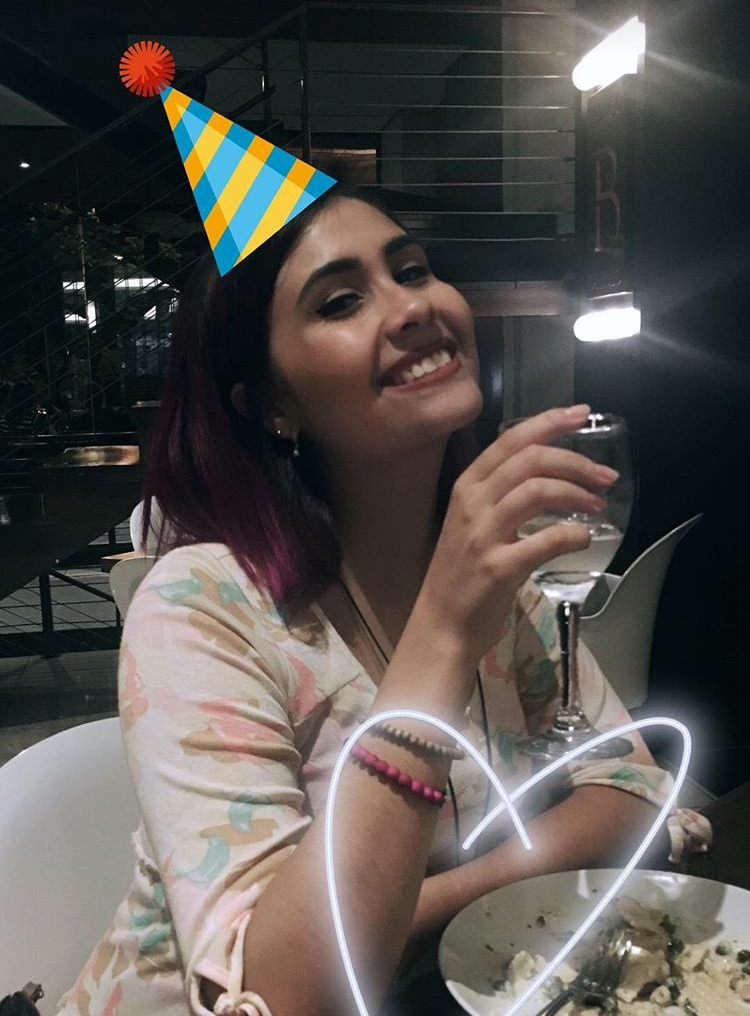


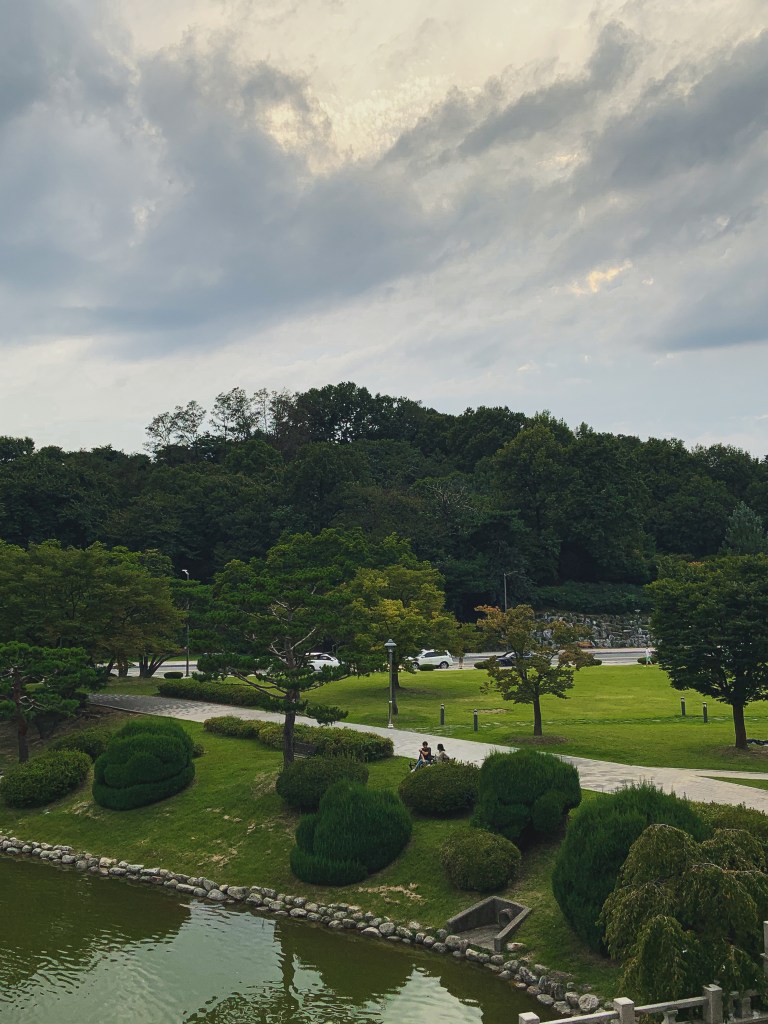


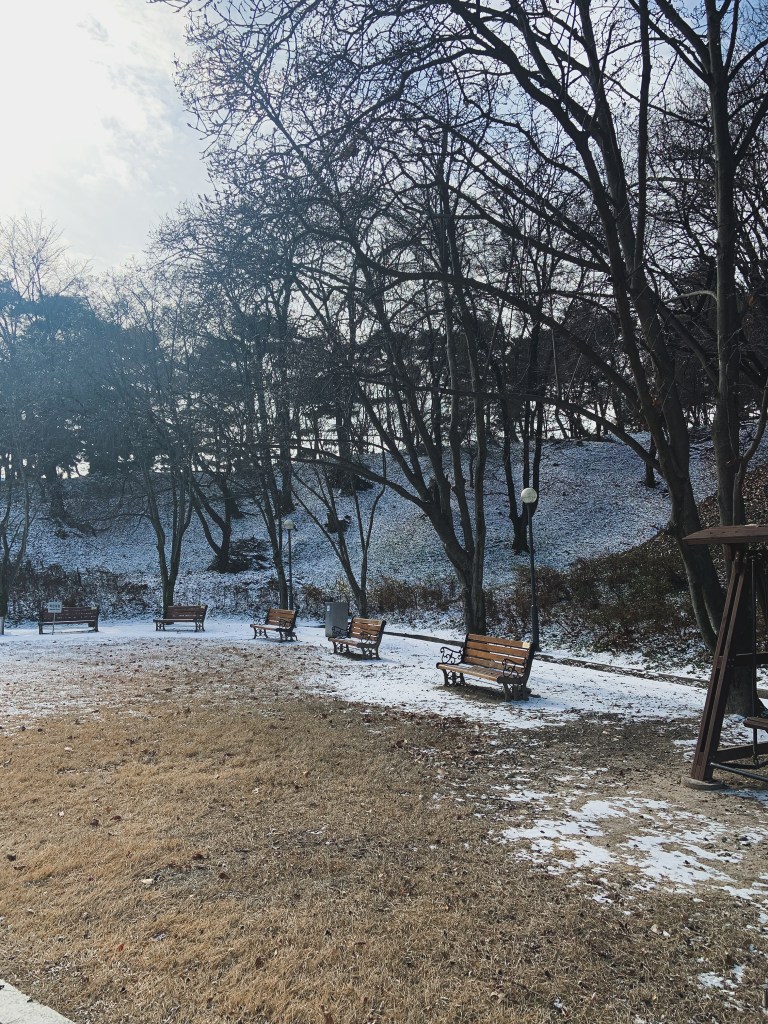
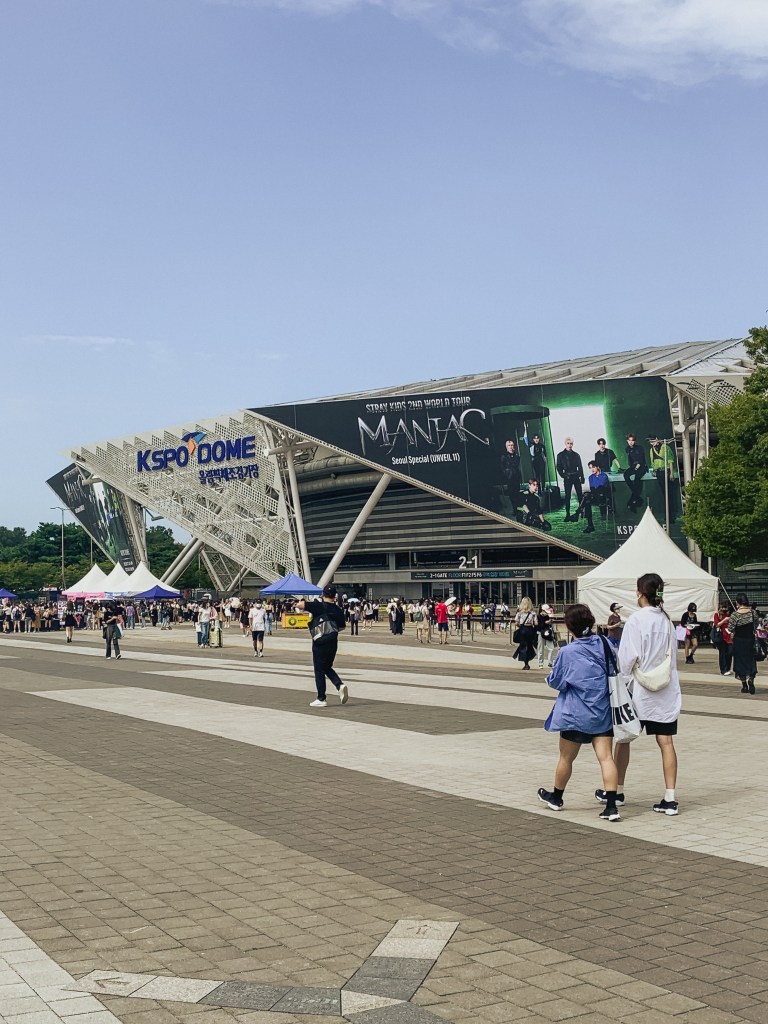


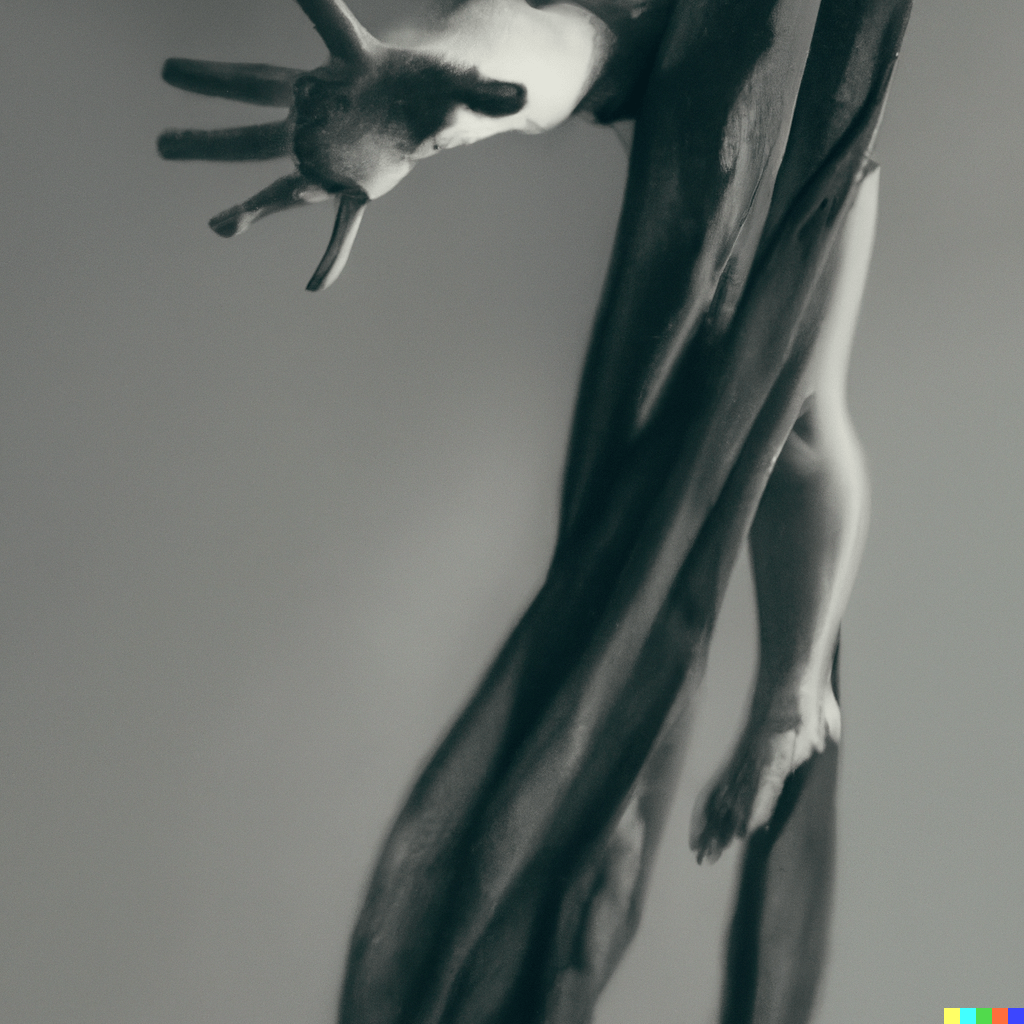


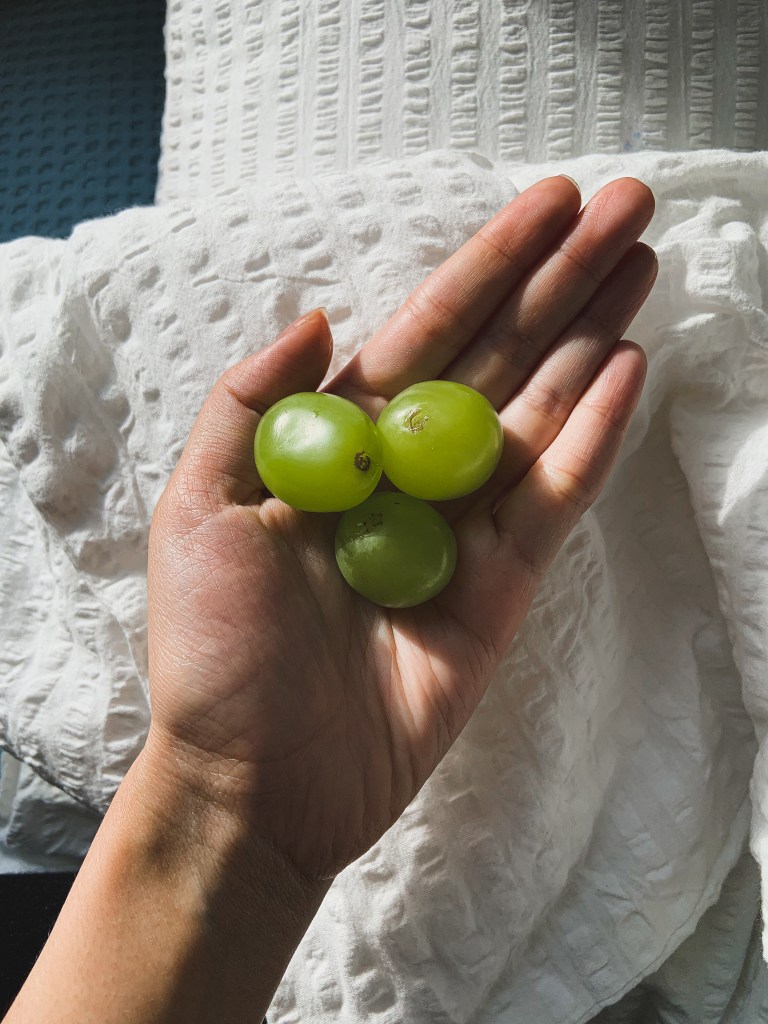

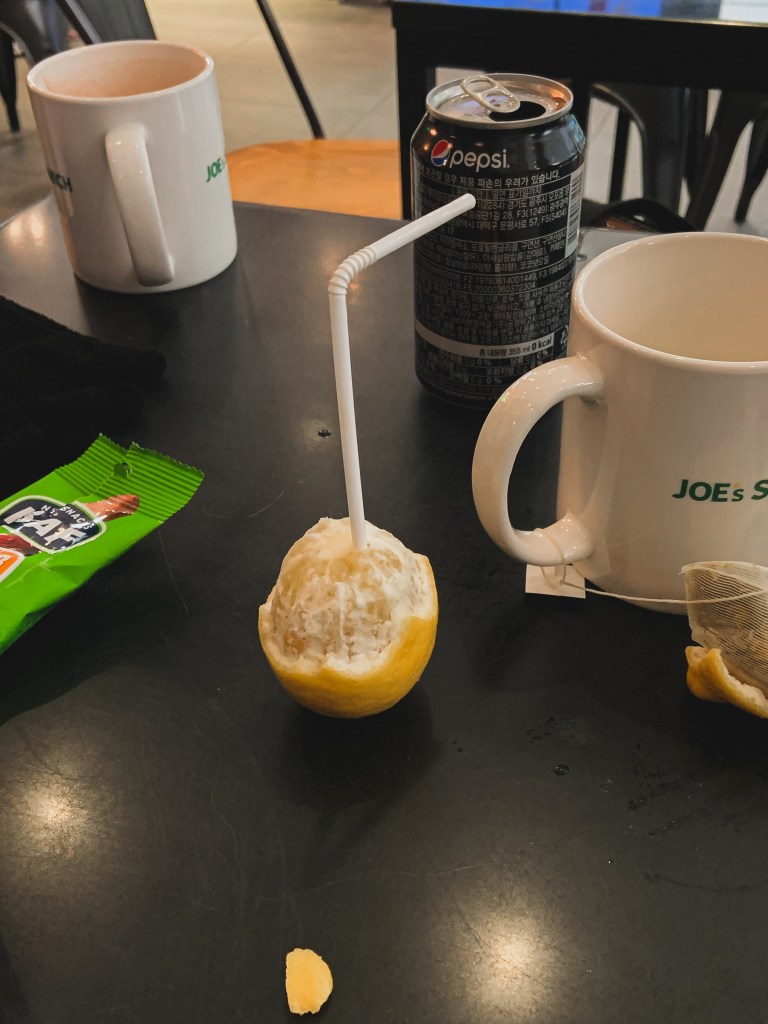


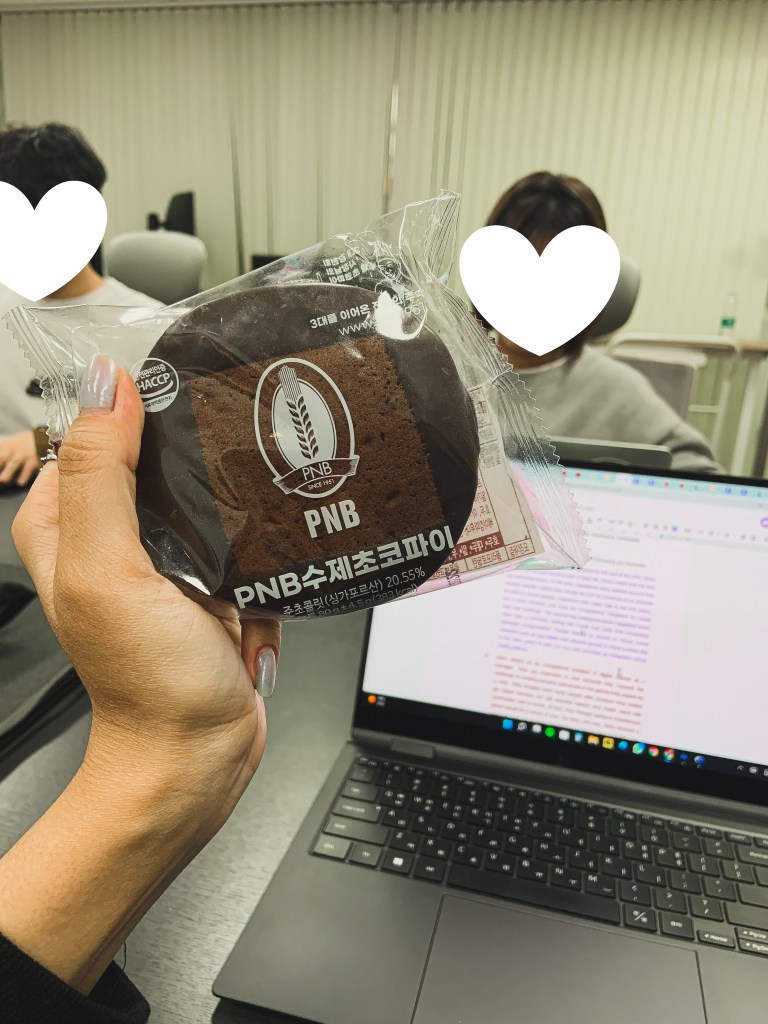
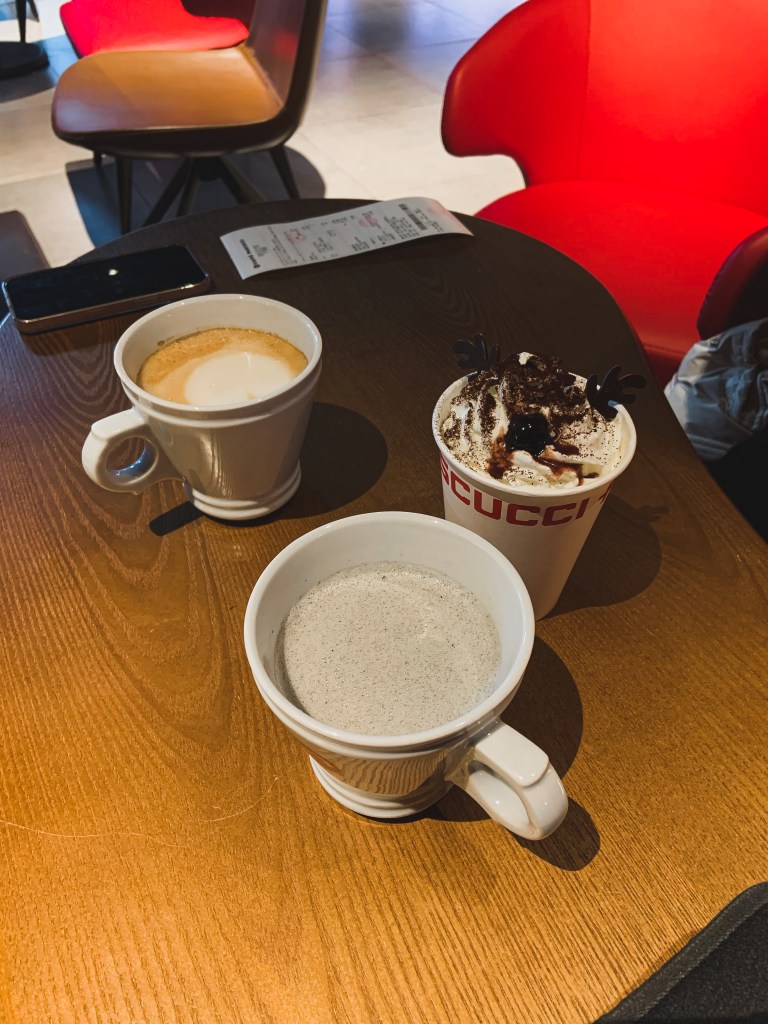

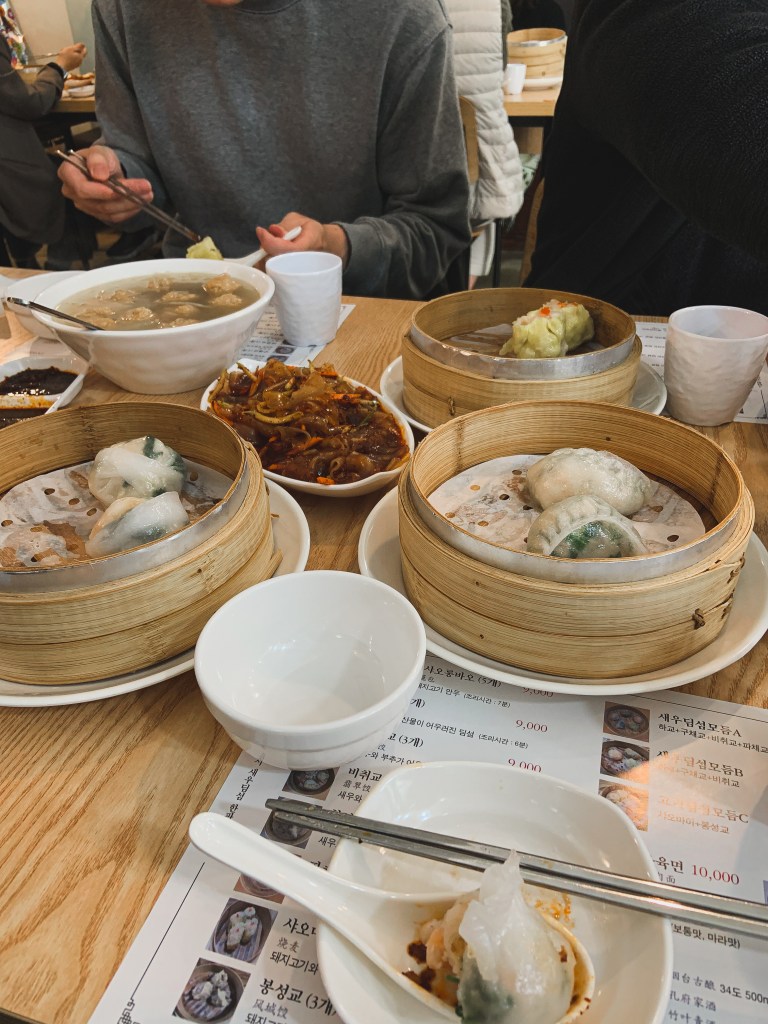
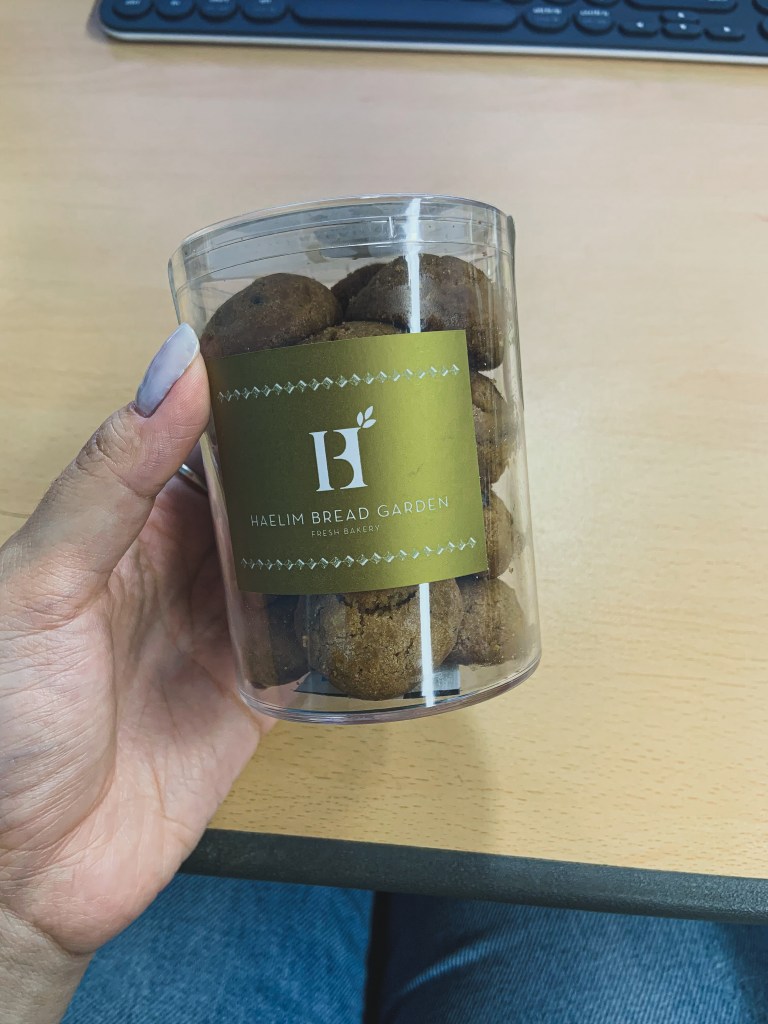


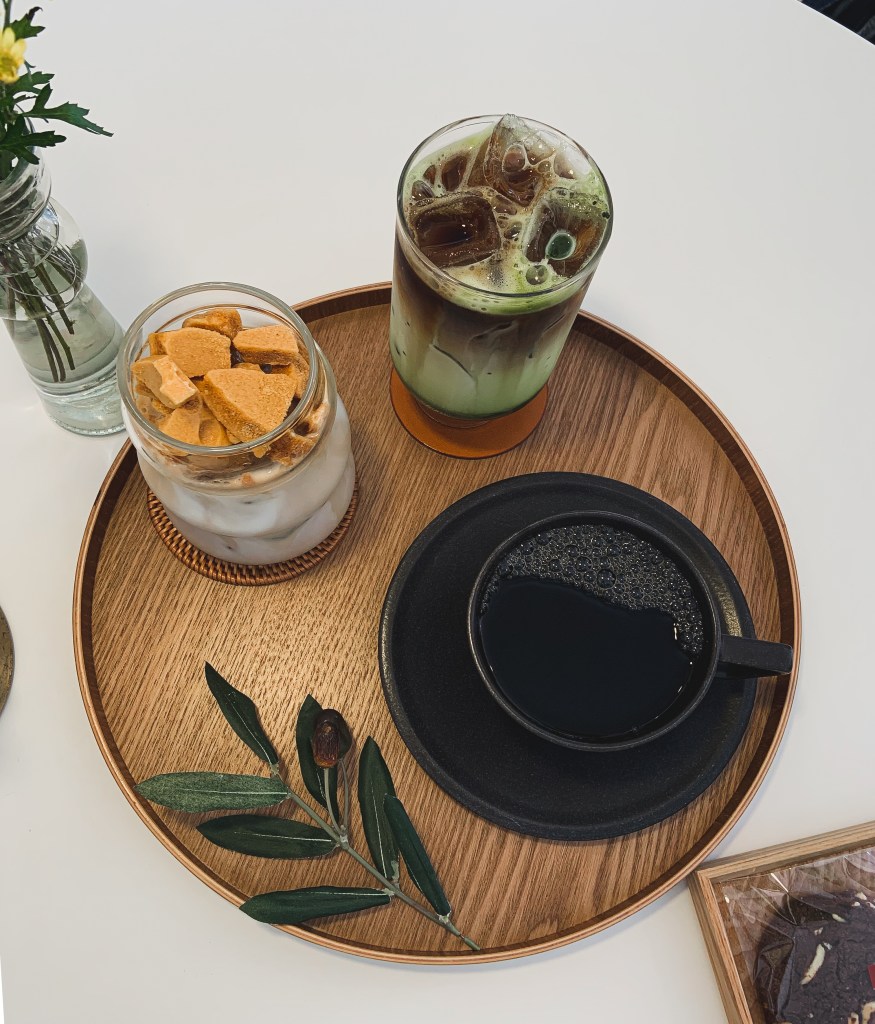


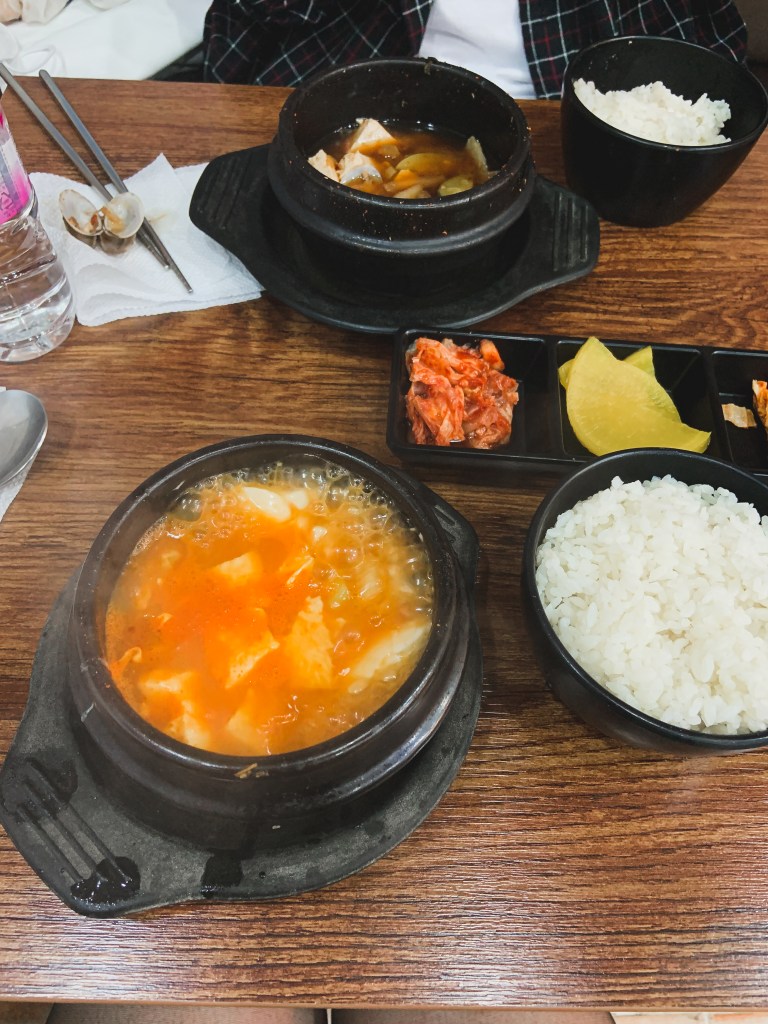
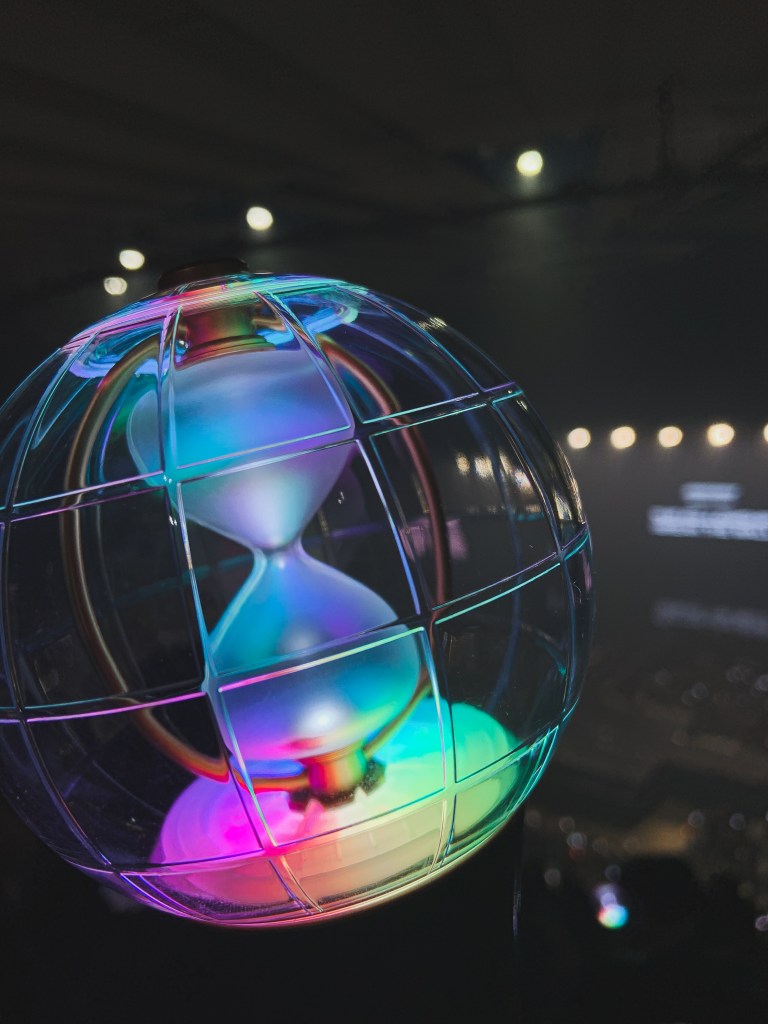








 Corvo Correio | the Raven Post