The Shape of an Idol

What sort of artist is an idol?

Para uma versão em Português, clique aqui.

I first came into contact with K-pop idols in 2009, at 14 years of age, when I learned that one of my favourite songs by one of my favourite German bands – Cinema Bizarre’s “Forever or Never” – had also been recorded by a Korean boy group called SHINee. The following year, most of my German band-loving peers had exchanged the likes of Cinema Bizarre, Tokio Hotel and Killerpilze with Super Junior, BIGBANG, SHINee, amongst others. Most of us had a history with J-pop and J-rock; I myself was briefly hooked on Super Junior because of Heechul’s visuals, which reminded me a bit of Miyavi’s, the visual kei rockstar I adored. It didn’t last long, though; as a Christian girl, my teenage mind was repelled by the label “idol”.

Cinema Bizarre “Forever or Never” live, 2008

Funnily enough, it was BTS’s 2018 song “IDOL” that ended up dragging me back into the industry, attracting me with the layering of Korean traditional percussion music and African beats that made my mornings as a then-freshly graduated (and unemployed) person less burdensome. That was around 2 and a half years ago. My more educated adult mind was able to overlook the negative connotations that the word “idol” communicated to me in the past, but once in a while I still have to explain myself when the topic arises in my daily religious contexts. Calling young stars such a name is a very unsubtle way of stating what they are presented for but, even so, there’s more to the name than a vocabulary choice.

I have said this many times, but I have always been a fan of things, since my late childhood. Being a fan is part of my identity and shapes how I interact with the world. This is relevant because, after becoming a K-pop fan, the process of learning more about what the label “idol” meant and how it informed so much of what made me enjoy these artists completely reshaped how I perceived my own fan experience. This piece is a very personal take, and a rather subjective first attempt at putting into words how my taste ethos changed over the last few years, as well as paying what little homage I can to one of the idols I cherish the most – Hoshi, from the group Seventeen – not just because today is his 25th birthday, but also because coming to appreciate him as much as I do today has a lot to do with my process of figuring out what idols were supposed to be. 

BTS, the biggest K-pop group in the world, stating that they are, indeed, idols. Aug, 2018.

I came into K-pop straight from a long career into different kinds of rock bands, from power pop to pop punk, to punk and stoner rock, and all sorts of sounds deemed “alternative”. My perception as a new K-pop fan was naturally highly informed by this previous experience, but, at the same time, because there was a poignant transition taking place, I had to admit that there had to be something specific, potentially new, attracting me to this very different type of artist (even though there are also important parallels, which even prompted an article about why so many former emo fans crossed over to K-pop). I had in me a deep sense of wanting to be able to appreciate the differences as much as the similarities. Like I mentioned before, I had just graduated, so my head was still full of my Bachelor’s Thesis and all the studying I had done to produce it, and I had enough free time to do my favourite thing: keep studying (by the way, that’s the rough version of how I ended up studying fandoms). I was lucky to make friends that pointed me in the right direction, showing me the songs, videos, live performances, articles and books that helped me lay a foundation to start to make sense of the general landscape of idols in Asia, in a way that gave context to the finished product I was hooked on. 

In early 2020, in a conversation with one of these more experienced fandom friends, she told me that every fan might eventually have to figure out who’s the one idol they will drop all others for once they no longer have the time (and energy) to put into supporting many different people. I remember saying I had no idea who I would choose; but then, not much longer later, shortly after Hoshi’s 24th birthday, I realised he had become my answer to that matter. When I first got into Seventeen, he was not one of the first members to catch my attention, but, the more I learned about the group, the more he intrigued me. Initially, there seemed to be some unusualness to such interest, because all of my favourite idols up until that point shared some specific traits that weren’t the most striking things about him. That made me think deeply about what could have sparked my interest. I ended up realising that my new-found love was a result of a larger process of shift that I was experiencing, and this shift was a result of the thoughts and conclusions I reached after seeking to educate my mind to perceive idols as idols.

Hoshi, in behind the scenes pictures of the music video for his solo debut song “Spider”, released in April this year. In his own words, he is “the kid who goes when you say not to go // “I’m the kid who tries until the end when you tell me not to do something” (from the lyrics of his self-produced unreleased song “Horanghae). Picture retrieved from Weverse.

What makes an idol?

Idol-ness is, in itself, a performance. Idols are a special brand of pop artist, whose persona is specially crafted to maximise the chance of stardom. Such performance is truly an artistic labour – a fact that can be easily ignored according to one’s definition of art. Because it’s a full-time performance, the role of the young people that work hard to bring up their idol-worthy images to life often ends up being overshadowed by the role of agencies and producers in the process. Trainees at K-pop companies spend their youth training in pursuit of their dream of being given the chance to debut in a group[1], and then work for the subsequent years to build relevance and stability, as a group, and as individuals. From the moment a new trainee is signed, and their journey begins, the ultimate goal is the stage; it’s the place where all parts come together, and they present themselves as idol-material, excelling both in singing and dancing to show they are worthy of the support of their fans. But the sovereignty of the stage is just one aspect of their performance. 

Idols were designed to become a source of security and an object of desire, one through which fans could live out their own dreams in the shape of unconditional support. To fulfill this fantasy, becoming an idol fan is made to be like stepping into a transmedia alternate universe, a realm in which all parts of the narrative eventually point back to one another[2], creating the illusion of a world of intimacy between an idol and their fans. In this world, a collective aesthetic utopia of youth is realised; more than just desiring their bodies and their lifestyle, fans are encouraged to perceive themselves as part of the journey. Just as idols grow from their trainee days into mature artists, all of their fans, too, will grow, and work hard to pursue their own aspirations and dreams. 

These processes are perceived as one, such is the architecture of parasocial interactions; in that sense, the idol fannish experience is a labour of (life)time[3] – as companies and idols work together to bring forth the images and texts around which support will be harnessed, fans come into the equation not only through supporting, but also in performing fandom. This performance is expressed through standard, daily fan practices, such as buying goods, voting for prizes and awards, streaming songs and videos, putting together fan events, producing fanart, supporting their brand endorsements. But, as the stage is the moment in which the idol presents their idol-worthiness, fans will also play their role during live performances, as they shake their lightsticks, sing the special fanchants and perform their fan events, holding up slogans with special phrases to their idols.[4] The entire idol system is built on this pact of kinship between idols and fans; and, as such, as Joanna Elfving-Hwang (2018) points out, whatever role one is assigned, being an idol requires never to drop out of character[5].

If being an idol circles back to articulating an idol-worthy expression of the self, the most desirable talent would be the ability to put on a captivating, consistent performance on and off stage. In that sense, when crafting their personas, the genius of performing as an idol is knowing how to use what they have to build a bridge between who they are and the role they are supposed to fulfill. Since every idol that gets to debut has gone through hard prepping for the chance of stepping on a stage, the very desired life-long fan support that will enable their careers relies greatly on their ability to make people fall in love with their dreams, and dream along with them. That’s why a compelling backstory plays such an important role in boosting a successful rendition, like a compass that informs the overall direction of the narrative and makes their story of growth all the more believable, and potentially sustainable.

Hoshi’s surprise appearance to the fans waiting in line to watch Seventeen’s concert in Newark, US. Jan, 2020.

Hoshi, the idol 

Hoshi, my favourite idol, is a force of nature. His stage name choice is a combination of the words “horangi” [호랑이, tiger] and “siseon” [시선, gaze]. His playful, talkative persona makes abundant use of loud cuteness aesthetics to showcase a soft, endearing side, which makes a great counterpoint to the real awe-inspiring tiger qualities he expresses in performance mode. Born in 1996 as Kwon Soonyoung, he made his official debut in May 2015 as the main dancer amongst the 13 members of Seventeen, after training for four years. Because of the large number of members, the group is internally divided into teams according to specialisation; there’s the Vocal Team, the Hip Hop Team and the Performance Team, of which Hoshi is the leader. He’s recognised as an earnest performer, a talented choreographer, and a pacesetter deeply obsessed with both the practice room and the stage. His absolute love for hard work and enduring the processes is one of his greatest assets – his passion transcends every step of the staircase that leads from the commitment and hardships of preparations into the place under the spotlight. 

Looking back, I believe that his ability to ooze passion in everything he did was what made me enjoy watching him so much. As I made my way through more and more of Seventeen’s transmedia content, he told a consistent story of a hard-working artist, who defied all odds to build himself up from nothing. As a young boy with a dream of becoming an artist and a solid background in taekwondo, he realised that his physical abilities were enough to give him a shot. He found little support at first, but he had enough thirst in himself to do his best to prove he could make it, so he created his own opportunities. At first, he practised on his own, at home. He went on to form his own dance club in school, entering multiple dance competitions, and even winning some. It was in one of these competitions that he succeeded in being scouted into an agency. Since day one, he became known for being the trainee that worked the hardest; this reputation has followed him ever since, and has been reasserted every single time he presented himself. 

Hoshi’s playfulness makes a sweet counterbalance to his fierce performance as a dancer. Seventeen “Ode to You” Tour in Seoul, picture by Eyes on You. Aug, 2019.

When he’s dancing, he’s untouchable and enticing; on camera he’s a reliable and active figure of comfort, with an approachable aura that makes his fans regard him as one like a friend. These many sides shape the complexity of his “tiger power”, the brand that summarises and iconifies the genius of his idol-ness. Kwon Soonyoung, who says that he’s actually an introvert, often chooses the energetic, loud and bordering on the insane as a booster, and seems to have his artistic mind set on putting on a show, whatever the assignment is. I would even argue that the differences between his performance and what he sometimes describes as his “true self” make the show more interesting to watch. He can count on the reliable support of his compelling backstory that makes the complete package being presented on stage easier to believe, and more enjoyable to watch – as if we could see the extent of the road that he’s walked so far every single time the lights are on him. There’s a sense of coherence that he presents across all forms of media which is hard to describe, but, ultimately, it translates to me as a sense of commitment and assurance that he’s infatuated with his own dreams as much as us fans are infatuated with him. 

His ability to communicate himself coherently over the years is perhaps the reason why it’s so easy to fall in love with his dreams and desire to watch him fulfill all of them. That was very evident during “Spider”, his remarkable solo debut this past April. The release is a great display of all that he has built ever since he decided he wanted to be on a stage; the luscious track, written and produced by his long-time friend and fellow Seventeen member Woozi, allowed him to show himself as a fully-grown artist beyond the group, highlighting his poignant moves, sultry vocals, beautiful angles and addictive visuals. The song is an easy listen that begs for a replay, and the music video, as well as the multiple stage performances and even the dance practice are a visual feast, as he makes his way through the backup dancers and the rectangular frames that are part of the choreography. His high quality standards are noticeable in every aspect of the release, since its inception, as described by him in the behind the scenes clips and interviews he gave about the song. It’s not so different from Hoshi, the SVT member, but it’s a few steps beyond, like the feeling of walking a bit further in order to get a bigger picture.

If you’re my close friend I have probably made you watch this at least once.

The shift

Taste is a very tricky topic to navigate, because there are multiple collective and individual, external and internal layers behind what biases and binds us; there are several unarticulated aspects of subjectivity which are both like a sifter and a strainer filtering and shaping how we digest everything that we ingest. Even more when it comes down to the many different kinds of fan discourse that exist, not only because of the emotional qualities, but also the communitarian aspect that entails the general perception of being a fan as being part of an extended array of people sharing the same taste. The extent to which fan taste should be discussed is highly debatable since, after a while, telling apart individual reactions to collective speech constructions can be hard. From the get-go, I stated that this was a personal account, because that’s what a person’s own bias will always come down to. 

But, even in that sense, even though coming to appreciate Hoshi, specifically, was a subjective endeavour, there’s a more general outlook in question, of my process of coming to love a dancer above all others, which is the thing I’m calling a personal shift, and the main product of my own experience of growing in knowledge. That sounds stupidly simple, and perhaps not worthy of a lengthy piece, but reshaping a lifelong perception of the worth of the multiple mediums through which expression can be articulated is quite a challenge. In Architecture school, my greatest asset was my ability to translate images and space into words, and vice-versa. Even my skills as a foreign language teacher are largely indebted to my talent to overthink verbal speech. As a result, someone’s ability with words has long been my biggest source of admiration – the sort of perception I nurtured growing up as a fan of things, and which I carried into idol fandom.

Initially, all of my favourite idols were the talented songwriters, the ones that had a poetics to them that was articulated verbally, going as far as releasing books. Even if I was so addicted to the complete package of the show, at the end of the day I still subconsciously attributed more value to those who could express their artistry in words. Getting deeper into the non-verbal contents of K-pop and how every aspect added its own value to the finished product made me more appreciative of the many layers of the show as equally important; the core of what I called appreciating idols as idols would be an overall sense of seeing each one for the role that they play on an equal footing – from the ones who write and the ones who sing most parts in songs to the ones that provide striking visuals but don’t necessarily lead performances. One of the reasons why idol groups have a diversity of looks, personalities, talents and assigned roles is to maximise appeal; the wider the possibilities, the higher the chances of someone’s story resonating with someone watching – because what is being communicated by one end still depends largely on the other end’s ability to get it.

A fancam of Hoshi dancing to Seventeen’s 2016 mega hit VERY NICE. Once Twitter’s #1 public enemy, fancams were one of the things that I struggled the get the point of when I first became a fan of K-pop but that became a natural part of my experience the more I enjoyed the performance aspects. I have watched this one countless times. Jul, 2016.

Once I had opened myself to cherish the various facets of how idols articulated themselves, I could channel my long-standing enjoyment of the ability to build up a coherent artistic narrative into appreciating an idol’s overall performance more wholly, which eventually developed into love for Hoshi, the idol and artist. Becoming his fan was a bit like figuring out how much I earnestly desired to find new points in the fabric of reality in which the sensibility of bodies and souls seemed to connect with the higher orders of the world – the window of possibility which leads into a taste of the numinous, if we’re lucky. It’s as simple as a deep craving for beauty. There are countless collective and individual, external and internal layers behind what biases and binds us as we make our separate and communitarian ways into the world, but, as such, it is a constant that time will keep going, and we will keep changing along the way. That’s when an idol’s performance points back to their successful journey to the stage, the intersection between falling in love with watching someone, and falling in love with their dreams, and wishing to turn that passion into support. That’s how a fan is born.

Even so, regardless of my big words, ultimately, the artist-fan exchange is a transaction. The reason for the complex structure that makes up the pact of kinship between idols and their fans is the need for steady, life-long support that will enable the careers of all the people involved in putting the show together. And what do fans get out of it? Various are the reasons why we give way to the emotional currency we have to offer in choosing to keep supporting and enjoying something we are fans of. Perhaps I also crave the feeling of doing life together, as distant parallel lines in a huge world, that will meet somewhere in the distant future, in the place where souls gather to look back on the journey. Even if that comes across as overly optimistic… Maybe it’s just my pandemic-struck mind in need of distraction speaking louder than my best senses, but it’s been said that the beauty of the world is like the mouth of a labyrinth. I love writing about my favourite artists, because they help me think about myself too. And I love writing about Hoshi, but I love watching him the most. Like strong, bitter coffee, every single time he steps forward I’m left with a taste that lingers on my tongue, gives me extra energy in the early mornings and might keep me up at night if it’s convenient. And that’s my proudly, fully, completely, passionately biased opinion on what makes him a great idol.

Itsy bitsy spider
Climbed up the waterspout;
Down came the rain
And washed the spider out;
Out came the sun
And dried up all the rain;
And the itsy bitsy spider
Climbed up the spout again.

OTHER Readings:

Filmi Girl. “Why an Idol Group isn’t a Boy Band.” The Idol Cast and Other Writings. Mar 4, 2021.

Musikosmos. In the Spider’s Web.” Musikal Kosmos. Mar 29, 2021.

Sara Delgado. SEVENTEEN’s HOSHI Talks First Solo Mixtape “Spider”.” TEEN VOGUE. Apr 2, 2021.

[INSIDE SEVENTEEN] HOSHI Mixtape ‘Spider’ Behind. SEVENTEEN Official Youtube Channel. 14:07. Apr 12, 2021.

Footnotes:

[1] Many idols who begin training at a very young age and/or who debut as teenagers might interrupt their education due to the demands of training/performing (Saeji et al. 2018: 12)

[2] In “Idols: The Image of Desire in Japanese Consumer Capitalism”, Galbraith (2012: 186) describes this using the term “inescapable intertextuality”: 

“Constantly present and exposed, the idol becomes “real,” the basis of feelings of intimacy among viewers, though this is independent of “reality.” John Fiske (1987, 116) describes the situation as “inescapable intertextuality,” where all texts refer to one another and not to any external reality. This is not to say that reality does not exist, but rather that what is accessible in cultural products is a construction of reality, which must be understood on its own terms. “Images are made and read in relation to other images and the real is read as an image” (Ibid., 117). The meanings of images, however temporary, are made (or negotiated) in interaction with images.”

[3] for more on this, I’d recommend specifically Lee Eungchel’s “Always Fans of Something: Fandom and Concealment of Taste in the Daily Lives of Young Koreans” (2021). Huge thanks to Prof. CedarBough T. Saeji who shared a link to this paper which sparked in me the desire to write this piece. 

[4] About fan practices, there’s a special place in my heart for the dense autoethnography “K- Popping: Korean Women, K-Pop, and Fandom” (Kim, 2016) 

[5] Showing consistency between the multiple venues of interaction with fans, media and other spectators is key to forming both the long-lasting bond with fans, as well as presenting a reliable, worthy image as a celebrity before society. (Elfving-Hwang 2018)

REFERENCES

Elfving-Hwang, Joanna. (2018) “K-Pop Idols, Artificial Beauty and Affective Fan Relationships in South Korea.” In Routledge Handbook of Celebrity Studies, edited by Anthony Elliott: 190-201. New York: Routledge. Retrieved from: https://www.academia.edu/36343905/K_pop_Idols_Artificial_Beauty_and_Affective_Fan_Relationships_in_South_Korea 

Galbraith, Patrick W. (2016) “The Labor of Love: On the Convergence of Fan and Corporate Interests in Contemporary Idol Culture in Japan”. In Media Convergence in Japan, edited by Patrick W. Galbraith and Jason G. Karlin: 232-64. Tokyo: Kinema Club. Retrieved from: https://www.academia.edu/25849863/The_Labor_of_Love_On_the_Convergence_of_Fan_and_Corporate_Interests_in_Contemporary_Idol_Culture_in_Japan 

Kim, J. (2017). K- Popping: Korean Women, K-Pop, and Fandom. UC Riverside. Retrieved from https://escholarship.org/uc/item/5pj4n52q

Lee,  Eungchel (2021). “Always Fans of Something: Fandom and Concealment of Taste in the Daily Lives of Young Koreans.” In Korean Anthropology Review 5: 53-78. Retrieved from: https://s-space.snu.ac.kr/handle/10371/174377 

Saeji et al. (2018) “Regulating the Idol: The Life and Death of a South Korean Popular Music Star.” In Asia Pacific Journal: Japan Focus 16 (13:3): 1-32. Retrieved from: https://apjjf.org/2018/13/Saeji.html 

My Love stories, as told by Taylor Swift


For the Portuguese version, click here.

Dedicated to my long-time best swiftie friend and namesake, Luíza.

TW // mentions of eating disorders

I’m an English teacher with an Architecture degree, but, as a side thing, I study fandoms. I’ve identified myself as a fan of things ever since I was a very young person; because of that, I take the moniker of “fan” very seriously. So, in the strictest sense, I am not a Taylor Swift fan; I am, however, a 26-year-old who grew up with her songs in the back of my early teenage and young adult years. I watched her adorable music video for “You Belong With Me” almost every day on TV back in 2009, enough times for me to enjoy the song, and know the lyrics by heart, and resort to them when the guy I liked in the first year of High School ended up dating my prettiest friend. 

we’re off to a great start.

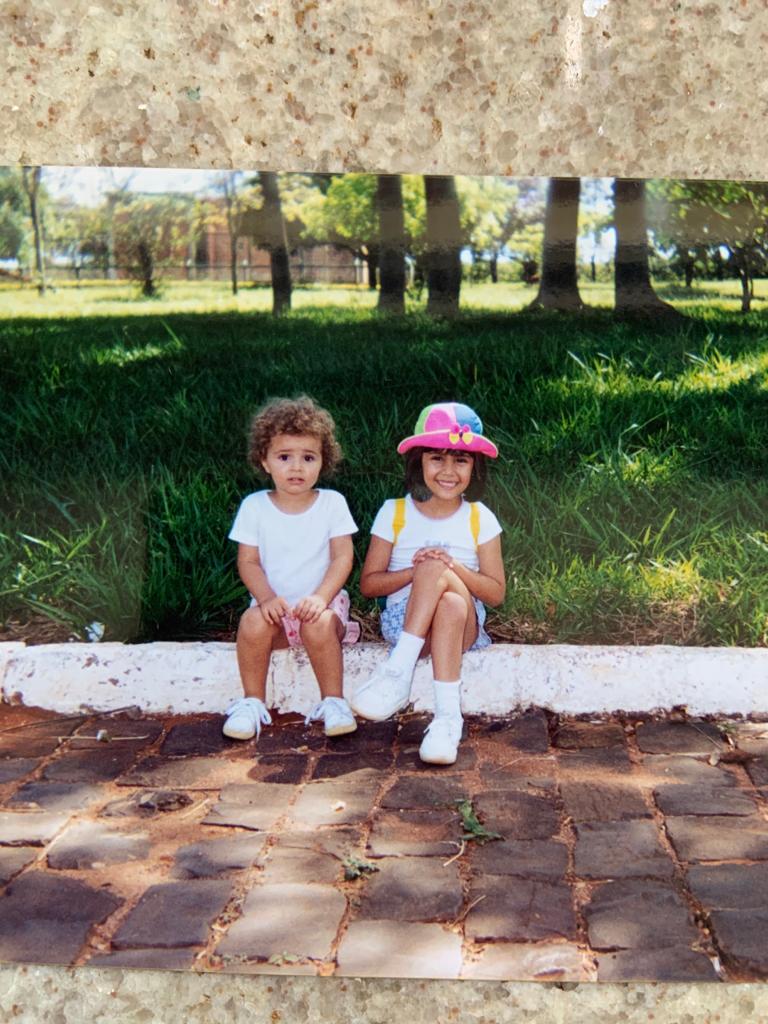
I thought it was interesting how, in the music video, Taylor fights against her own brunette self, for the boy she loves. When I was around 6 years old, there was this popular Brazilian soap opera after Shakepeare’s “The Taming of the Shrew”. I had a little brown bob haircut, a big mouth and a blonde curly-haired sweet little sister — I got the nickname of Catarina (Katherina in the adaption), which I grew to hate once I read the play in middle school. I longed to look like a sweet, beautiful, loveable Bianca Minola — someone like Taylor, the prettiest girl I had ever seen at my big age of 14. In my head, she looked like someone I would never be as good as; but, under the four minutes of that song, singing about how she was an underdog and how she was the one who understood him made me believe we could be so similar, almost the same.

My sister and I, at 3 and 6 years old. I’m happy to inform I’m no longer bothered by being associated to Katherina Minola (though I shall remain an untamed shrew) (c. 2001)

Sadly for me, I sang this song to two consecutive guys in High School; just as the first one never woke up and found that what he was looking for had been there the whole time (me), neither did the second one. Back then, it felt like the end of the world, but it was just the beginning. My senior year was a very complicated one, because, after the rejections of the year before, I was led to believe that, if I looked skinny like my pretty friend, maybe things would have been different, maybe he would have picked me. I stopped eating, developing an eating disorder that would follow me into the next decade. Rejection followed too; the other guy spent a year playing with my heart, as he went on and off with another girl from our class, and I had “You Belong With Me” on repeat again. I felt bitter about rejection, but, somehow, I ended up being regarded as “the prettiest girl” at prom, a type of compliment I had never dreamed about, let alone after being turned down in front of the whole class for a year. But it seemed that, whatever people couldn’t see about me before, had come out when I became very skinny, and, in my head, skinny pretty and worthy of being loved were the same.

A picture of me in 2012, the year I started uni, at 17. Taken with my laptop’s webcam.

I started university the same week I turned 17, very young, very skinny, and somehow very proud. My arrogance almost led me into a trap — I was approached by one of my seniors, who was 25 at the time. He was an avid reader of everything I enjoyed, knowledgeable about music and Italian cuisine and vintage clothing, and he made me feel important, and seen, and so mature. Looking from the outside, it seemed like a perfect scenario for a disaster, but after a couple of weeks he just turned out to be the dullest guy I had ever met. After wasting my three years of high school on guys that weren’t really worthy of my time, I wasn’t interested in repeating the same mistake (not that quickly), so I just cut him off, to his absolute displeasure. Around a month later, when he was still making sad posts about missing “someone” so much, the anthemic “We Are Never Ever Getting Back Together” came out. I had this song on repeat for months, spinning with youthful joy to its circular melody as I enjoyed having just ditched a bullet. 

“Taylor Swift has her heart broken five times a month” – the lack of self-awareness speaks volumes

The sensibility I had shown proved to be a one-time thing very soon, not once, but repeatedly; at some point in late 2012 I tweeted that “Taylor Swift gets her heart broken five times a year”, but such a joke could only be made by someone whose heart was also getting broken left and right. Around that late 2012, the day after Christmas, barely weeks after that tweet, I fell for the guy that sold me a book about Renaissance in a bookshop, and it took me nearly five years to completely get over him, even as I was getting crushed by others along the way. We both loved the same bands, he loved my favourite YA book series, and our birthdays were two days apart; he had an unresolved teenage infatuation with James Bond, the same way I had one with Batman. The months we spent together gave me some of my sweetest memories, the little things that are worth holding even as memories fade. When he left me for someone else, I stayed up all night crying, and the sadness I felt stayed with me for the months that followed, to the end of 2013 into 2014. When I first played Taylor’s “Red”, I wanted to know what a song titled after my favourite colour would sound like, and it sounded just like I felt at the time — “but moving on from him is impossible // when I still see it all in my head // in burning red”. I had the song, and the full “Red” album on constant repeat that specific weekend, one of the many that I spent working at my uni’s Architecture studio room.

Bookshop guy gave me a Harley Quinn flower when we went to the movies to watch opera. I tearfully tore it apart when he left me (Apr, 2013).

All that repeating should’ve taught me better than it did; in September 2013, I tweeted about people whose proximity made me hear Taylor singing in my head “trouble, trouble, trouble”; had I given her ears, I would have avoided yet another year of emotional waste. I became fascinated by this guy that was an acquaintance of my friends. Everything about him screamed that I shouldn’t come too close, but I ignored it, because I was stupidly attracted to being challenged by danger. I don’t remember exactly how we became close, but he was so alluring that I started writing poems about him, and I posted them under a specific tag in my blog (and they’re all still here). In many ways, he behaved like some sort of cult movie character, and he gave me room to play the role of one, too; we exchanged songs all day long, I left small paper notes on the way he took to go home, and I brought him a little lion figure from a trip, because he had curly hair, and a t-shirt from his favourite movie. I got a kiss from him once, and then it took me another half a year to learn he had been seeing someone else – “he was long gone when he met me”. He liked the post of the farewell poem I wrote, and I was glad to know he knew how much I despised how he had played with me.

I was, however, becoming very needy, and I wasn’t clever enough to realise I should never go out of my way for someone the way I did for him. The disappointment that followed ended up being the hardest one, because we actually stayed together for a longer time. This guy wasn’t particularly interested in me, but he enjoyed my attention. We were the same age, but he was two years my junior at uni, and we got closer talking about faith and music. I wrote him a poem too, and bought him a bunch of books that he never read. The first time we broke up was months after “Shake It Off” was released; I cried a lot, and danced twice as much, to shake him off me — “Heartbreakers gonna break, break, break, break, break”… But it ultimately didn’t really work, because we got back together. It took almost a year going on-and-off until he kind of realised he could like me. I thought he was so precious that all the hard work I was doing for him to fall in love with me was worth it. I made him many cute playlists, either with Taylor’s “Mine”, or Glee’s beautiful version by Naya Rivera — “you are the best thing that’s ever been mine”. For the first time, I really wanted to marry someone, but we would have to get through the year I was supposed to spend studying in England first… And we didn’t.

A picture from a trip to Sao Paulo in late 2014 in which I intended to forget the guy that I would go on to date for months a few weeks later. My best swifitie friend left a comment saying I was in the spirit of Taylor’s “Red” tour (Dec 2014)

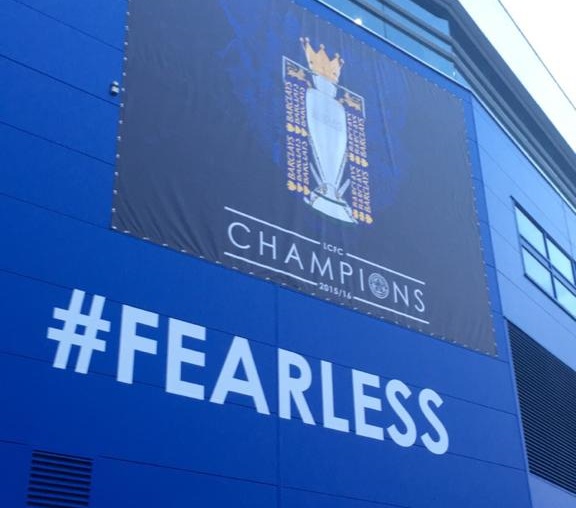
Being away from him made me realise how worn out from working for love I had become, to the point that it made us grow distant, until eventually breaking up over FaceTime. I wasn’t sad whatsoever; I felt free. Trying to become the girl he wanted, who looked, dressed up and behaved a way he found desirable, had crushed me, but now I was in my dream country, and I had time to find myself again. I lived right next to Leicester City’s home stadium, and that year we had the word “Fearless” written all over the city, because it was the season the fearless foxes won the league. I revisited Taylor’s “Fearless” countless times, eventually tying it up to the cute worship leader that kept me from focusing on Jesus at my local British church. He gave me a lift to my student court every week after our small groups, and we had so much fun, and at some point I thought he was just as distracted by me too. “In this moment now, capture it, remember it”. He was sweet, but we weren’t going anywhere. I was really upset about it for a while, and I returned to Brazil still feeling a bit sad, but the hurt passed rather quickly, and I kept a lot more good than bad. Somehow, I thought that falling in love in England would be beautiful, but now I see that he was right not to let me get closer. Luckily, I kept the nice friend. He was the one who proofread every text in English I posted in 2016.

I must have posted at least a dozen snapchats filming this and singing “Fearless” throughout the season (May, 2016)

Back in Brazil, I felt like I had reached some sort of roof with all those failed attempts, and I was ready for a long single season. It doesn’t feel like a long time ago, but I was only 21, which is significantly younger than 26. I certainly did not live up to my promise – I was already in love and hurting again before I even turned 22. This time felt different, though; it didn’t really amount to anything other than hurt (spoiler!) so I guess I was just feeling a bit of that bitterness that comes with just how serious everything starts to look and feel like after you become more of an adult and less of a teenager. He was by far the most interesting person I’d met, and we clicked intellectually in the way I’d always dreamed I would click with someone. We became very good friends through books, music and politics, and I got enough mixed signs to hang around for two full years. In my head, he was a real Superman, just like the one Taylor sings about — flying and saving the world while I was alone at home, finishing my degree, and figuring out what to do next. “I’ll be right here on the ground // when you come back down”. That was 2017, the year her catalogue came back to Spotify, in August. “Superman”made it to my end-of-year most listened list, as well as “Sparks Fly”, which got second place overall. “Red” also showed up. 

Falling out of love with Superman was tough, because I had some odd hope I should keep on sticking around, because he was worth it — “I’m captivated by you baby // like a fireworks show”. I had been rejected way too many times at that point, but that one was different; I had met someone who seemed to be all that I had thought that would be good for me to have, and I had offered all of the very best I had, all of the very best I was, and it wasn’t enough. I’m still moving on from that feeling, and, sadly, it takes time. I was coming to terms with having to force myself to get over him when the guy from the bookshop that I still had in the back of my mind got in touch with me. He wanted to apologise for leaving me hanging for all those years. To be honest, I didn’t really need that closure, and I told him so, but I could finally let go of my love for the flashes and echoes of our time together that came to me once in a while. In a way, I also think that made me long for putting an end to things that shouldn’t drag. I sent Superman an email a few weeks later, the exact day it turned two years since the first time we met. And, then, my heart was empty and I was alone with myself (but with a Bachelor’s degree).

I wish I could tell you about how the following year sounded like “I Forgot That You Existed”, but it didn’t – it was miserable, in many ways. I had put on a lot of weight over the year before, writing my Bachelor’s Thesis, and all the thoughts that had followed me since my senior year came back – because, now that I had put on weight, whatever people could see in me wouldn’t be visible anymore. My confidence was at an all-time low, but, even as a sad graduate, I made myself time to have fun. I closely followed the release of “Me!”, not just because I’ve been a Panic! fan for many years, but also because I wanted to see if it would surpass the first 24-hour views of BTS’s “Boy with Luv”, which had been released exactly two weeks before. At this all-time low, that’s when I started studying fandoms as a side thing, and that’s the reason I ended up on a plane to London by the end of the year, to attend an academic conference. It was my first time in the UK since 2016; I couldn’t meet the worship leader that distracted me four years ago, but I met my couple of (now married) best friends, some sweet internet friends, and even some friends from university. One of them was a cute, genius young Architect I had a platonic crush on back in 2016. Two days before he left the UK to go back to his own country for the Summer, he told me he had a crush on me too. Once in a while, over the years, I would think about him, and wonder if anything would have been different if we had spoken to each other earlier. Meeting him again was sweet. We had a pint together before I flew back. At the time, Taylor still hadn’t released “folklore”, but when she did, I still had our fun, light conversation stuck in my head, the one thing I think the most about when I hear “the 1” — “if one thing had been different // would everything be different today?”. He’s in a happy relationship now, and I wish him all the best, because he’s the best guy I know, and being happy about him makes me feel better about the rest. 

my little cover of Taylor’s “the 1”. I’m not good but I enjoy doing this.

I also wish I could tell a story with a happier ending, but the best I have is “And no one has been in my heart ever since”. But don’t get me wrong, I don’t see myself as a victim here. I’ve been unlucky so far, in a way, but, at the end of the day, I’m just a person who took too long to realise she would do better things in life besides dating the guys she was obsessed with at every season. Believe me or not, this is just half of my stories; there’s a lot more drama, and even more stupid guys, and maybe one or two that were worth the trouble, and a bunch of stuff that was wrong on my end too (but to which Taylor wasn’t singing along in the back — maybe one day I could also write about what Electra Heart has to say about my series of unfortunate love events). There is a debatable value to storing up so many love stories, but I do enjoy recounting the stupid stuff I did, like a third-person watching a character making wrong moves, wishing they could tell them what comes next. Maybe it’s just a coping mechanism, but it works.

But I think what I’ve been through makes me happier for Taylor, and not only because she succeeded in building an empire out of her heartbreaks: witnessing her stories with friends and lovers as told by the media, having my own share of struggles along the way, even as a non-fan, makes me feel a certain way when she sings “hell was the journey, but it brought me heaven”. She was 30 when she released this. I was 25 when I first heard it, the age I always said I wanted to get married. As an unmarried 26-year-old, I sometimes feel the weight of my 20s passing, and the struggle of rethinking what it meant to be young and hopeful back at 18, and what it means now. It doesn’t always feel like a long time (and it’s not), but this is probably easier to figure out as you get older. Whenever I recount my love stories, surprised at my own stupidity, I realise that only some people are given the gift of getting a happy ending out of their foolishness. On the other hand, I’m glad none of these men that made me suffer amounted to anything else in my life, because the trick is the realisation that I was chasing after the ones that didn’t really belong with me. Funnily enough, one of them ended up marrying the girl he rejected me for, and they’ve just become parents. Maybe I should send his baby a present too.

The Day We Jopped

Do you remember the day we first jopped?

To those unaware, “Jopping” is the combination of “jumping” and “popping”. I’m not a dancer, so I can’t “jump” nor “pop” at the same time, but I’m under the impression that I can every single time I crack yet another joke about the verb coined by “Jopping”, SuperM’s debut title track, released in October last year.

A screenshot I took from the “Jopping” music video page, 12 minutes before it premiered. From left to right: Mark, Ten, Taemin, Taeyong, Lucas, Baekhyun and Kai.

SuperM’s debut season was one of the greatest times of my career as a fan of things. From the initial skepticism with which the project was met, and all the jokes people cracked before some of us realised exactly how huge it was to have all of these amazing artists together in one single group, seeing their separate fandoms coming together to love them or hate them, getting caught in the crossfire, but still having so much fun from getting to know new people and new music I wasn’t very invested in at the time. One mini album, one album, five music videos, a tour, numerous stages and performances of over twenty songs later, we’re still somehow jopping to all of this, as we make our individual ways in the world.

Last week, when their new music video dropped at 1am – for the title track “One”, a mash-up of two other of their songs, “Monster” + “Infinity” – I wasn’t having a particularly good day, nor night. I considered going to bed and watching everything the next morning, but, in honour of the “good old times” – read, last year – I decided to stay. As we began to go through the album, the timeline felt just like October last year all over again, and I was reminded once more of just how much I love being their fan.

SuperM “One”, a mashup of tracks “Monster” and “Infinity”, lead single for their first album

The season around SuperM’s debut was a particularly troubled time of our fan experience on Twitter – by “our” I mean us, their supporters. The aforementioned skepticism with which their debut was met came from different sides – not just their own, suspicious fans, but other fandoms as well – and it reflected badly on us that chose to support them. It might not make a lot of sense to outsiders, but, in the trenches of fandom-making, picking sides might turn into an ugly game if the parties involved are willing enough to take it seriously enough.

At the time, I was working on my essay about Fandoms on Twitter for the BTS Interdisciplinary Conference in London, as well as working double to afford the trip from Brazil to the UK. 2019 was the year I decided to interact with collective fandom again, after a couple of years of enjoying my hobbies solo. This sudden comeback gave me a lot of food for thought, which eventually led me to engaging academically with the topic. It sounded like a great idea at first, but the nights were long and filled with tears, because I felt so alone and so unable to complete what I had decided to do.

Even as I worked on my essay, I still hadn’t realised that this end-of-year journey was my own process of giving birth to the academic fan I had in me. She is the one writing this piece right now.

My own struggles around this time last year surely add to the value of just how good it was to have something that felt so fun and weightless during an especially hard time. I can’t separate how badly my personal life was going from how I perceived everything that happened at the time. But the trope of the lost girl that found herself in a community is an old, overused one, which does not provide enough answers for me – because the question that makes rounds in my head is why everyone else, even those who weren’t particularly struggling at the time, felt the same about this experience we got to share. 

My SuperM mini album – Taemin version, with a Taeyong photocard, the day it arrived. My favourite group chat on Twitter came together because we wanted to discuss which album versions we were going to buy.

Fandoms are inherently religious projects, not just for those who join them, seeking a community to belong to, but for those from whom they are born – the sources of our love, the ones from which we get content and to whom we offer our time, money and full attention in return. The desperate commitment to something so aesthetically appealing, and which can appear bigger than life if you tilt your head the right way, produces religious fanatics in droves, easily driving the most sensible out of their best senses. The digital fandom experience is filled with its own unbelievable kinds of highs and lows, and there isn’t a single reason that explains how our community problems happen. My own theory to digital fandom spaces is an attempt at understanding how artists, admirers, devotees and outsiders interact in/with specific digital social network sites over time and generate their own specific identities. This is why, in order to understand fandoms, I always turn to the sources, to understand what birthed them in the first place.

As I’ve mentioned before, there was a lot of collective trouble starting when SuperM was announced, in August 2019. When Taemin, Baekhyun, Kai, Taeyong, Ten, Lucas and Mark were pulled from SHINee, EXO, NCT 127 and WayV to make the group, no one was very sure of what was going to happen – in fact, there were indeed plenty of reasons for the initial skepticism with which the project was met. None of them knew how it would turn out, but neither did any of us, on the other side of the screens. Wishful thinking wasn’t enough of a window into the future, but, as the first teasers dropped, and our collective enthusiasm grew with each new release, I guess this is where the turning point happened – realising how great this project was going to be, with such a great lineup.

A picture that I downloaded from Twitter, taken during SuperM’s debut showcase at Capitol Records Building. From left to right, we can see the lightsticks of the fandoms that make up SuperM SHINee, EXO and NCT (minus WayV‘s lightstick).

If you know who took this picture, let me know so I can credit them.

In SuperM’s debut, all of my favourite things about being a fan came together to make an unforgettable experience. Nothing felt like a job, or a personality trait I had to hold onto for dear life. In a sense, their debut was a turning point in my fan experience as well, as I realised exactly the type of fan I wanted to be from then on. The images that inhabit my imagination and my memory from those days are filled with, among other things, countless jopping jokes, concept pictures, broken friendships and scenes from always-so-dramatic “I Can’t Stand the Rain” stages, in between dozens of papers I read and dozens of friends I gained and lost along the way. The excitement of anticipating their TV appearances and wondering if our side of the world was about to fall in love with artists we admired so much; appreciating the great interactions between the members, all of them talented beyond measure and committed to help one another as they worked to make this project successful on their end.

Fans’ attachment to the optics of the bond between members can often be their own way of satisfying their craving for stability in the existence of their fannish identities. With a temporary supergroup such as SuperM, there’s no stability besides the assurance that these members are talented and willing to make their time together count. Our network of SuperM Supporters is shaped the same – we’re all happy with the great content, but we’re the happiest that we get to come together from our individual fandoms when it’s time for them to assemble again, like a special party. We’ll be here for whatever the outcome is, because these artists brought us together, and they are worth the views, the listens, and the chance*.

And all of this happened even before the pandemics arrived, and lockdown and quarantines became the norm. SuperM has been just one of the many pieces of fan experience that made the last months easier to bear – watching them on Beyond Live on the first weeks of Quarantine, waiting to see them perform “With You” on Together At Home, discussing with friends, staying up to see everything first hand, waiting for the next teaser, the next single, the next live, the next stage. There was always something to look forward to, even as the world felt out of place. But, even so, even after so much changed, and the world appeared to have become much darker, and we needed even more distraction to cope, the memories that SuperM gave us when we first jopped still feel just as special. Perhaps even more now that we were given a first full album with amazing songs and fun music videos, reminders of how great this group is, and how much they’re capable of, and how we all want them to succeed altogether.

This is the power of a successful parasocial interaction; both parties are inherently separate and so, so distant, but still enjoying and building something together. I can only hope that these members are having as much fun as we are. We all deserve that little jumping and popping. 

* Read Also: Kulture Kolumn: The Polarizing Debut of SuperM Riddhi Chakraborty‘s amazing piece about SuperM for Rolling Stone India, which greatly influenced me back then, and still does.

SuperM’s first full album is out now! My personal favourites are Together at Home, Wish You Were Here and Step Up.

#3. the words you left behind

When I started writing this series, I wanted to talk about people and relationships as if they were lights, inspired by this song called “Mikrokosmos”. I must say that this isn’t exactly how I had planned to wrap up this trilogy, but, looking back to the lighthouse, and the roar of our stars, I realise that ending like this was an inevitability. Today, 17 September, marks four years since an album called “Story Op. 1” was released. My plan was to save this one for December, or next April, but I thought it only fair to publish it today in honour of the irreplaceable Kim Jonghyun.

Around three years ago, I asked the heavens what my divine calling on earth was; the answer came almost immediately — “you are a storyteller.”

Although there are heavenly words that come as a surprise and bring new realities and new identities into existence, the words I heard that day simply ordered feelings that I already had inside. I like stories; in fact, I like the people we find behind stories, and the God who created all things and who reveals Himself through the fragments of our messy daily lives — as if Eternity lied very close, just a small crack away. I’ve written extensively about the reasons why I like to write, how I keep myself as a permanent reader of the world, as someone who is always responding to something else.

Today, specifically, I want to respond to Jonghyun. Choosing to publish this text is something I do with great care; I have a lot of zeal and respect for him, and the legacy he has built. As his fan, I am sadly part of the ones who only fell in love with his work after his passing, missing out on the privilege of witnessing him in his lifetime. To talk about Jjong today is to talk about the words he left behind — like the light of a star that continues to travel and illuminate for many light years, even after it’s gone.

I am so fascinated with stars that, over the years, I have collected the light of many inside my mind and heart. I grew up very much on my own, within my own world, and the artists who influenced me the most are like the best friends that I should have had, who made themselves present, somehow, when I needed the most. My life has taken many twists and turns, but, to this day, getting to know someone’s work still feels like gaining a new companion, coming in at the right time, to bring in what they should. When I started to get closer to Korean music, I think I tried to keep a conscious distance from Jonghyun’s solo work, because I didn’t want to let the tragedy speak louder than anything else he had to say. To my delight, he showed up naturally, mediated by Spotify’s random shuffle, facilitated by the sweet, captivating voice of someone who loved stories as much as I do, and who was very good and writing them, and telling them (and singing them).

Singing a version of “Gloomy Letter” (우울한 편지) by Korean singer-songwriter Yoo Jae-ha (유재하). One of my favourite of his performances.

In addition to being a member of SHINee, one of the greatest boy groups of his generation for nine years, Jonghyun also solo-hosted a radio show called “Blue Night,” between 2014-2017. In an interview conducted in April 2017, on his last day as a radio host, he said that doing radio was the second biggest turning point in his life (the first being the decision to drop out of high school). He considered both more important than joining the K-pop industry, or publishing his first book, because they were decisions that transformed and broadened his worldview. On Blue Night, which aired between 00:00 and 02:00, he joined his listeners to build and share the same space, and make those two hours into a safe place to rest at the end of the day.

The great triumph of the show was that it succeeded as a channel for communication and exchange, as sincere as possible. From the many stories that people shared through live comments, he began to write songs, in a special section called “Written by Blue Night, composed by him”, in which listeners would send in their stories — vague or specific, momentary expressions of longing, short outbursts, small manifestations of routine that would have gone completely unnoticed until someone decided to put them into words. These songs eventually became his first musical collection — Story Op. 1, released in 2015, which is four years old today.

Some songs came straight from stories told by the listeners — such as the track “Like You,” based on a story of a guy who was caught in a one-sided unconfessed crush, or “I’m Sorry,” about a girl who had received an email from her ex-boyfriend. “Maybe tomorrow,” my personal favourite, was a response to the many messages about tiredness and discouragement at the end of a working day, while “End of a Day” talks about having someone to go back to at the end of another day. The excellent “Diphylleia grayi [skeleton flower]” came from a proposal he received to describe life through flowers and time, and was also the title of a novel, published in September 2015, which combined extracts and aspects of the album’s songs into a single story (to learn more about the individual tracks). The album was not promoted in the usual fashion of K-pop releases, in music shows, but through a series of small, guerilla concerts, called “The Story by Jonghyun” — a much smaller scale compared to the arenas and domes he was used to selling out, with his group.

U & I,” the album’s 2nd track, as well as Blue Night‘s theme song, is about the everyday encounter between Jonghyun and his listeners, to share a little bit of themselves with each other. From inside that studio, he was able to deconstruct parts of his image as a young idol, reveal his pessimistic side, his inconveniences, his atypical routine, and get to know more about the ordinary lives of the people who followed him — both those who lived in the same city and those who listened to him from other countries, in other time zones. Countless people he would never meet in person, but whose lives he was a part of — as an image, as a voice, as an artist, poet, song — as a memory. Every day, when the show finished at 2am, he would close it with an invitation, almost like a mission statement — “This is Blue Night’s Jonghyun. If you don’t have a place to rest, you’re welcome here whenever you need it. Come and rest here tomorrow, too.”

“U & I” performance during one of the guerrilla concerts, to promote Story Op. 1, in 2015.

Hannah Ewens, in her book “Fangirls” [2019] draws attention to the use of the term “fandoms” (or fan kingdoms) to refer to the universe of admirers that orbit around a more or less public figure — something that presupposes the existence of a territory under someone’s domain. In fact, the greatest power an artist has is to create worlds around them; to open up spaces and set up new points of encounter, parallel dimensions in which different people cross paths, and build memories, and touch each other’s lives, moving the history and networks of our society. On the occasion of his last programme, on 2 April 2017, among the many messages he received, one always stands out to me — “Thanks to Jjong-D, my simple life has become a little more special. Thank you so much for always being here, no matter how good or bad my day was.” Watching his old broadcasts, reading his interviews, and listening to his songs, he continues to create new worlds and new spaces, in me and in others; his songs set the tone for some days, change the mood of others, or sometimes find no space at all. Some are like a hug, others make me laugh and dance, others remain in the background of the chores of a day. I’ve made friends talking about them, I’ve been unfollowed talking about them, and today I’m writing about them in the hope that they can touch someone else’s life. The lighthouse keeps shining.

“Our Page”, released in 2018, written by the four remaining SHINee members, about the loss of their member.

Of the many things that fascinate me about him and his music, the most important one is perhaps the endeavour to remain sensitive to the world around him, even if his circumstances could have comfortably sent him in the opposite direction. We all order reality through narratives — the points of view, subjectivities, biases, prejudices and peculiarities of our own gaze. Constantly putting ourselves at the place of exchange is what allows us to see through other eyes, take other perspectives and discover more of the facets of life that are intangible when we are alone. The stories we keep and share all touch upon the limit between what you can and cannot come to know about someone else; we don’t always open our mouths to say good, constructive or truthful things, but the moment when the encounter happens always opens up a new world — like the lighthouses we build, which continue to illuminate the seas, even after no one else has bothered to clean the dust off the steps and handrails of the staircase. In Jonghyun’s own words, “any kind of relationship (or connection) is important, because you never know what will become of it”.

“1000,” my favourite of his songs, is part of Story Op. 2 (released in 2017). It was written to celebrate his 1000th day hosting Blue Night.

People like Jonghyun make me think of the poignant contrast between the black and white blocks of the figure-ground diagram of someone’s life, the filled and the empty spaces that remain when a person leaves, but leaves a lot behind. The places he occupied are still full with his presence, because his words were many, they were strong, loud, powerful, and they filled every corner to the brim. And that’s why his absence also speaks so loudly; everything he left behind is a reminder of how much he is missed. There’s the void of all the things he could still have done and lived, but didn’t; the family he didn’t build, the stories he never got to tell, the songs he never got to write, the books he never got to publish, the return to Blue Night that never happened. The things he said with his eyes, with his hands, as well as his own voice, they are still making rounds, they still reverberate, for those who care to listen, and for those who don’t as well, whose lives intertwine with the lives of those who stopped to listen. They spark memories, they’re the reason we stay up at night, they bump into the fragments of everyday life… But this isn’t just about Jonghyun anymore, even though it’s about him that I’m writing, today.

Of course, of everything I say, I speak only as a simple fan, and a posthumous one — the smallest and most insignificant of all, who never experienced the present expectation of admiring him in life, and for whom absence was the first reality. But that’s the power of the stories we share — that limit between what you can and can’t know about someone else; we don’t always open our mouths to say good, constructive or truthful things, but the moment when the encounter happens always opens up a new world. Even as a posthumous fan — even as such — I feel emptiness whenever I remember that he is no longer here. Death is our oldest problem, but it’s always a new problem, because we only die once, and those who live on continue towards their own death without knowing what it means. It will always hurt someone, but that, too, shall pass — but something still remains. It makes me wonder.

If Jonghyun had been a story, he would have been a great story; it’s hard to explain what I mean without raising some eyebrows, so I will leave it to the readers’ imagination. As always, life goes on, there are plenty more pages left to fill until the end of all things. This is how it all goes, like a great match of pinball, or button football, or the chain reaction of a nuclear fission; the metaphors are many, but the meaning is approximately the same. Not everything is good, very little is praiseworthy, not enough is enjoyable, but the world hasn’t stopped turning because of any of this. Storytelling has its ways of reminding us that, in spite of everything, being a part of each other’s lives can still be a privilege. At least, that’s how I see it. Thank you so much for being a part of mine, Jonghyun. You did well.

(there’s a playlist too)

#1. point of no return.

I am a hoarder by nature. In fact, I could argue that this relates to my vocation as a storyteller, because, to tell stories, you have to collect them. But, however poetic I can make it sound, I have to fight the temptation of hoarding endlessly. I see the act of passing things on to others as its own form of storytelling, making sure the world of possibilities that they contain won’t be stuck with me forever. I have given away half of my snow globes, a bunch of hardcover books (my favourite ones). Gifting my own possessions feels like letting go of parts of myself, but isn’t that the reason why sharing is so meaningful? It is a hopeful act, that whatever I have to offer can be like a seed, bringing new life into existence when it falls on good soil.

I have been living on the internet since I was a teenager, and I have a bunch of memories scattered across different platforms. Maybe most people my age feel the same, as if most of our lives had been kept online, in virtual spaces and formats. At least once a week, I take a trip down the gallery on my phone, going through the different seasons of my life, past experiences, people I have known, things I have seen and photographed, those that I have never posted about, screenshots of news and events that are no longer relevant, or conversations that I barely remember having. Today, I came across a memory of exactly one year before, when I was trying to teach a friend how to read poetry. I found the picture I sent him, counting the poetic syllables of a well-known Brazilian poem: “Mas as coisas findas,/muito mais que lindas,/essas ficarão.” (But the things that end,/much more than beautiful,/they will remain.)

I strongly believe in a metaphor that came to me in a dream, a few months ago, of building relationships like building a lighthouse in the middle of the ocean of anything (it might not always be water, but this is a topic for another text). In my dream, I climbed up the stairs of the lighthouse; at the top, I could see the night sky, the ocean, the light, and a friend, and I met a different friend every single time I woke up then fell asleep again. My mind was telling me that we had reached the point of no return—when two people build something together, and what they can do for each other, amidst the chaos of living. I am fascinated by people and the marks we leave on each others’ lives. This is the beauty of the pages of the story that we write, as we go through the world—the worn edges, the teardrops that blur the ink and turn full stops into commas.

I write because I like to pass stories on, because I don’t want them to be stuck with me forever. That one day, I taught my friend how to read poetry, then he wrote a poem about me, and I wrote a poem about him, and then we fought, and we haven’t spoken since. It’s been a year, it’s not a lot, and so many things have changed, but the lighthouse is still there, even if I have stopped going up the stairs to meet him, and the steps and rails are covered in dust. We might miss those who have come and gone, but it does bring me some comfort to know (or believe) that nothing comes and goes in vain.

As I sailed these seas, I made sure to bring light at every stop along the way. Sometimes, as I navigate the days, the light of a distant lamp reaches me from afar. Sometimes, it is so bright that it almost blinds me through my eyelids, and I realise I hadn’t noticed I had come this close to old, familiar waters… Even when it brings me to tears, I know it’s for the better. It lights the way to other seas, other shores, places to build other lighthouses, that will help us go to even farther places, and so on. At the end of the day, this is just one of many ways to think about the most beaten up clichés of living, but such is life, whether we like it or not. This is as much as I have to offer today: a picture, a text, and three verses: “But the things that end,/much more than beautiful,/they will remain.

This is the first part of a series. Part 2 (untranslated). Part 3.

      Photo by Casey Horner on Unsplash

The forgotten photograph.

         Para a versão em Português, clique aqui.

     Once upon a time in the future, and she can’t remember a single thing. Can’t remember her wedding day, the many trips she took, all the places she had been to. Can’t remember her children’s birth dates, nor their first days in school, nor the days they left home. But she does remember their faces; she kept the people, but forgot the facts.

      Nothing is as important as the story it carries within, but hers isn’t hers anymore. Everyday, she holds on to whatever others tell her about the adventures of her lifetime, even though not everything seems true or right. She can’t guess if she would really climb a mountain, but she can’t remember if she was ever scared of heights. Some stories seem so simple she can’t believe she could have forgotten them. But that’s what she got – she fell asleep, and, one day later, everything was gone.

         “Have I so far lived a life worth living?”

     With love, every weekend, she would sit down with her husband, children, grandchildren, siblings and friends and examine all of the memories she kept all those years. And they would tell her about party dresses, first kisses, family trips, parties they went. The photographs were many, the objects as well. Luckily, she had always been a storyteller. All of her children and grandchildren could tell where she had bought each of the snowglobes in her collection. And they would retell her the same stories she had first told them, so many times, before she forgot everything. They all knew the first drinks she had in every glass and mug she had kept, and why some book covers were dirtier than others. She would smile, hearing about a life that was hers, as if it was someone elses’s. Maybe tomorrow she would forget that as well.

      “Nana”, her third older granddaughter, nearly grown-up, asked her, one day, “do you remember the people in this picture?”

     It was a small photograph, slightly blurry, but no one there could tell much more about it. “I suppose these were good friends of mine. But I don’t know why.”. The landscape seemed cold and bucolic, but they were all smiles. Rocks, yellow winter fields, and a grey foggy sky. Anyone smart enough would have guessed they were in the English countryside. “I would guess this is in the English countryside, ma”, her smarter daughter spoke, “but, unfortunately, I have reasons to believe all these friends have already passed away. I can recall having been to at least one funeral with you”.

She careful and sadly examined the photograph. If they were all gone, as well as her memory, who else could remember that day? Five beautiful happy young people, but no one could tell the reason they smiled. The frozen moment would last forgotten. The whole room remained in silence, for much longer than it was usual in that family.

     “Nana”, her only great-grandson, almost gone through childhood, that dreamt of being Peter Pan just like she used to, “I can make up a story for your picture, then you can be happy like that again! Could I, please?”

     He rapidly sat down next to her. He was quite clever. His mommy had told him nana would no longer remember that they used to read Peter Pan everytime he stayed at ther place for the weekend. He kept bringing the book with him, though, but he would read her stories about Neverland. And, now, he would read a story in the subtle lines of that picture no one knew a thing about.

     “You’re all smiling, nana, because you’ve just eaten magical delicious food that makes you feel really really happy! You and your two friends are sitting down on the rocks because you ran a lot to get there! You would stop by to play with every animal on the way up! Your friends standing would shout at you all the time ‘Girls, come quickly, before it’s too cold!’, but you didn’t want just to get on the top, you wanted to have fun! The grass is only half green because winter came just like a wave, that destroyed just little by little, and that’s why only half of it has been burnt by the cold! The picture is blurry because even the person who took it was very cold, but forgot to bring gloves! And I’m sure you left home very early, to have the most fun before the Sun was gone! You may not be holding each other, nana, but I know you were holding each other in your hearts, because I think you really loved these friends, nana. I’m sure you loved them a lot, just like I love you.”

     And she really loved them. That, she could tell. She loved them all – the friends in the photographs, the children, the grandchildren, the great-grandchild, the husband. She couldn’t remember a thing, but she knew that, whoever had this much love in life, should have lived an amazing life. On that day, they stayed up later, making up new stories about the photos and objects whose real stories no one could tell.


     [This post is part of the 80 Somethings project. Read more about it here.]

“Look at this photograph!”

Featured Image by Jason Wong on Unsplash

Brazilian Girl in the UK – some impressions.

     I left home on the 18th of September, and arrived in the UK on the 19th. It’s been six months and a half now. Six months and a half of growth, many challenges, many things learnt, many dreams come true. My life here is a blessing, for several reasons – I have good friends, get to travel a lot, feel much safer walking around the streets, and, to be honest, I love the complications of doing life on my own.
However, this is a text about one very expected reality shock.
     Leicester, in spite of being the home town of the future champions of the Premier League, is also considered to be the most diverse city in the United Kingdom, and that is by no means a lie. I suspect that, amongst the people of my acquaintance, I handle people of at least 20 different nationalities on a daily basis, from immigrants to people born british, but raised in their family heritage. I go to university with people from Pakistan to the Baltics, always chat to the owner of the Costcutter next to my student court, born and raised in India, and my british best friend, Hannah, is half chinese, half mauritian.
     Hannah herself was the one who told me with the proper words about the impressions that I had been been collecting over the past months, of how there is so much diversity around, but so little mix, in proportion. In fact, she said that mixed races couples only became an actual reality from her parents’ generation, but, still, we see the division between different people. There are very strong boundaries, like, for example, between chinese people and indian and black people; and, inside the universities, most would rather hang with other students from their own fellow country. The biggest division, though, is still between english people and non-english people.
     In this crossfire, I, one always considered white enough not to suffer with racism in my home country, have found myself caught.
     The title of this text connects my three realities – as a a girl, woman, as a brazilian citizen, and as someone who currently lives in Europe. These realities are the source of these restlessness and frustration that have convinced me to write tonight.
     As a woman, chauvinism in society paints me as an object all the time. As a brazilian woman, I carry several different heritages in my blood, amongst Portugal, Spain, Cape Verde and indigenous people. As a brazilian woman living in Europe, I am always evaluated under the specific stereotypes designed for my country, whilst still standing with the rest of the non-european foreigners as mixed-race, never good enough as those whose veins carry blood subtly called pure (I assume no one has been reading Harry Potter with the right approach).
     Working in pubs across the city, it was never that hard to understand that most of english boys would rather buy drinks from my english friends. I’ve heard the most absurd comments, such as “how brown” my eyes are, and, once, I was asked twice if I was asian. Actually, they so eagerly ask about the heritage of non-english girls, as if there was a checklist of different races to be tasted.
     The current impression is that, in their eyes, regardless of how sucessfully we could fit in their society, we would still carry the badge of foreigners. Exotics – that innocent word that turns people into objects to be appreciated. The ones who leave their countries to steal jobs and husbands from others. Samba dancers, carnival. The girlfriends their parents would not approve.
     My refuge, in this frustration, is being sure that God is the One with all the answers that I need, and this subject is not an exception. My life, my destiny, my paths, everything has been surrendered to the Almighty. And my citizenship is in Heaven, as Paul said in Philippians 3:20. As long as I’m on Earth, I will always be a foreign. Long live us pilgrims!


Single Awareness Day

     Para a versão em Português, clique aqui.
 
    One of the most irritating comercial celebrations must be Valentine’s Day. The “Single Awareness Day” pun fits well the situation, in which we are forced to cope with Love being in the air everywhere we go. This year, living in the UK, I had to experience Valentines Day twice in 8 months, between the brazilian 12th of June and today, the 14th of February. I believe that the short amount of time and the fact that I actually had a boyfriend last year have made me quite thoughtful.
     
     Thinking about everything that I’ve ever been through, from the distance of experience, has made me realise how I’ve already allowed my needs to guide me to poor life choices. Relationships with bad endings weren’t necessarily bad relationships, and every experience is an excellent opportunity for us to learn a lot about ourselves and others – but, maybe a little bit more thinking and pondering would have kept people from going forward in situations that were clearly made to step back. However, we are easily deceived by our eyes, and some situations just seem so ideal that we are not conscious enough to see the fragile base on which the love we believe to be building stands.
     
     It’s this same need that saddens the lonely hearts on Valentine’s Day. It’s hard not to catch yourself staring blankly at your bedroom window after scrolling through your Facebook and Instagram feeds, questioning whether Mr. and Mrs. Right will ever come to you. And that’s one serious issue, because a lot of very nice people are getting hurt in exchange of cheap gifts and late night “I love you” texts. And not only the young ones, I’m afraid.
     
     I’ve already heard so many speaking about the perks of being single and how important it is to enjoy this time of our lives, but most of them still don’t quite get the point of it. I believe that human beings were created to be in groups, to live in pairs, but, at the end, we are individuals, above everything else. No one else is allowed inside your head, but yourself and God. And if you never learn how to turn yourself inside out, and know yourself, and love yourself, you can’t possibly expect to do the same for others. Our collective coexistence is perfected in ourselves, more than in the midst of everyone, because good relationships are based in treating others the way we would like to be treated.
     
     And what would you like, anyway?


Once again, Friend’s Day.

     Para a versão em português, clique aqui.
     
     A reasonably famous campaign defends that, in christian life, Christ is first, others are second, we are third. I agree with that – I’ve already been led to believe that I would only be fit to live in society once I could comfortably live with myself. Today, I realise that my ways are better perfected in the midst of people and the hardest trials that society can put us through.
     
     When you move out, and leave your comfort zone, you obviously learn a lot about yourself, but also about the true meaning of friendship, partnership, trust, honesty. Extreme situations have this power of revealing the best and worst about everything, and distance reveals the real intensity of the relations that are part of our everyday life. You also spend a lot of time on your own, thinking about nothing and scrolling through your Whatsapp contacts list.
     
     That’s not necessarily wrong, or bad. We may be social beings, but we are still individuals, essentially, and always end up on our own. I used to be someone perfectly happy with being lonely, because that was all I knew back then. Nowadays, I may appreciate it sometimes, but I’ve been blessed enough to meet people who accepted me with all my oddities and peculiarities, and who were bold enough to convince me to tear down my walls. The ones that I love, look up to and wants the most around me are those who have truly touched my heart, those that I miss when all that’s left is the Holy Spirit and I, staring at the cars on Eastern Boulevard.
     
     I dedicate this text, first of all, to Jesus, my best friend, the One who first loved me; to my family, the first ones to have my back when I need; to the old friends, those who have been loving me since I wasn’t quite loveable myself; to the friends who stick closer than brothers, always welcome at my own home; to the everyday friends, the ones who fight with me the battle of reaching adulthood; to the friends that are with my in this pilgrim’s journey in this land, the ones who use my toilet and with whom I share the bread, the tears, with whom I eat salt; to the friends in faith from home, the ones who were kind enough to believe in me when I couldn’t, and who always cover me with their prayers; and to the friends in faith from my new land, the ones who daily reassure me that, as hard as things may get, I’m finally making my way in this world.
     
     Not every friendship is meant to last forever, but any friendship can be amazing while “forever” seems to fit within a few weeks, months, years. I am very thankful to every person that was, is and will be part of my life. I’m also happy to have been part of the lives of so many incredible people, and I hope that I’ve touched their hearts as deep as they’ve touched mine. At the end, this text is dedicated to all those who offer me memories that make me look back sometimes, just to realise how worth living my life has been. Thank you. 


"The Ugly Duckling" is not about Beauty.

     Para a versão em Português, clique aqui. 
      
     Blame it on the filters, the make up and the gym membership, but most of us seem to carry within this feeling of having been one very very ugly duckling, now grown into the most beautiful swan in the pond. Honestly, any self esteem is good for the heart, and I won’t be one to question people’s search for an evergrowing love for themselves.
    
     However, growing up and understanding how much harm can be caused by the social perception of beauty has made me reject its importance in my life. You can blame it on Funny Girl, maybe, but the last thing that I want to be important about me is how pretty I am or am not. I enjoy having and expressing one very loud personality, louder than anything else – not necessarily screaming, but mostly. 
    
     I was thinking about this as I watched the dozens of swans living on the river right opposite to my student hall.
         
     One very interesting thing that studying Art allows me to is overthink about things, to the point of being capable of extracting from them hidden meanings and purposes theretofore nonexistent to me, but real enough for my subconscious to learn from them. So, Hans Christian Andersen was most probably only talking about his past as an ugly child, and rejoicing on the beauty and glory that the years had brought, but I’d rather understand The Ugly Duckling as a story about identity.
     
     If you have never seen swans, know that they are huge birds, constantly cleaning their white feathers, and usually spill water on those who don’t feed them (but I’d guess that’s an specific feature of the ones who live next to me). Their babies are greyish and could be the clumsiets and fuzziest creatures swimming on fresh waters. You can tell that swans and ducks don’t belong with each other, even though they can be seen hanging together.
     
     After being rejected by his mother, sublings, and basically every other creature he ever met in his life, the duckling strongly believed he wasn’t much more than one very unlucky bird. Even though he had already seen the swans, and was aware of their existence, he couldn’t see himself as one of them, because he couldn’t think of himself as anything other than what he had heard his whole life. His identity was distorted, as a fogged mirror in which he could only see disappointment.
     
     Life can be really ungrateful to those who take a longer time to finally fit in, because there is a rush; the world won’t stop spinning around for you to go somewhere else and try to figure out yourself. Then, we can all relate to the unfortunate events in the life of the duckling. Some may say that the tale enhances the idea of superiority between different types of people. I’d rather highlight that the duckling’s biggest joy wasn’t discovering himself as one of the beautiful birds – or even the most beautiful of them all – , but having found a place to belong, to feel welcome and important, instead of freezing to death alone in the winter.
     
     One of the greatest joys in life, for me, is that, after so much pain and trials, I know who I am and I have found a place, several places, in which my presence is desired, in which I can grow into a better person, and help others as well. I could say that, now, I am a swan surrounded by so many others swans, but we could be ducks, seagulls, bears, bees, ravens. And I may not always feel happy, but I am happy to have a purpose, a focus, a direction. The ugly duckling flew his way into the sky, and I’ve just spread my wings and followed his path. I hope that you will join us someday.