The Life of a Writer’s Block

I visited This is Taylor Swift: a Spotify Playlist Experience by Spotify in Seoul the day before I turned 30. I went alone, to bid my girlhood goodbye, then I met my friends afterwards, to celebrate properly. I was wearing the friendship bracelet I got at the exhibition, and I’m pretty sure we sang “You Belong With Me” at the karaoke. The day after, my actual birthday, I woke up in a terrible allergic crisis. The friend I was living with at the time left for a business trip, and I spent the day alone in the dark, lying next to a roll of toilet paper, sneezing every 45 seconds until I fell asleep.

This is Taylor Swift: a Spotify Playlist Experience. Seoul, 1 March 2025.

That was the last I had of Taylor Swift for a few months. It wasn’t on purpose; though I did get a bit fed up with her public persona, I was mostly happy for her, her life changing before everyone’s eyes. My life was changing as well, the soundtrack of my days mixing fresh voices and old favourites of my lowest times, the kind of stuff you reach towards when nothing works out, the future looks like a void, and hope feels elusive. In this head space, my hindsight bias tells me we knew that The Life of a Showgirl wouldn’t be our cup of tea since the first teasers. I don’t feel convinced by the music, nor am I particularly attached to the narrative she is pushing. Dwelling on this estrangement made me think about the last 2-3 years of my life, the creative paralysis that crept in through the cracks in my duty as a writer, and my sense of connection with Taylor’s work and story.


Four and a half years ago, I published an essay called “My Love Stories, as told by Taylor Swift” — by far, the most popular piece on my website. I made it clear that I didn’t really consider myself a fan of hers around that time; I wrote the essay because it was funny to me that most of my memories of broken hearts had one of her songs playing in the background. Maybe it was just probabilities boosting the overlaps between a person my age, and the biggest pop star of my generation. Nonetheless, the real driving force behind the essay was that I had finally connected with her story, because of “invisible string.” The lyrics spoke to the heart of my intimate aspirations — the inescapable interconnectedness of everything, and the hope of redemption through love.

After that, I settled at the fringes of her fandom, peeking into their conversations from time to time, through the long-term Swifties in my circles. I followed closely when she released Red (Taylor’s Version), but it wasn’t until Midnights that I felt completely captured by the spirit of her time. It was my first semester studying in Korea, and I projected all of my anxiety about being alone in a distant country onto one of my few friends, a tall, good-looking artist with an interest in Brazilian music. Inspired by the album, I started a separate journal just for the thoughts keeping me up at night — mostly about my crush on him, and whether he felt the same. He told me he was dating someone else a week later, and then started avoiding me altogether. A downpour of emotions, present and past, crashed over me, and I lacked the roots to keep me grounded. I needed help to remember who I was; “You’re On Your Own, Kid” was there for me, to help me bring things into focus every night, on the 15-min walk between my lab and my dorm.

She was also there months later, when I met a guy after a football match. He walked me home, all the sparks were flying, I called my best friend as I walked upstairs, to tell her I had just met The One. Our first date was right when she released the ’Til the Dawn edition of Midnights, with an expanded version of the delicate, dreamy “Snow on the Beach,” which added more whimsy to the joy of that moment. Taylor, on the other hand, ended her six-year relationship the month before. I felt quite conflicted about dwelling on the feeling that sparked my connection to her music, but I was so, so convinced I had found the single thread of gold of my invisible string. I planned to write a sequel to my first essay about love stories, once we had been together for long enough; first, I edited one of my midnight journal entries into a text to celebrate the release of Speak Now (Taylor’s Version), and savour the delight of sharing something about being happy and in love.

We broke up by the end of August, and the irony was not lost on me. We were in Europe, and it was sudden, but not a complete surprise — just the night before, around midnight, I wrote a text about feeling that it was time to go. Still, it was brutal; his cowardice and cruelty tore me apart, cutting open all my core wounds at the same time. I was away from home, surrounded by strangers (who became my friends), all of them graceful enough to help me hold my parts together until I could go back to Korea.

In retrospect, that was the seed of my writer’s block.

When I first shared some of these picture on Instagram, someone told me I looked so “genuinely happy.” At that point, I was running on 2-going-on-3 weeks of no food and no sleep, crying through the night and relying on friends to power through the day. Linz, September 2023 (by Patrick Münnich).


It started with writing the most I had ever had, a new paragraph every couple of hours, in between the other things I had to do. I was desperate to rationalise my way out of the maelstrom of our breakup, and new things were constantly coming up, our paths being entangled by common friends and common business. Though it was such a short relationship, it was devastating, because he blew a hole through the centre of the person I thought I was. I resented myself for being me, and I wrote day and night to reorganise the narrative of my life into something I could truly live with, to move on. On the side, as I worked on my Master’s thesis about meaning and sense-making, all the reading I did pierced through my personal crisis, and it sparked an idea. I wanted to write something big, both scientific and literary, to capture the specifics of such an eventful season and, ultimately, justify my life choices — before myself, first, and before my ex, second. I slept very little, going back and forth between Korea and Austria, all of my free time going into looking for the right thought process towards the magnum opus of my quarter life crisis.

I have published a lot since then, chasing my vision; I created a new blog, with my friend, and a Substack, to keep the thoughts flowing, but nothing lived up to my expectations. First, I was embarrassed of everything I wrote, because of all the emotional shaming I endured. I also distrusted my own feelings, and my ability to attach meaning to my experiences, after being so gravely wrong about him. Enmeshed with the drama of our breakup, I experienced some of the most exciting opportunities of my life, but I self-censored whenever I tried to articulate how I felt about that season, as if every thought I produced was an abhorrent reminder of my dumb sentimentality. I was ashamed of being a writer altogether, called out on the audacity of standing in the midst of real artists with nothing to offer but a vaguely sociological account of feeling and thinking too much. Finally, I felt burdened by the scale of what I wanted to do; such a thing, I have learned, is a sign that one might be trying to overcompensate.


Those who never got over their teenage repulse to anything mainstream cannot understand what is meaningful about connecting with a song that is inescapable, more so in such a fragmented media landscape. I work with independent music, my favourite songwriter is an obscure Icelandic woman with a cult following (to which I have been devoted since I was 17). But Taylor Swift is like a common language, a card you can always pull to make a connection, even in the most unexpected circles. When she released The Tortured Poets Department to much public criticism, I was on her side for the most of it. The overwhelming volume of songs was a handy collection of ways to process the frustrations I was dealing with at the time, as I approached my 30th birthday. I couldn’t put together the writing that I wanted, but I had other people’s words to help me through it.

More than anything, The Tortured Poets Department was unmasked. There were pain and dismay, vividly coming through the musical and visual motifs she chose to portray them, but also lucid confessions of reprehensible attitudes on her end. A lot of work goes into crafting something brilliant, that still sounds fresh, even if it’s telling the same story that countless others have told before. I felt like I was grieving with her, the end of her fateful love story, the loss of the decade-long “what-if” in the back of her mind, the years she had spent in London, the life she thought she was going to have. There were also moments of hope — some from her career and work, some from her new relationship. I have sometimes wondered what kind of work it would have been if she hadn’t already found someone else, by the time she released it. If it would have been as easy to write and sing “I’m pissed off you let me give you all that youth for free” in “So Long, London” if there was no promising new lover bearing the weight of all that she had lost.
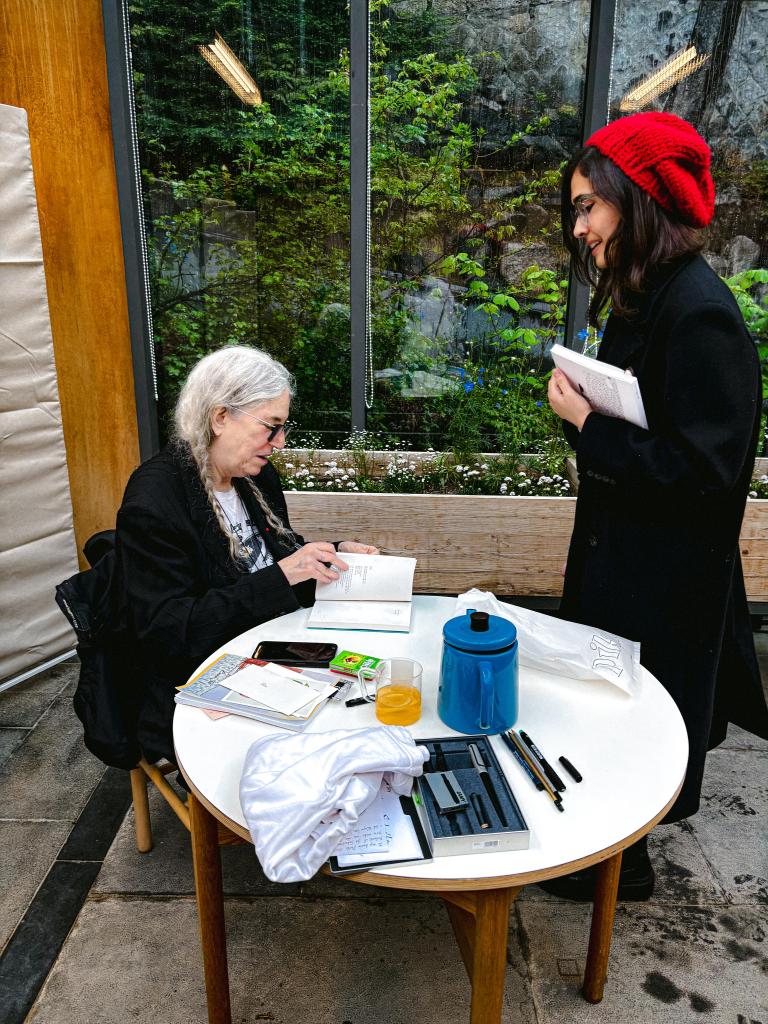
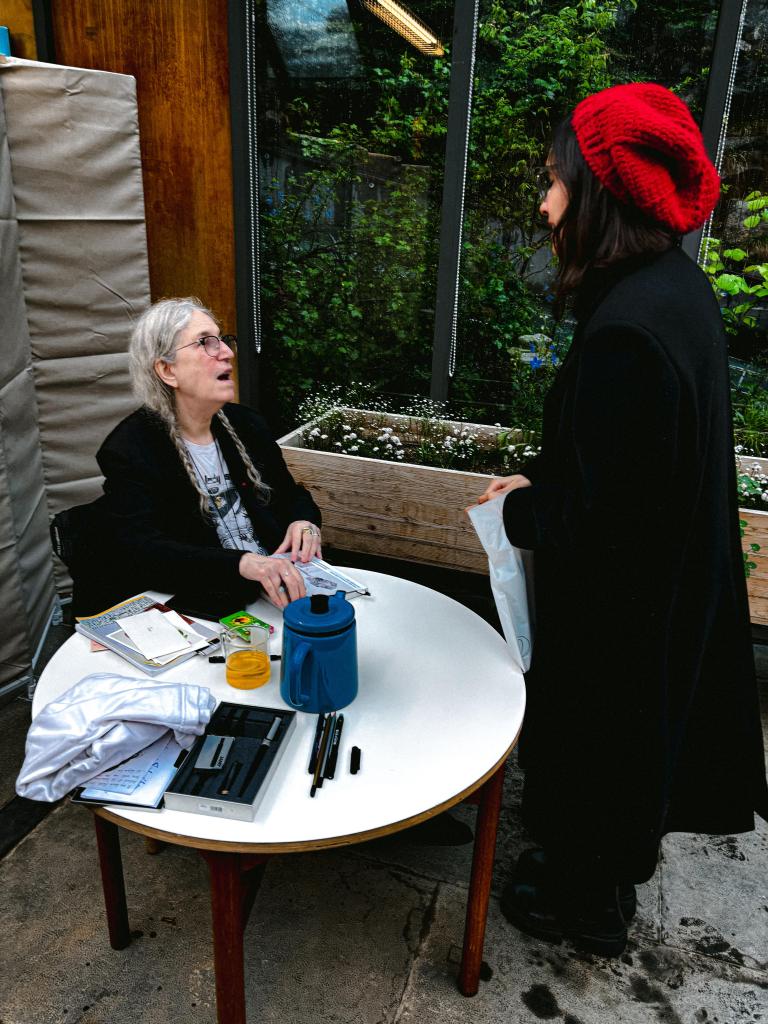
Instead of posting my favourite song from The Tortured Poets Department (the title track itself), I will record here my wonderful, unexpected encounter with Patti Smith earlier this year. Seoul, 19 April 2025.


The highlight of The Life of a Showgirl is the very first song: “The Fate of Ophelia” is likeable and deliciously uplifting. Where the lyrics sacrifice emotional complexity for the sake of the allegory, the allusion paints a touching picture of redemption — “you saved me from the fate of Ophelia.”  Like the first time I heard “invisible string,” I felt relieved and hopeful — for her, first, and for myself, second. There are other good moments: “Opalite” is bright and optimistic, and “Father Figure” accomplishes a lot through her rage, an instant classic. The title track, “Life of a Showgirl,” could use a stronger resolution and a bit less cliché (here goes a nod to “Clara Bow”) but it is familiar and inviting, Sabrina Carpenter’s voice making it all the more heart-warming. The rest sounds like a collection of drafts, striking melodic hooks wasted on questionable lyrics with clumsy phrasing, the dissonances aggravated by the expectations she has nurtured over the years. Above all, the whole lacked an anchor. “Eldest Daughter,” the famed track 5 of this release, was, quite frankly, a mistake: no sense of direction, distasteful lyrics with misused satire, the overall depth of a saucer.

I was going to use this space to share a great video essay about the album but then I realised just sharing “The Fate of Ophelia” would be more fun.

Public response to the album has been unavoidable on my side of the internet, ranging from very underwhelmed to utterly disappointed (if we leave out the displays of passionate hate). The volume of discourse surrounding everything Taylor Swift does is maddening, but this deluge of think-pieces is what she worked for — her career was built on bringing everyone onboard her extremely vulnerable, overly detailed, highly ambitious brand of stardom. But, for an album meant to shed light on the other side of her fame, Showgirl sounds like yet another performance (and not on purpose). I don’t think the issue is that she had nothing to say, as some have suggested, but it doesn’t feel like she was ready to do so. Perhaps the time between releases was too short, she was burnt out from the touring, with a clouded judgement (ever for a light-hearted concept). I can excuse my parasocial friend Taylor Swift for being unsure of where she stands during a happy season, but I draw the line as a fan and fellow writer who expects better.

Still, some of her self-awareness seems to align with the material; speaking to Jimmy Fallon, she said this is one of her most well-matched eras, considering where she was when she wrote the songs, and where she is now, upon releasing them. I think back to how I felt about TTPD, and the meaning of her looking back at turbulent times from within the promise of restitution. It makes sense that she sounds all over the place now, if she was used to releasing albums with more emotional distance from the season she was trying to capture. Maybe some of the dissonance would have been avoided if the promo campaign had been less pretentious, but her marketing strategies also seem misguided, as if she can’t tell certain things have changed — even the expectations of her faithful fanbase. Such short-sightedness, I have learned, is a sign that one might be trying to overcompensate; her eagerness to atone for the years of melancholia might have missed the aspirational component of singing about her present happiness. There isn’t much in the music that makes me want to go outside and fall in love as well.

At 1:18, she says “This has just been, like, I think the most well-matched era, in terms of where my life was, when I wrote it, and then where I am now, when it’s out in the world.”


Sifting through the lack of clarity in The Life of a Showgirl made me think of my own writing of the last few years, and the reasons why I have struggled to talk about one of the most eventful seasons of my life.

The simple explanation is that nothing I have written in the last two years or so has truly satisfied my vision, and the standards I set for it. The complicated part is how the vision and the standards came to be. My brand of creative crisis isn’t me staring at a blank page; I could still write paragraphs by the dozens, but they rarely amounted to anything I wanted to let others read. To hope to get out, I had to decide whether my writing was falling short because I needed to work harder, or because I needed to move the benchmark (“a little bit of both” is not enough). Underlying all of it, the hope I entertained, of redeeming such a disastrous season through writing — to make sense of my current state, to convince myself that my path was still the life I believed in, to feel once again proud of what I considered to be my calling. I was eager to prove something, to myself and to others, but the reality of what I had to offer was at odds with what I wanted to accomplish. Back then, I didn’t really believe in myself at all, or in the life I had chosen to live. Right now, I still don’t.

The most enduring aspect has been my disillusionment with the limits of storytelling — an unfamiliar experience, as someone who had always appreciated the semantic horizons of language. I started to hate the feeling of rationalising a difficult season into a more optimistic outlook, or appealing to the interconnectedness of everything to count my blessings. My therapist used to propose that I should relish the freedom to interpret things and bend the narrative to my liking. Instead, I have been angry, because no amount of reframing my losses and failures will grant me power over the overall state of my life, and other people’s freedom to nurture opinions about me that I have not sanctioned. Control, control, control, each new draft increasing my desire of owning up to every failure, rejection and loss of the last few years.
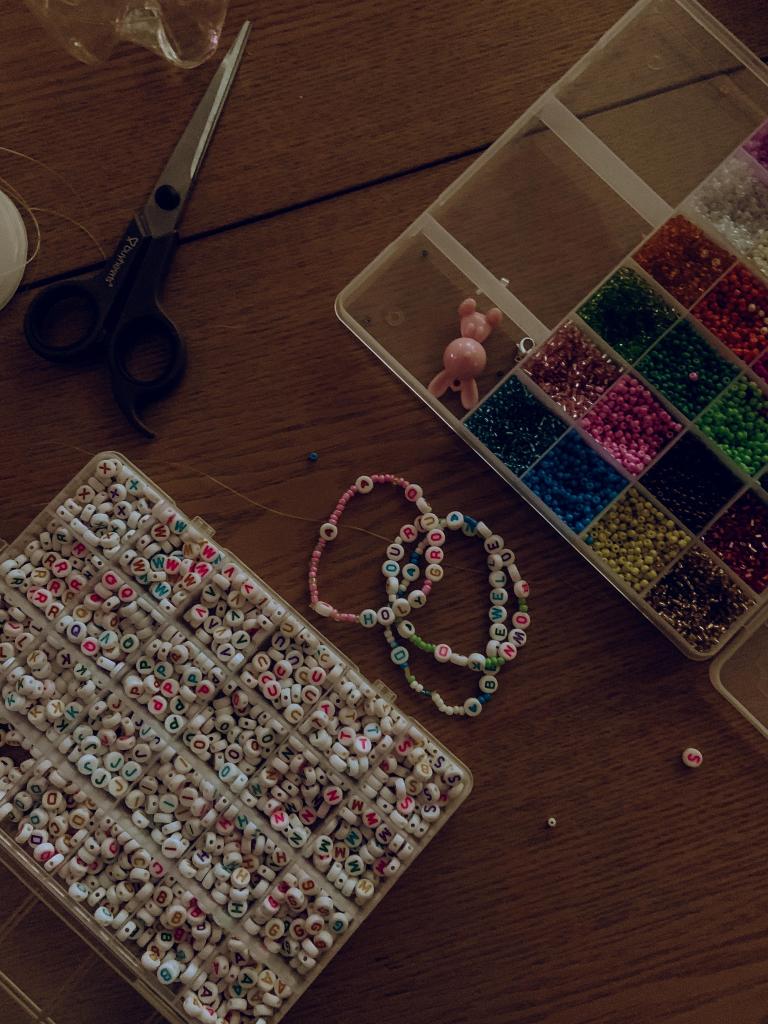
I was busy all the time for the most of 2023 and 2024, but I made the time to attend this special listening party for 1989 (Taylor’s Version), organised by the Taylor Swift club at KAIST. Some of my friends couldn’t come, so I made them all friendship bracelets. My outfit was inspired by “Welcome to New York.” Daejeon, October 2023.

Things have been much better for a couple of months now, in miraculous ways — the kind of thing that could have made me believe once again that I am still tied to the invisible string. I have resisted the urge to grab the streak of good outcomes and weave them into a fake picture of hope, an excuse to express the relief of feeling a bit more in control of the narrative. To feel happy again, after being miserable for a long time, is an unsettling feeling, full of cracks to be watched closely. Nothing I have accomplished has lessened the burden of my insufficiency, or snapped me out of feeling worthless and rightfully shamed into silence. I am still losing sleep over other things, new things. Here, I must uphold my standards: neither my feelings nor my openness mean anything to others unless they achieve something, as a result of my craft. As long as I am writing to convince myself of something, I am not accessing the heart of the matter, and it won’t be good enough. The issue lies somewhere else, and I must keep looking.


Amongst the many drafts and actual publications of this period, a few things did get quite close to the writing I was looking for. On the Raven Post, every single piece posted since September 2023 has been some sort of response to my creative crisis (a paradox, and a very wordy one, if we are being honest). That includes “madness and sorrow“, about my grandma’s death — something I wrote over the course of a year, weaving in traces of the self-absorbedness of anxiety, and the negative sides of the interconnectedness of everything. My absolute favourite one is “Reduce, Reuse, Recycle: How to be Disposable,” originally posted on the sappy sallows. Also for that blog, I wrote “at a crossroads,” a (rather) short account of how my emotional, creative and professional struggles intertwined. Lastly, “at-a-distance,” the longest, broadest and most ambitious attempt I have made so far, of combining theory and experience, messy but full of potential (also, ironically, contains an unexpected mention of Taylor Swift).

Before the drought caught onto my Substack, I did put together a few things of which I am proud. “Chasing Ideal Types” showed how my philosophical and sociological perspectives cut through my experiences, and helped me process a few rejections. “Like a Polaroid” captured different facets of the reasons why I have been struggling to write, with more details and room to wander than this present essay allows. In “Nurtured by Ravens,” my favourite one, I compiled excerpts from things I wrote about my breakup — specifically musings on the interconnectedness of everything, and how it had both blessed me and failed me. To a certain extent, finishing and publishing each of them did make me feel more content with myself and the state of my life, even if for a very short amount of time.

I also experimented with other ways of expressing my ideas, and both Art and the Social Sciences served me a bit during this time. You can read more about the projects in these images here.


My endless sympathy for Taylor Swift might pierce a hole through my credibility, but I am still under the impression that the two of us are walking a similar journey, even though the specifics of our problems are completely different — she is the biggest star in the world, smashing records and preparing to get married, I am the one who has to worry about affording groceries every month. But celebrities are at their best when, to any extent, they serve as a plot device to help common people make sense of their lives. The mirrorball has once again reflected myself back to me, and I was happy to respond. At the same time, for now, the way she sees herself in the world is not the reference I want to entertain. As a fan and fellow writer, I retain the right to think she failed to be completely honest with this new release. I still wear my friendship bracelet everywhere I go, not so much for her, but for the world of other things that it means to me: a reminder of everything I did to honour my girlhood, and to keep living with the same heart.

As for my writer’s block (or whatever we may call my semantic crisis), I believe it will be a while before I put this season behind me. Things will take their time anyway (including this essay, published almost two weeks later than planned); I have never been patient, but I learned to be understanding. The older I get, some of my problems seem to be the necessary questions of being myself. Maybe my struggles with meaning and control won’t ever go away. I am still wrestling with God every day, cradling the thought that I might eventually snatch some sovereignty from His hands, if I try really hard. The only hope for a control freak is to relent a bit; if I cannot do it for my peace of mind, I may do it because I need the type of honesty required to admit defeat, in order to hone my craft, and honour my calling. I believed an essay could redeem the hard times because I believed in the significance of the task of writing. Even if I never accomplish the exact magnum opus I envisioned, I will keep trying to accomplish something.

Many thanks to Ashley Chong, my trusted editor, and to my friends with whom I spent almost 200h going back and forth about this album (and who also took the time to read through the early drafts): Gésily, Bruna, Gabriela, Rayane, Esther, Luiza, and my sister Julia.
mikrokosmos // daydream (2019)

Written in June 2019, published with minor edits. Inspired by the song Mikrokosmos.

I had a dream yesterday, I was climbing up the stairs of a lighthouse. It was dark, but it wasn’t cold. I couldn’t tell at first if it was real, or just a delusion, but, still, I went all the way, up until that point where it was just the wind against my face. My eyes could see the open sea, reflecting the darkness of the star-studded night skies, waves crashing over and over the infiniteness of secrets. I turned my back on the moon, and the stars, and the lights of the lighthouse, to face my lifetime fear of the unknown, and to face you, there all along. I wish I had taken a photograph; a single frame of you, leaning over the railings, turning around to watch me, watching you and the sea. I know that night pictures can seldom capture the magic of the moment we seek to freeze, but your ghostly shape against a pitch-black scenario would be enough to tell this story.

We have always been so cheesy, waking up before the sunrise, staying up after midnight, to tell each other myths about the constellations. Before I met you, I used to reserve these moments for me, because, in real life, they are never as beautiful as in the movies. The first time I ever asked someone to come watch the sunset, I was bored by their boredness; but you asked me to count the colours of the clouds. I was confused, I could swear I would have told that myself, but you said it first. For a minute there, I thought you were just a fiction of me, outside my body. “Maybe this is the daydream”, I guessed, but maybe we just watched the same movies growing up. Life can be that funny, too, I just didn’t know it, back then.

I can’t remember every sunrise and sunset, but, everytime I look at you, it feels like I do. I suppose that’s the reason any simple picture could tell this story so well; you’ve always been there, whatever the situation, whether in the background, or taking over the whole frame. I know we don’t tell our feelings very often these days, because we’re old enough to remember all the stuff that’s been said before, but I still talk about you every day, in my mind. And, every time we come together, for a meal, or business, or just an unimportant conversation, I go back to the sunrises, and sunsets, because we’re still the same kids, but we’ve grown up a little and now we do overtime almost everyday, past 8 pm.

I daydreamed yesterday, but I didn’t realise it was just a fragment of my imagination until the night skies and the sea melted into the colours of walls, desks, and curtains. Remember how I could see the world in allegories? I still do, I just don’t talk about it anymore. I see so many realities coexisting at the same time, and sometimes I can’t even tell which one is real, and which one is just a picture in my head. Right now, I swear I can see through these brick walls, to watch the big dark sea from the top of the lighthouse, as if I could turn my back at any given time just to see how it lights the whole room, from an alternative dimension. 

Even though this town is too bright for us to see the stars, last night we agreed to watch the night skies. We met later than expected, in your own office, because it’s five floors closer to Heaven than mine. I had my bag, so that I could go straight home, but you would still have work to do, and we both know it isn’t fair, but we both do it, anyway. You pulled the curtains apart, and sat on the floor to wait—in this reality, there are no railings to see the sea, just big glass windows facing the streets. I could still take a picture, though, when you turned your head to face me, because this one tells the story, too; just a frame of your profile against those city lights, that shine much brighter than the distant stars, and piss you off enough to rant about it all night long. Remember when we used to daydream about flying in outer space, touching celestial bodies as if they were just hanging from the ceiling, a palpable reflection of Holy light? I could draw a picture of that in my head as well.

I know you’ve been too busy every day of every month of every past year since we grew up, so little did you know that I’d been watching the night skies every day on my own, since we got too old to stop to see the sunset. I’m sorry if I never called you to come, but I know that you hate how the next-door building blocks so much of our view. We lean closer to the glass, to catch a glimpse of the upper Heavens, but I spy something with my little eye. Have I told you that I still see the world in allegories? I just don’t talk about it anymore.

If you can, imagine with me that every light on across the city is like a twinkling star, like the street lights that look like constellations, when you watch the world from an airplane at night. Remember when we first stepped into each other’s worlds, the moment we crossed the point of no return? Everyday we worked hard to grow up decent, and dreaming, and I just knew you could shine so bright, even with my eyes closed. And we mean so much to each other, but there’s always a bigger world to realise, there’s always a much bigger picture that we can draw, if we zoom out just a little bit and get caught in the hundreds and thousands and millions of billions of small galaxies that we see everyday, even though we might never see them up close.

There are stars that shine bright behind every window that we see now. Sometimes, I daydream about flying in their outer space, touching their bright golden faces, seeing how they reflect Holy light, and they captivate me so deeply that I don’t even want to come down. So many windows I’ll never get to open, so many lighthouses I’ll never get to climb, but, still, I can’t help but wonder what colour their walls are painted, and how tall or short I’d look next to their railings. If they do overtime, or if they bring their work home. If they’re happy or sad, if they’re dying of hunger, or loneliness, and if I could ever do something to help. If they ever look outside their window, and wonder if someone, somewhere, is wondering too. 

Sometimes I’m amazed by how big this world is, and sometimes I’m just scared, because I’m so small. But, if you could just hold my hand now, I’d remember that, out of all the allegories in my head, this is real, we are alive, somewhere, being someone, walking down a path carved out just for us. We are one each, in 7 billion ones, but we are here, and we share this planet, and we call it home. I hope you can see right now how beautiful this is, too, but nowhere near as beautiful as you. I love our little lighthouse, but I also love this office floor, and every other place we can meet up to talk about the skies or the sunrise— even if it’s just in my head. Everytime I sat down to watch the constellations of city lights, I realised we were never watching the stars, we were watching each other. And maybe that’s the reason why this night looks so beautiful—not because of the pitch-black skies we see lurking behind the buildings, but because of you, and me, and all the people we can daydream about, even if we never ever meet.

Photo by Thong Vo on Unsplash

useless mess (sappy sallows)

Originally published on sappy sallows (12 Dec 2023).

My friend Cyan and I met as we both experienced a personal loss. We decided to get together to produce some work that would help us find some sense of purpose in the haze of feeling like a loser. Not an autobiographical account of what happened to us as we tried to figure out what we wanted to do, but a self-analysis, in the best style of reflexive social scientists, to account for all the ways that what happened to us affected our ideas about the world and our place in it (as much as our self-awareness allowed).

I am not a Sociologist by degree but I care about the idea of being able to tell others I am a Social Scientist by my post-degree. I care about calling things by their name, giving them a title, in a way that makes them categorisable. Once, during an ice-breaking game, I was asked to describe myself as a machine. I said I was a BERT model; at the heart, I’m nothing but a classifier. Just a fuzzy identity, trying to assert my footing by telling others what to expect from me, and expecting others to tell me what to expect from them, with little ambiguity, with as little anxiety of uncertainty as possible.


My friend Cyan and I now have a new collaborator in our project and his work is about accepting our uselessness. I hate the thought of it, so maybe I should sit with this discomfort for a bit. Here I am, losing sleep and hurting my body with horrible habits just so that I can do the work of three semesters in one, just because I want to overcompensate for what I lost, just because I want to prove to myself that I am not a loser. I am losing a lot of things in order to prove to myself and to others that I am not a loser, even though I did lose something.

How useless will that be, in a year or two? Maybe one day I will rationalise my way into thinking that this has been an amazingly useful season. I can feel the seeds of that thought popping and spreading all throughout my insides, branching out into my limbs and getting ready to come out through my holes. The leaves, the flower, the fruit, I will cry them out and sweat them out and voice them out and puke them out for as long as they keep growing. Anything can be useful if you think very small, if you only think about yourself and a small handful of others. But life isn’t small.


My new friend Sunghoon is interested in how the experience of nature can help us recover the realisation of our own insignificance, in a comforting way. I have fallen out of touch with both the comfort and the anxiety of most natural things around me, outside the boundaries of the metaphors that I use to order this gelatinous space of flows, but I can still relate to the sky when I look up at night, not as a mind, but as a body. My skin shivers and my nerves buzz like a swarm of bees, like a swarm of drones, the more and the harder I try to picture how big the celestial bodies are, and how far away from me they are.

I am dust, with no use except to be cast out, to be thrown away. I am working hard for things that will never matter in the grand scheme of things. And, yet, I exist. And I am aware of that. And my body and mind are seeking control, in this uncertain world, to find some peace, to manage to survive through the hell of being too small to do anything. Addicted to making meanings out of things because I bear the burden of existing, and I wonder why, and I wonder how, and I wonder what, and for how long, and wishful thinking is the best I can do, when all hope is gone. How strange it is, to be anything at all.

Photo by Nathan Anderson on Unsplash

madness and sorrow

…”I am not mad; too well, too well I feel
“The different plague of each calamity”
Constance in King John, Act III, Scene 4

My paternal grandmother passed away last year, on the first of July. My father’s mother, my last grandparent. She took to her grave whatever little energy I had to make it through the rest of 2024. The last time I saw her was two years before, when we said goodbye, before I came to Korea. We took a picture together, which I liked so much at the time, and which I dislike a bit now, because the lighting was not very flattering. But I was hugging her, and it’s one of our sweetest photos. As we drove away, I took a video of her outside the house, making finger hearts and waving goodbye.

I had a call with dad on the weekend after her passing. He told me about the three weeks that she spent under intensive care. It was a Monday night when my aunt called him, and he went running to their house, because grandma had passed out. He had done that several times; she would often run out of breath in the middle of the night, sometimes due to asthma, sometimes due to anxiety. But, this time, it was different, that time. Dad said he knew she wouldn’t recover the moment he got there, and saw her lying on the floor, almost lifeless, as the emergency workers tried to bring her back.

The last time they met was on Sunday, the day before. After my sister and I moved out, visiting grandma helped my parents fill their weekends. He went alone that time; she was in the kitchen, as usual, cooking something delicious (as usual). They talked about a bunch of small things, he nibbled on whatever she was preparing. She was running out of supplements, so he told her he would make sure to buy a new box later that week. On the way home, he passed by a drugstore, and decided to stop and get the supplements, because he wanted her to know that he meant it, when he said he would buy them; he wanted her to know that he really cared. Unbeknownst to all, that was their farewell: a small thoughtful gesture.

Grandma and I texted almost every day. Our last interaction was also on Sunday, the day before she stopped breathing in the middle of the night. It was midnight in Korea, around noon in Brazil. I was exhausted from the week and went to bed at 8, woke up around 11.45, and decided to go for a walk. My head was full of things that I needed to sort out. I wanted to speak with someone, but he was already asleep. I texted another friend, then I replied to my grandma’s “good morning” message. She couldn’t text well so she mostly sent voice notes, and a swarm of stickers, and I always replied back in the same fashion. That night, I only sent one, because I was too distressed. I ended up walking to meet my friend, cried a lot about what was bothering me, and she had to stay over, because I couldn’t stop crying.

Many alternative scenarios run through my mind, as I think about that night. I wonder what could have been different. Maybe grandma and I would have talked more, if I hadn’t been so distracted by the conversation I wanted to have with someone. But maybe I wouldn’t have even replied to her text until it was too late, if I hadn’t decided to leave for a walk. What if he had been up, what if my friend had been asleep. If I wasn’t so tired, from having multiple friends visiting that week. If I hadn’t gone to Austria, where I met those friends. If I hadn’t dated the guy who told me about that project in Austria. If I had stayed home that Thursday night in 2023. If I had passed that scholarship interview in 2022, and gone to a different Master’s program, instead of the one to which I applied the month after. If I hadn’t removed my wisdom tooth right before the interview that I failed. If I hadn’t decided to give this idea of going to graduate school in Korea a shot.

I am an overthinker and I cannot afford to have many regrets. The solution is to always do everything that I feel like I should do, living to the fullest of my heart and conscience at any given time. I trust my ability to put all of my money where my mouth is; some might say that not everything we do requires 100% of us, but I disagree. I am hyperaware of how the small things that happen, the small choices that we make, become the pipes and prisms of much bigger processes and events. Be it the vice of writers, the obsession with connecting parts and chains of events, or my flawed sociological imagination, lost in the predicting of outcomes. In both cases, I am always trying to make sense of the narrative. And this is a dangerous habit, the source of multiple cognitive biases, the reason I can’t afford to go without therapy, but it is also the reason I know that I meant that little sticker I sent to my grandma, with all my heart. I always do.


There is a text that has been occupying my thoughts for months now. I haven’t written it yet, but I have been trying to, for a while. It is loosely about how I feel about life. This is pathetically broad and the reason why it remains unwritten. It feels daunting because it is something I want to write solely to justify myself before the world. I can never get the content right because, at different times, I feel differently about what parts of myself are the most disjointed, most unjustifiable and unacceptable (by me, first, then by others). At the same time, I suspect there is some loose connecting thread linking all of these struggles, hence why I still think about it as One Text that I shall write, one day. Soon, hopefully.


I consider myself lucky whenever I am reminded that living is as much of a beautiful privilege as it is a heavy burden, and that our lack of control over things is the norm, not the exception. It doesn’t always hit as heavily as it does when someone dies, but there are other smaller deaths along the way. My obsession with narratives is challenged by all the ways that life turns out to be anti-climactic. Seeing talented young people die in preventable accidents, seeing elders who aged into poverty and loneliness after a lifetime of love, service and hard work. So many efforts that went unrewarded, unacknowledged, so much love that might as well have gone to waste. There is no way to account for all of the loose ends in the tapestry of living. Maybe that is why I have never hated stories as much as I do now; no amount of perspective, reframing or starting over can account for where I stand.

But I prayed for such a life. A few years ago, when I dedicated my youth to the service of God, I asked Him to freely take me or leave me wherever He pleased, however suited His plans. This meant that my own plans were second to whatever He needed me to do first. It was an open invitation to delays, detours and other inconveniences in the sequence of events I had envisioned for myself. The prayer sounds great when you tell people about it, something to boast abouthow selflessly you have given yourself away to the Kingdom of God! It is not so good when events begin to unfold, and you realise you are not fit for the measure of faith you are expected to deploy, to endure season after season stuck where you hadn’t hoped to be. My hopes are desires aren’t geared towards eternity, not as much as I thought they were.

Not all days feel like a failure, though. I am convinced I feel it more often than most, that things were exactly as they were supposed to be—not as a way to rationalise the hurt of not getting what I wanted, but really experiencing that small window of serendipity in which the specific twists and turns that made something possible are so intricate, that it couldn’t be anything other than divine. This can be as little as having a heartfelt conversation with a friend, and realising that moment wouldn’t have happened if you weren’t unemployed (as I am now). In the terms of machine intelligence, this is a small victory of all the reprogramming effort I have taken up. Optimism doesn’t come naturally to me, so I had to build the frame myself. But it is a struggle, and a habit, and I feel less than perseverant these days.

The spiral of regret that followed after my grandmother’s death stemmed from the feeling that I had been counted as unworthy of a proper goodbye, because I was too distracted with unimportant things. On her last day on earth, when she reached out to wish me a good Sunday, my mind was filled with regret from something else, something avoidable, a stupid hurt that I had brought upon myself. Like I was being punished for fixating on my broken heart, something which hardly anyone else thought worthy of so much thinking. This is a downside of certain religious ways of seeing the world—immediately assigning things as blessings or curses, and then just bending the narrative as events unfold, and new consequences come about. Every single thing that went wrong, or not as I expected, in the last two years or so, has felt like a penitence.

Overthinking feeds off cognitive dissonances, sustaining the belief that any turmoil—present, past or future—can be addressed with the right thinking process. Guilt keeps the gears spinning; a misplaced sense of responsibility goes a long way in convincing someone they occupy an extremely powerful and important position, in the grand scheme of related facts and events in a chain reaction. But what did I expect to feel, after the death of a loved one? Blaming myself is one of the natural reactions; madness goes with sorrow where reasons fail to follow.


There is an ideal version of me that is unmoved by circumstances, a machine who never fails to predict what is the best, most optimal micro-decision to be made at all times. I will never measure up because I am a poet, and I was born to play the fool. I miscalculate the costs, pay the full price, reap both the bitter and the sweet fruit. I bear the burden of existing, which is doing things and leaving traces. Maybe there is a deeper, higher aspiration, lurking beneath the things I say when I resent being alive the most, which is to have never existed at all. No body, no sins, no pleasure, no rewards, and no burdens. The ultimate control measure.


Funnily enough, on the other side of all the what-ifs that I can pull out of the pain of grandma’s passing, there a little counter-fact. I was supposed to be going back to Brazil around that time, maybe in late August or mid-September, but I had to delay my graduation—because of the semester I spent going to Austria, because of the chain of events that led to my broken heart. If I hadn’t, she would have passed right before we were scheduled to reunite. I have enough logical thinking and honesty left in me to agree that this would have been somehow worse, all things considered. Assigning a label of blessing or curse to these events is not the point I am trying to make, but this small thought, amidst the sea of possible pathways in my head, did help me sleep at night. A functioning reminder of how little perspective I am capable of conjuring. Peace is not a natural response; it is giving up, and it begets something to be given up, first.


This has been a season of losses, smaller ones, but coming for the same pressure points nonetheless—guilt, regret, resentment. Days when the joy of the small pleasures doesn’t linger. I am coming to terms with my humanity again, in different ways. It’s been nine months since grandma’s passing. I made peace with the goodbye I couldn’t say. Reason is invariably post facto; my mind has cleared a bit, and things turn out to be very simple, as they are. Grandma’s time came, and now she is gone, and this has nothing to do with me and what I think I can control. And I miss her terribly, and I will do so for a long time. It will eventually hurt less, but other things will come and hurt me just the same or worse. Then I will die one day as well. Regardless of the narratives I have told myself about living, there is no different end to the story. Rest in peace, grandma. I am coming to meet you, too.

Photo by Grant Whitty on Unsplash

reduce, reuse, recycle: how to be disposable (sappy sallows)

Originally published sappy sallows (22 Dec 2023).

I was reading “Switchings under uncertainty: The coming and becoming of meanings” (Godart & White, 2010) to write something for my manuscript and then I decided to write something else.

My greatest existential terror is insufficiency. I’ve always felt like I had the ability to do a lot, and to do well, but not well enough to be great by the standards of greatness. Like a person who scores 81 when the cut to get an A is 82. I know a lot of people think I’m great, but I know there’s a lot more people in the world who wouldn’t think the same. And that’s horrible, because it means that there is an uncertainty level — an incomputable risk — that people that I meet will think I’m below their standards, be it because of my gender, my nationality, the way I look, the way I speak, what ideas I share, how much money I have, what I wear, what I believe in, what I have done with my life so far, and how many pages I can fill with this information.

At times, I could have simply avoided being places with those who could see through my limitations, and could point them out. The trick of being scared of being insufficient is the craving for being great, for being more-than-enough, for being so much that no one can ever say otherwise. If we’re being honest, someone’s low self-esteem is an epiphenomenon of their inflated sense of self, aspiring to be more than they were made out to be, by their birthplace, their birthparents, their birth rights. I’ve seen people surround themselves with people they thought inferior to them, and I’ve seen people crushing to the point of killing those they thought superior to them, if they had the power to inflict that kind of death.

Arrogance that is easily mistaken for humility is the greatest cognitive dissonance of our times, because we are all drowning in the anxiety of being left behind by a world with standards that we cannot meet, but we want to, because we cannot give up the illusory promises we have been made. I starve my body to fit into a smaller dress because I want the assurance of happiness that comes with skinny beauty. I destroy my body and deprive my mind of its much-needed rest because I am blinded by the promise of hard work that pays off, even as I rationalise my commitment to capitalistic ideals into commitment to myself and what I believe in — that I ought to do my best, in order to sleep at night (even if I don’t sleep at all in the process).

The discomfort of cognitive dissonances also keeps me up at night, and, truth be told, I am so self-aware that it makes me angry. A few weeks ago, after several painful weeks of overthinking and crying and dragging myself through the days, trying to understand what was wrong with me, I arrived at the same realisation I had had on the day things started going wrong; I had known the answer all along, but I had to, first, exhaust all the other possible explanations, to convince myself in a way that would allow me to close that door for good (or something like that). I have, indeed, opened the door to make peace with my own insufficiency. But I’m still stuck, standing by the door, the same place I was when I grabbed the doorknob and pulled it. I am paralysed because I am too scared to confront the truth in a way that forces me to find some sort of resolution. Because I’m insufficient by several standards, and I’m weak and I’m also one of billions and, statistically speaking, there will always be way, waaaay more people to whom I won’t mean anything, than people to whom I will mean something.

To mean something to someone, such a stupid-sounding aspiration, but one that we cannot live without, because meaning-making is the only thing we have, as humans, on earth. And to mean something to someone means that someone will care about me, enough for me not to disappear, even as I feel as if I’m fading away. But what security is there is meaning something to someone, if everyone is a larger or smaller version of the same mess I am made of? As much as I have let others down, I have been let down, and the reason I am terrified and I cry to sleep at times these days is because I was, once again, counted as being worthy of being thrown away. Once again, the insufficiency I am not ready to come to terms with came back to hit me, and my inherent, statistical disposability reminded me the odds will always be against me. And every attempt at controlling the outcomes will be inherently, statistically more likely to be unsuccessful than the contrary.

And the universality of the experience doesn’t help that much when it hurts. To know that everyone else out there — including the ones who inflict the pain and discomfort I experience — are also trying to establish their footing, and resolve their existential anxiety, and sleep well at night in the arms of something other than the absolute historical contingency of facts. What I realised is that nothing is ever absolutely meaningless, but not every meaningful thing means the same, to the same extent. In fact, we might even not care at all about what something means, or even how useful it can be, if the possibilities are not clear, tacit, tangible, desirable, or even reasonable, or if there isn’t enough empirical evidence to verify that it means something to me. What I’m trying to say is that something can be meaningful and still be disposable, because it doesn’t fit, because it doesn’t serve us right now, because it’s meant to be thrown away anyway, like a plastic spork in a box of takeout fried rice, or even like, oh God, like a pair of disposable rubber gloves, whose disposability literally saves lives in the right context.

And what is the opposite of disposable? Reusable doesn’t sound that good to go with meaningful and useful, but I don’t feel ready to think about that yet. There are multiple other layers to consider. But I do think it’s interesting that things can be meaningful, and useful, and still worthy of going into the bin. Like candy wrap, the moment you open it, and you finally get the chocolate you coveted. You can’t eat the paper. You shouldn’t eat the damn thing. So, yes, sometimes we’re just the paper hiding something better, more important, more significant, that requires me to get out of the way for others to get their hands on. Is it that absurd? Sometimes, it feels like such. It feels unfair that I should be measured up against a pair of wooden chopsticks to say if it’s good or not that someone decided to throw me away. I would say i’s just a technicality, at best, because it all comes down to how we play with the meanings, and if we feel enabled to switch them towards our favour, when it’s convenient to do so.

Even so, right now, I still feel pretty much like I’m stuck in the trash bin of someone’s life, and I need to make my way out of it, if I want to see things more clearly.

Featured image by Julio Lopez on Unsplash

how to be a loser — Center for Ambitious Failure, Essay contest

This essay won the Excellence Award in the Category “Lesson” of the 2024 KAISTian Failure Story Essay Contest, by the Center for Ambitious Failure (CAF), a research centre of KAIST that is very dear to me.

2 March 2023. It’s my 28th birthday, the first one I celebrated in Korea since I moved from Brazil, on the other side of the world. I went to a nice restaurant, with my labmates and Professor. The girl sitting next to me was a feminist researcher, whom I had known for about a week, at that point, and we both felt that we would become each other’s best friend. We had tteokbokki and soju, they sang “Happy Birthday” to me, and I blew out candles on an ice cream cake, because I cannot eat gluten. It was colder than I expected, for early March. We would soon go out to find another bar, for a second round. We all had appointments the next day, but we stayed out past 3 in the morning, drinking and chatting. 

A year before, I spent my 27th birthday at home, with my parents and sister. We went to the movies to watch “The Batman,” and I had caramel popcorn (which I adore). We are the “birthday party” type of family, but we couldn’t do a lot that time. I was going through a busy season, preparing for what I assumed to be my last application for grad school in Korea, for a highly selective government scholarship. To give this opportunity a fair try, I devoted all of my energy to do well. The entire year before, since the previous birthday, had been dedicated to working on improving my qualifications. Every waking hour was spent on improving my Korean skills, networking with researchers (in spite of the restrictions of the pandemic), considering prospects and working to pay for the language classes and expensive documents I needed to prepare. 

After returning from the movies with my family, I stayed up all night—once I printed and validated multiple copies of all paperwork, I had to neatly label every page, order and assign them to different packages, to ship them safely. The day after, I sent a box with four thick envelopes to the Korean Embassy, and then, around three weeks later, I got an email saying I had been selected for the next phase. I was very happy, but not too surprised—that was the goal of all the hard work leading up to that moment, right? My face was puffy on the day of my online interview, from removing two wisdom teeth the week before. With the help of my language tutor, I prepared a speech in Korean, which I did not use, and I left the Zoom call feeling a bit disappointed by the questions they asked, about things I thought I had explained well in my application statements. Another participant told me she had seen my qualifications, and she was sure I was in. But, when we heard back by the end of the week, I was not on the list. They had not selected me. 

Upon failing that application, I realised I had not prepared myself well for the possibility of being unsuccessful. Perhaps because I wanted to feel confident in my hard work. But also, my life was going really well. Back when I decided to go all in for the scholarship, I thought to myself that, if I failed that round of applications, I would take it as a sign to focus on other things, and give up pursuing further education. On the side, I had turned my gigs teaching English to adults into a thriving small business; my students were growing, and there was a long waitlist of people interested in studying with me. I had also just landed a dream position as a storytelling consultant for artists in a music label, where my experience studying how K-pop fans interact online and with their object of fandom was very valuable. By all means, I had plenty of reasons to feel like I was winning, and that not getting into grad school wasn’t the end of the world. 

Nonetheless, I felt like a loser. As a writer, I know that the difference between “barking up the wrong tree” and “not all those who wander are lost” is a matter of plot, but the story I was telling myself about my application was not accommodating the latest events. I couldn’t stop replaying my frustrating interview with the Embassy. At that point, I had been active as an independent scholar for almost three years, but the interviewers doubted I could get into the top program on my list, KAIST School of Science and Technology Policy, because I had an Architecture major. Maybe, I thought, they hadn’t read my application thoroughly, so they didn’t understand how much work I had done since finishing my Bachelor’s. Or maybe they just thought it wasn’t good or convincing enough. Either version of the story left me feeling bad—I was either wronged, or lacking. I got the news right before lunch, and I immediately called my therapist to request an urgent appointment. Our session was an hour of crying about how I felt like I was constantly setting myself up for disappointment. I can be optimistic when it comes to the end of all our hard work—it never goes to waste, even if the purpose changes. But, more than the loss, I was grieving the fact that what I wanted, and what I could get, seemed to be out of sync. It seemed that I was able to do well, and accomplish a lot, but not enough for my dreams. 

I had a close friend who had been granted the same scholarship I was applying for, and who helped me enormously during the whole process. Instead of adding to my self-pity party, she presented me with a list of options of what I could still do. Even though I had told myself I wouldn’t apply again if I failed, I had set a small condition to giving it another try—if the opportunity came up naturally, almost seamlessly. My friend told me I could still use the same documents and apply directly to the universities, instead of the embassy. It was a Friday afternoon in my hometown, early Saturday in Seoul, and she was helping me find what schools still had deadlines that I could meet, with the time that it would take for documents to arrive in Korea. Of my three original schools of choice, KAIST and Yeungnam were still doable (the other one, SEOULTECH, was not). I decided I had some energy left to spend another weekend poring over papers. And then—and I do not remember exactly why I did that—, it was after this conversation that I decided to take another look through the programs of the universities I was considering, and that was the first time I looked into the Graduate School of Culture Technology, less than 12 hours after I was rejected from my original application. 

My younger sister got home from work, and walked into my room, to see how I was doing. As she sat on the floor, I talked about how I had just found The Perfect Program to conduct the research that I wanted. My room was dark, with nothing but the soft glow of my computer screen, as I showed her the website of the Social Computing Lab. The homepage donned a tagline that got my heart racing—The Nonidentity of Society and Interaction. That was the kind of energy I had been looking for since I first became interested in my research topic, back in 2019. Finding that lab after a failure was making it seem like nothing else had worked out before because that was the right one. Around 1am that day, I emailed Professor Wonjae Lee; I sounded equal parts resolute and desperate—“A lengthy email isn’t the best way to contact prospective research supervisors, but I need more than two paragraphs to explain why an Architect is emailing you, and why we should work together.” 

When I woke up, my friend in Korea texted me to say we misunderstood the deadlines: KAIST was no longer accepting scholarship applicants. That threw cold water on my latest flicker of hope and I had to, once again, change the story I was telling myself about this whole process. Things were not over yet, I still had a chance to try—and one does not always get a new opportunity right after losing something. At that point, it was all very different from what I had envisioned, but I wouldn’t turn down a good chance just because it wasn’t the ideal scenario. The rest of the weekend was spent preparing documents for Yeungnam, and organising my feelings about what I was doing. The plan for Monday morning was to go validate new copies of my documents. Instead, I woke up early to an email waiting in my inbox; it was Professor Wonjae Lee, telling me he would be very happy to receive my application for the Social Computing Lab. 

As it turns out, KAIST was no longer receiving scholarship applicants, but they were still open to regular applications. But the deadline was very tight—I would have to put everything together in less than 72 hours, to ship my documents in time. My family made it a collective project; with their help, I pushed through until Wednesday, with little to no sleep. Out of what had seemed to be my last straw, I pulled two sets of applications, dispatched to Daegu and Daejeon. The stress lasted for a bit longer—UPS lost track of one of my packages, and delayed both of them, and I had to get lawyers involved to manage the situation. Yeungnam did not accept my documents, but KAIST did, even though they arrived almost a week after the deadline. And then I waited, and I put my heart into other things, and I got content enough with the multiple possibilities of life, so I could face the chance of another rejection with more grace. 

It was late June, 5 in the morning, when I read “Congratulations” on my phone screen, and learned that I had been admitted to KAIST for Fall 2022. Around two months after results came out, I boarded the first of two flights, from São Paulo to Seoul, with 75 kg of luggage, bright blue hair and the confident feeling that this was the way that things were supposed to be. I thought about the night when I first found my lab’s website, and how I was right—that nothing else had worked out before, because that was the right place for me. But this only makes sense because I am standing on the other side of this process: I have been wrong about timing before. Looking back at the couple of days between failing the scholarship, finding my lab, and then thinking KAIST was no longer receiving applications, before I found out they were, I don’t think the lesson is “just wait a bit and your dreams will come true” or “if you are sure about something, keep pushing” because these are misleading beliefs, not conducive to a an honest outlook of the possibility of failure. We don’t always get some deus ex machina unexpectedly changing our circumstances; more often than not, we just lose, and then we have to move on. 

At the beginning of this application process, I established that failing was supposed to be a sign to focus on other things, but I was not willing to accept the terms of the failure. I was not willing to accept myself as a loser, almost as if that was not a compulsory part of the decision to apply. It is unrealistic to expect a life of victories, even more to attach our meaning and validation to winning, when losing is inevitable, even in unjust ways — but it seems like we do it anyway. Even after getting accepted into CT, I still catch myself replaying the frustrating scholarship interview. I see that I regarded the application process more as personal validation of my intelligence and capacity, than a good chance to advance my plans and dreams. So, as much as I wouldn’t trade my current life for the scenario that didn’t work out, it has been hard to make peace with not being deemed “enough” for it. 

But lingering on what was lost, or what could have been, only keeps me from enjoying the possibilities ahead. With hindsight, I have been as happy getting what I wanted as living the surprise results of unexpected events. And my feelings towards things I desired, at one point or another, have changed a lot over the years. What frustration has repeatedly shown me is that a closed door isn’t the end of the road, even if it feels like that, for some time. Everyone will be a loser at some point; part of learning how to deal with it is accepting that not all opportunities are for me, and that is just how things go. Life is always changing, new possibilities are always coming up, and we cannot anticipate the new paths waiting on the other side of the most frustrating moments of loss. The story is still being written.

9 June, 2024. It is a Sunday morning, I am sitting at a convenience store, having breakfast with my best friend, a feminist researcher, and two other friends I met in Europe the year before, in a Summer School, which I joined with a classmate from Spring 2023. The guy sitting next to me asked me if I had to take a Korean language test to apply to KAIST, and I said no, but that I had taken it because I had applied for a scholarship first, but failed it. “But,” I said, “if I hadn’t failed that scholarship, I wouldn’t have come to CT, and I also couldn’t have applied to the Summer School, because I wouldn’t have really started my Master’s until Fall 2023.” “So this moment wouldn’t be happening right now if you hadn’t failed!” my friend said. This thought had crossed my mind many times, but that was the first time I heard it from someone else. She was right. We laughed about it, as we tried different protein bars, I taught them how to prepare the best convenience store latte, and then we went for a walk along the stream across my house, under the sizzling Sun of late Spring.

knock on wood

From the vault. Written in October 2022.
Based on a true story.

She had worked late and spent most of her Saturday trying to recover from the burden of doing overtime five times a week. She was highly ambitious, but very simple at heart, and content with as little as buying herself a new book, and something tasty for dinner. Even though she had never been to that particular library, making it hard to feel completely at home and familiar with the surroundings, the weather was nice and her spirits were high.

She made her way through the shelves until spotting titles about feminism. His eyes had been following her since the moment that she walked in. His poor eyesight made it difficult to see what books she was looking at, but he could take a fair guess, he supposed. There’s very little you can learn about someone from the books they look at, but most of the magic of sitting in a bookshop is the belief that you can. She looked pretty — but the world is filled with pretty girls. She also looked strong, or so he thought, and he wondered if that was because of the books he assumed she was looking at. He could see her profile and the way the tip of her nose made her eyeliner look sharper — or was it the other way round? 

He was an anxious guy with an inclination to FOBO — Fear Of The Better Option. Having wasted too much time overthinking all of his decisions, he developed the habit of outsourcing everything to the universe; instead of placing on himself the burden of thinking about anything at all, he would just write all the conceivable options on paper, and then follow the instructions of the one he picked with his eyes closed. It didn’t always seem right, but he was committed to this system. He took the small block of purple post-its inside his pockets and, staring at the tip of her nose from afar, wrote down all of the things he could do at that moment. He could go up to the girl and introduce himself, or ask about the book that she was reading, or wait by the door until she was about to leave, or wait by the cashier and join the payment line at the same time as her. He folded them neatly, to make sure he wouldn’t be able to tell them apart just by looking, and tossed them inside his pocket. 

After taking a deep breath and saying a prayer, he was ready to find out what would come next, so he closed his eyes. It was only for a second, just enough time to draw the results but, somehow, she was already gone when he opened them again. Being stared at made her very nervous. She fled the building, without the book, and went out to find a vegetarian bowl she could have for dinner. He stood up to see if he could catch her but he wasn’t sure that was the best option at the moment. Before he wrote a new set of possible pathways on his little purple post-its, she was already sitting and waiting for her order, thinking about the book she didn’t take and about the guy she didn’t speak to. On the way home, he played with the little fateful folded papers inside his pockets until the sweat and oil from his hands began to melt them away. They won’t ever see each other again.

Photo by Clay Banks on Unsplash.

chaos of inter-disciplines

This short essay was written on 12 January 2024, when I was in Linz, Austria, as a student of the IT:U x Ars Electronica Founding Lab. It was a contribution to the book “Starting a University”, recently released during the Ars Electronica Festival 2024. Student essays ended up not making the final cut of the book, but I liked this piece, so I decided to share it. There are no specific citations but I will list at the end the main references I employed as I wrote this. Special thanks to my trusted editor Ashley Chong for reviewing it before submission.

Inattentive watchers (and dishonest ones alike) can be quick to dismiss “interdisciplinarity” as a trendy buzzword that embellishes hefty grant proposals. The history of the creation of knowledge shows a different scenario — several disciplines, if not most of them, have started out of interstitiality1, some space in-between different practices of their time, which was slowly revealed as a site of difference, until boundaries were agreed upon. Nevertheless, this doesn’t mean that there aren’t semantic traps along the way. Interdisciplinarity, much like words such as “citizenship” or “freedom,” holds a type of universalist appeal, with enough multivalence and ambiguity to serve different purposes, according to the person who employs it, and wields it. These divergences are natural and expected, but they can also make or break a team’s ability to move forward together.

The Founding Lab, as a moment in time, and as an ongoing process, has been both a site of exploration, discovery and change, as well as the source of the type of reflection which separates things that ought to be reshaped from things that are better off nurtured as they are. Even though, as I write this, we still have a lot left to do before we wrap up the activities, I can already describe several important personal gains. In addition to joining a global network of innovative thinking, it has been the catalyst of decisive transformation in my process of transitioning fields as a graduate student. Thanks to this space, I was encouraged to dive deeper into the methodological questions that still challenge my ability to go beyond the thinking patterns of Architecture, to discover my place as a sociologist. On a higher level, the process of constant exchange with peers from both similar and different disciplinary backgrounds has been enlightening. It serves as a reminder that the boundaries defining disciplines aren’t as clear-cut as we might wish, and no field is entirely coherent or uniform. 

Experience tells us that there are productive ways of collaboration that don’t necessarily entail what interdisciplinarity tries to do, which is bringing about innovative epistemic change by associating, contrasting and integrating different elements from disciplines and practices. This is why “interdisciplinarity” can be so easily reduced to a set of performative displays of pluralism that don’t accomplish the tasks that require new ways of thinking about problems. So, for this new university to live out its purpose, it is paramount that, as the years go by, the image of interdisciplinarity by which its members and associates are possessed is always conducive to collaboration that isn’t just for show. This involves cultivating values, skills, and a culture of asking the difficult questions, and pursuing the realisation of their equally difficult answers.

My biggest hope for IT:U is for it to become a community of knowledge whose members and associates are brimming with the willingness to do complicated things, of which the hardest might be approaching a new field with openness, understanding, and, most importantly, patience. These skills are far from being merely social, but they are, indeed, crucial as rhetorical devices in articulating relationships in cross-disciplinary settings. They are the requirements which ensure that disciplinary interactive processes will be mindful of the time and energy that it takes for one side to understand enough of the other in a way that teaches the different parties to see the world through different eyes. Several boundaries between disciplines are blurry formalities that serve organisational purposes. Still, they signal implications that are deeply entrenched into practitioners. Entrenchment poses big challenges to constructive collaborations, but this is precisely why professors, students and staff at IT:U ought to be aligned in attitude, informed by the image of interdisciplinarity by which they abide, and what goals our collaborative efforts are expected to amount to. 

One of the biggest takeaways from the spaces we constructed during the Founding Lab is to not skip talk and confrontation when necessary, before sketching out any plan of action. Interdisciplinarity isn’t for everyone, just as performance arts or quantum physics aren’t for everyone. So, for those who are up for the task, those who will choose IT:U as the setting for their undertakings, the rewards will be contingent upon their awareness of their position, in relation to peers and to other disciplines, and the field of the production of knowledge as a whole. And this awareness is more than something cultivated on the individual level – it has to be a collective construction, which also responds to the collective’s ability to accommodate differences, and, most importantly, separate the things that ought to be reshaped from the things that are better off nurtured as they are.

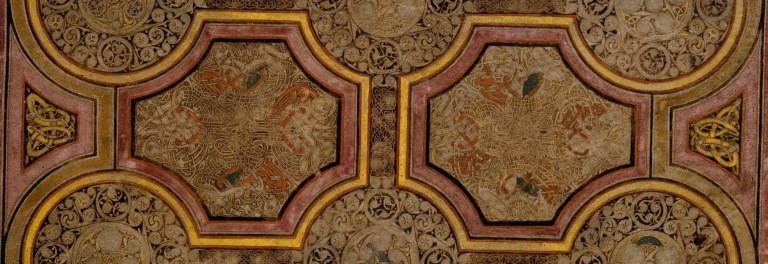
[1] The word “interstitiality,” and most of the argument made in the first paragraph, came from Andrew Abbott’s “Chaos of Disciplines.” The featured image on this post also comes from the cover of the book, the 8-circled cross from the “Book of Kells.”

Abbott, Andrew. Chaos of disciplines. University of Chicago Press, 2010.
Abbott, Andrew. “Things of boundaries.” Social research (1995): 857-882.
Brint, Steven G., ed. The future of the city of intellect: The changing American university. Stanford University Press, 2002.
Fuller, Steve. Social epistemology. Indiana University Press, 2002.
Lamont, Michèle, and Virág Molnár. “The study of boundaries in the social sciences.” Annual review of sociology 28, no. 1 (2002): 167-195.

we are golden [a birthday wish]

[from my vault — versão em português aqui]

Dear A.,

It is your birthday, and I have known you for almost an entire season. The end of Spring brought you to me, and I caught myself falling for you as the days got longer and the weather changed into unbearable heat. I am miserable when it is hot and humid, but I can’t deny that there is something vibrant about Summer, the thing that makes it so attractive to writers of songs, movies and TV shows, when they want to talk about young love.

The two of us, however, are not that young anymore (thank goodness). I say it with a smile and a giggle because we have not lived for long enough to call ourselves old by any measure, but we have lived long enough to have trespassed many of the things that weighed us down when we were innocent. Becoming an adult is playing games with time, figuring out how it is possible that sometimes it flies, and sometimes it drags, always against our wishes, always against how we feel about the things that we are experiencing at a certain point. How do we get over how strange it is to exist, to be anything at all?

Perhaps the problem is that our imagination is completely infected with movie-like scenarios of what the movements of life should look like. Fall, crisis, passion, despair and hunger are always more interesting through cinematographic lenses, where the hearts, aspirations and expectations needn’t be broken, only shattered for a minute, for as long as the scene lasts. Maybe it has something to do with the possibility of skipping parts or turning off the screen. But, as much as I hate sitting with the discomfort of living through things I would rather observe and write about, my sense of wonder keeps me on the verge of transcendence whenever I think too much about the assortment of improbabilities that have come together to weave the fabric of our reality as it is.

Feelings, for all their fleetingness, are something beautiful in how they come to exist. I could write hundreds of journal entries to put my thoughts into place, and figure out what makes me want to talk to you every single day since the day I talked to you for the first time. Since it’s your birthday, I wanted to put into words the rush of joy that I get when I think about you, and the little moments we get to spend together, doing our silly little tasks and jumping through an assortment of random topics, for no other reason besides the fun of sharing ideas with someone who is eager to hear them, and respond.

I am assured that there is beauty and glory in the slightest grain of dust, but I am also convinced that something more valuable is hiding in the parts still unknown, in the unexplored depths, the place where all the things our body, mind and heart cannot understand go. I want to find these treasures with you. It is a cliché to talk about the small but certain happiness, but I cannot help it. And maybe this is the hope that I entertain, when I keep myself sensitive to all of the smallest things that come my way, oscillating between highs and lows just to make sure that I have truly met the limits of myself. It is tiring, but it’s movement that has made us who we are; I am a lot of things, some are better than others, but all of them have come together today to try to tell you that I care immensely about you, and I am glad the assortment of improbabilities that make up reality have come together to bring us together.

Maybe it is crazy luck, maybe it is fate. Maybe Annie Ernaux was right, and it is a form of luxury, to live out a passion for another person. Maybe one day we will realise it was a mishap that we should have foreseen. They say it takes all four seasons to start to get to know someone; this Summer, too, will pass, like all Summers did before, the leaves will turn yellow and begin to fall. But, right now, the Sun is still hot and burning, and our honey skin is glimmering, brighter than ever. You don’t smile often but I like the way you light up when you do. I like the way we glow under the clear day sky, when the monsoon is gone. Maybe being golden together is our treasure.

Please, be happy for a long time. And let’s do it together, for as long as we can.

Happy Birthday to you, from me.

J.

Photo by Lucas K on Unsplash

like a polaroid

I have never hated writing as much as I do these days. I have also never written as much as I have, these days.

Since the end of August, I have started, sketched, completed, abandoned, more than 20 different essays. Most of them will never leave my drafts. Journal entries on Notion, there have been at least 50, without counting my research journal pages, which have been a surprisingly useful outlet these days. There are also over 50 notes on my phone’s Notes app, almost daily random thoughts I write on the Whatsapp group chat with myself, and, lastly, my extensive collection of paper journals, planners and notebooks, and the 9 new ones I purchased within this timeframe. Not to mention the things that never see the outsides of my brain; every single day, I sit in the dark and I write in my mind until everything gets blurry and I fall asleep.

My writings are the shape of my thoughts — according to the season, my most common literary genre will take over my cognitive networks. When I was younger, I saw the world in tales — of fairies, of magical worlds, of mystery and imagination. During my most-active seasons on the internet, I only thought in the shape of tweets; then, there was the phase of inspiring Instagram captions. One of the reasons I gave up poetry was because strophes and certain ways of speaking vaguely (and concisely) stopped making sense in my head. And now, or at least for a while, for a few years now, I have been thinking through essays and papers. I talk to myself by crafting hypothetical long-ass texts that I will never write down. And, even when it’s just me and my mind, my essayist voice is clear and well-positioned to speak to a general, speculative reader, causing me to employ words and construct trains of thought that never mention hard details by name and avoid the heart of the matter that I am at odds with.

It’s as if my consciousness can’t help but sounds ambiguous and act evasive, even when there’s no one there to judge what we have to say. And so, the conversations with myself have become unproductive, in the usual fashion of scientific writings that are full of intricate ways of not really stating something if it sounds like it’s too much. But it’s also worse than that — everything that I write seems terrible to me, by all standards. My academic papers look dull and uninteresting, regardless of what others say. Everything I’ve tried to write for my blogs has sucked, and what did end up getting posted did so under the guise of not missing out on the duty of keeping records of things. In the past, I’ve described writing as mapping out the land and following the lead towards the treasure of the good life (I was very young). At some point, I understood it more like “maze-running” through my mind. Nowadays, I feel like the struggle I’m trying to address with all of this writing is more akin to a labyrinth; no turn is really a dead-end, and reaching the centre is an inevitability, as much as eventually making all the way back, and starting over.

This account may sound positive and almost hopeful, but, right now, it feels tiresome and monotonous as hell. Perhaps this is the reason why I write journal entry after journal entry and I am completely bored of every single one of them — the truth is that having and handling my broken heart are the things I have done the most, as a writer. My fears, my anxieties, none of it is new to me, there is no fresh revelation to make me feel like there is anything worth finding inside when I sit down to write. Unsurprisingly, my brightest moments of clarity lately have come in the shape of confessional text messages I shared with my friends, in our silly little group chats, in between the dozens of things I am supposed to do throughout the day. Writing is, at the core, a very lonely job, and, as a writer, there are worse things you can do than getting out of your head once in a while, not just to go for a walk to stretch the legs and wander around, in typical flaneurian fashion, but to listen to someone else, and give yourself a bit less credit.

At the same time, I’m convinced this isn’t quite the right answer to my current crisis, but I must admit that the correct way out is something that I don’t feel ready to come to terms with. I realised recently that I am terrified of silence. Like an unsettling stranger, someone I don’t know well enough to be comfortable standing in its presence, and who I would never willingly choose to spend any amount of time with. This complicated relationship did not seem as bad as my description sounds now, not until very recently, because I could cut myself some slack by speculating that I would be ok with being silent, until I realised I could not recall the last time I had withstood it, by any measure. It sounds pathetic, which is exactly how I felt when it clocked that, even when I shut my mouth, my brain never shuts up. I have seldom experienced the joy of leaving myself alone.

I am not suggesting that the answer is stopping writing altogether, because, even if I could spend a week or a month without putting words together on paper, I highly doubt that it would be enough to make my brains calm down and leave me be. Like many other times in my life, I have to come to terms with having a problem that cannot be solved, easily or at all, and sitting with the discomfort, tossing and turning without leaving the bed before the dawn. I am restless and I have realised that there is no way of rationalising myself into being at ease, at least not for now, as I grapple with this dramatic identity crisis, and this unexpected, unplanned season, and all the things I am trying to reconcile. Right now, the air feels too cold, my fingers are freezing, my stomach is churning, everything tastes like nausea, my head hurts and time is dragging, moving very slowly, but also so fast, and there is not enough of it for me to do everything that I should do. I feel dizzy and confused and I want to go home, but I can’t, so I won’t. I will stay in, I will haul myself down the end of this day, finish my tasks a lot later than planned, and hope that tomorrow won’t feel this heavy.


This text was meant to be a short entry, a personal challenge to post something that needn’t be a long, comprehensive exploration of all different aspects I have personally considered when thinking about a certain topic, presented in a way that highlights how everything is somehow interconnected, and the absolute historical contingency of facts is the only sure thing in the grand scheme of networks of happenings. I saw this little sentence that Matt Healy said on an interview with the Pitchfork, about The 1975’s 2022 album “Being Funny in a Foreign Language”:

Every record I’ve made, I convinced myself that I had so much to prove, so it had to be about everything that ever happened, everything that’s happening now, and everything that could ever happen,” […] “But on this record, I said, ‘Instead of a magnum opus, what about more like a polaroid?’”

I don’t think this is exactly the format I had in mind when I took this sentence very personally and decided that I, too, should stop trying to prove something to myself & other imaginary someones and just post anything, like I used to, in the past. I don’t think this text here is quite the polaroid yet; to be honest, I would have much preferred to start with an insightful exploration of what the metaphor could mean if we actually took the polaroid more seriously than Matty probably did when he said that. Nevertheless, this is what I had to say, I did it, and this is the best I can do about everything else today.

Additionally, I would like to share that I recently started a simple blog with my friend and labmate Dahyun Ryu, about our research thoughts and theoretical reflections. It’s called sappy sallows and you can access it here. I’ve also added it to the top menu so it’s pretty serious!

Photo by Izzy Gerosa on Unsplash