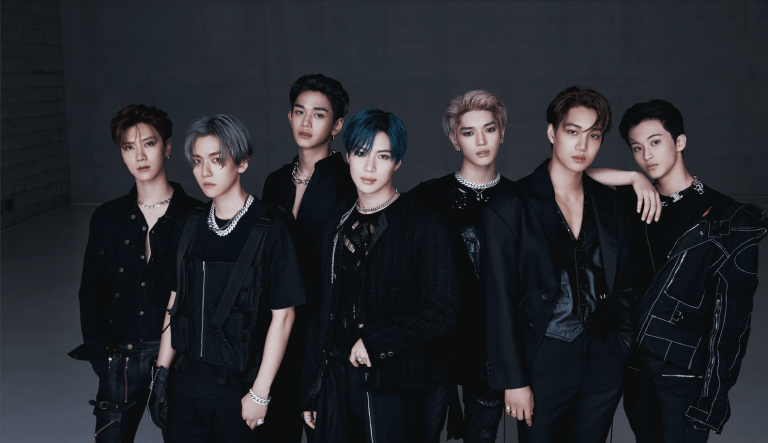
The Day We Jopped

Do you remember the day we first jopped?

To those unaware, “Jopping” is the combination of “jumping” and “popping”. I’m not a dancer, so I can’t “jump” nor “pop” at the same time, but I’m under the impression that I can every single time I crack yet another joke about the verb coined by “Jopping”, SuperM’s debut title track, released in October last year.

A screenshot I took from the “Jopping” music video page, 12 minutes before it premiered. From left to right: Mark, Ten, Taemin, Taeyong, Lucas, Baekhyun and Kai.

SuperM’s debut season was one of the greatest times of my career as a fan of things. From the initial skepticism with which the project was met, and all the jokes people cracked before some of us realised exactly how huge it was to have all of these amazing artists together in one single group, seeing their separate fandoms coming together to love them or hate them, getting caught in the crossfire, but still having so much fun from getting to know new people and new music I wasn’t very invested in at the time. One mini album, one album, five music videos, a tour, numerous stages and performances of over twenty songs later, we’re still somehow jopping to all of this, as we make our individual ways in the world.

Last week, when their new music video dropped at 1am – for the title track “One”, a mash-up of two other of their songs, “Monster” + “Infinity” – I wasn’t having a particularly good day, nor night. I considered going to bed and watching everything the next morning, but, in honour of the “good old times” – read, last year – I decided to stay. As we began to go through the album, the timeline felt just like October last year all over again, and I was reminded once more of just how much I love being their fan.

SuperM “One”, a mashup of tracks “Monster” and “Infinity”, lead single for their first album

The season around SuperM’s debut was a particularly troubled time of our fan experience on Twitter – by “our” I mean us, their supporters. The aforementioned skepticism with which their debut was met came from different sides – not just their own, suspicious fans, but other fandoms as well – and it reflected badly on us that chose to support them. It might not make a lot of sense to outsiders, but, in the trenches of fandom-making, picking sides might turn into an ugly game if the parties involved are willing enough to take it seriously enough.

At the time, I was working on my essay about Fandoms on Twitter for the BTS Interdisciplinary Conference in London, as well as working double to afford the trip from Brazil to the UK. 2019 was the year I decided to interact with collective fandom again, after a couple of years of enjoying my hobbies solo. This sudden comeback gave me a lot of food for thought, which eventually led me to engaging academically with the topic. It sounded like a great idea at first, but the nights were long and filled with tears, because I felt so alone and so unable to complete what I had decided to do.

Even as I worked on my essay, I still hadn’t realised that this end-of-year journey was my own process of giving birth to the academic fan I had in me. She is the one writing this piece right now.

My own struggles around this time last year surely add to the value of just how good it was to have something that felt so fun and weightless during an especially hard time. I can’t separate how badly my personal life was going from how I perceived everything that happened at the time. But the trope of the lost girl that found herself in a community is an old, overused one, which does not provide enough answers for me – because the question that makes rounds in my head is why everyone else, even those who weren’t particularly struggling at the time, felt the same about this experience we got to share. 

My SuperM mini album – Taemin version, with a Taeyong photocard, the day it arrived. My favourite group chat on Twitter came together because we wanted to discuss which album versions we were going to buy.

Fandoms are inherently religious projects, not just for those who join them, seeking a community to belong to, but for those from whom they are born – the sources of our love, the ones from which we get content and to whom we offer our time, money and full attention in return. The desperate commitment to something so aesthetically appealing, and which can appear bigger than life if you tilt your head the right way, produces religious fanatics in droves, easily driving the most sensible out of their best senses. The digital fandom experience is filled with its own unbelievable kinds of highs and lows, and there isn’t a single reason that explains how our community problems happen. My own theory to digital fandom spaces is an attempt at understanding how artists, admirers, devotees and outsiders interact in/with specific digital social network sites over time and generate their own specific identities. This is why, in order to understand fandoms, I always turn to the sources, to understand what birthed them in the first place.

As I’ve mentioned before, there was a lot of collective trouble starting when SuperM was announced, in August 2019. When Taemin, Baekhyun, Kai, Taeyong, Ten, Lucas and Mark were pulled from SHINee, EXO, NCT 127 and WayV to make the group, no one was very sure of what was going to happen – in fact, there were indeed plenty of reasons for the initial skepticism with which the project was met. None of them knew how it would turn out, but neither did any of us, on the other side of the screens. Wishful thinking wasn’t enough of a window into the future, but, as the first teasers dropped, and our collective enthusiasm grew with each new release, I guess this is where the turning point happened – realising how great this project was going to be, with such a great lineup.

A picture that I downloaded from Twitter, taken during SuperM’s debut showcase at Capitol Records Building. From left to right, we can see the lightsticks of the fandoms that make up SuperM SHINee, EXO and NCT (minus WayV‘s lightstick).

If you know who took this picture, let me know so I can credit them.

In SuperM’s debut, all of my favourite things about being a fan came together to make an unforgettable experience. Nothing felt like a job, or a personality trait I had to hold onto for dear life. In a sense, their debut was a turning point in my fan experience as well, as I realised exactly the type of fan I wanted to be from then on. The images that inhabit my imagination and my memory from those days are filled with, among other things, countless jopping jokes, concept pictures, broken friendships and scenes from always-so-dramatic “I Can’t Stand the Rain” stages, in between dozens of papers I read and dozens of friends I gained and lost along the way. The excitement of anticipating their TV appearances and wondering if our side of the world was about to fall in love with artists we admired so much; appreciating the great interactions between the members, all of them talented beyond measure and committed to help one another as they worked to make this project successful on their end.

Fans’ attachment to the optics of the bond between members can often be their own way of satisfying their craving for stability in the existence of their fannish identities. With a temporary supergroup such as SuperM, there’s no stability besides the assurance that these members are talented and willing to make their time together count. Our network of SuperM Supporters is shaped the same – we’re all happy with the great content, but we’re the happiest that we get to come together from our individual fandoms when it’s time for them to assemble again, like a special party. We’ll be here for whatever the outcome is, because these artists brought us together, and they are worth the views, the listens, and the chance*.

And all of this happened even before the pandemics arrived, and lockdown and quarantines became the norm. SuperM has been just one of the many pieces of fan experience that made the last months easier to bear – watching them on Beyond Live on the first weeks of Quarantine, waiting to see them perform “With You” on Together At Home, discussing with friends, staying up to see everything first hand, waiting for the next teaser, the next single, the next live, the next stage. There was always something to look forward to, even as the world felt out of place. But, even so, even after so much changed, and the world appeared to have become much darker, and we needed even more distraction to cope, the memories that SuperM gave us when we first jopped still feel just as special. Perhaps even more now that we were given a first full album with amazing songs and fun music videos, reminders of how great this group is, and how much they’re capable of, and how we all want them to succeed altogether.

This is the power of a successful parasocial interaction; both parties are inherently separate and so, so distant, but still enjoying and building something together. I can only hope that these members are having as much fun as we are. We all deserve that little jumping and popping. 

* Read Also: Kulture Kolumn: The Polarizing Debut of SuperM Riddhi Chakraborty‘s amazing piece about SuperM for Rolling Stone India, which greatly influenced me back then, and still does.

SuperM’s first full album is out now! My personal favourites are Together at Home, Wish You Were Here and Step Up.

#3. the words you left behind

When I started writing this series, I wanted to talk about people and relationships as if they were lights, inspired by this song called “Mikrokosmos”. I must say that this isn’t exactly how I had planned to wrap up this trilogy, but, looking back to the lighthouse, and the roar of our stars, I realise that ending like this was an inevitability. Today, 17 September, marks four years since an album called “Story Op. 1” was released. My plan was to save this one for December, or next April, but I thought it only fair to publish it today in honour of the irreplaceable Kim Jonghyun.

Around three years ago, I asked the heavens what my divine calling on earth was; the answer came almost immediately — “you are a storyteller.”

Although there are heavenly words that come as a surprise and bring new realities and new identities into existence, the words I heard that day simply ordered feelings that I already had inside. I like stories; in fact, I like the people we find behind stories, and the God who created all things and who reveals Himself through the fragments of our messy daily lives — as if Eternity lied very close, just a small crack away. I’ve written extensively about the reasons why I like to write, how I keep myself as a permanent reader of the world, as someone who is always responding to something else.

Today, specifically, I want to respond to Jonghyun. Choosing to publish this text is something I do with great care; I have a lot of zeal and respect for him, and the legacy he has built. As his fan, I am sadly part of the ones who only fell in love with his work after his passing, missing out on the privilege of witnessing him in his lifetime. To talk about Jjong today is to talk about the words he left behind — like the light of a star that continues to travel and illuminate for many light years, even after it’s gone.

I am so fascinated with stars that, over the years, I have collected the light of many inside my mind and heart. I grew up very much on my own, within my own world, and the artists who influenced me the most are like the best friends that I should have had, who made themselves present, somehow, when I needed the most. My life has taken many twists and turns, but, to this day, getting to know someone’s work still feels like gaining a new companion, coming in at the right time, to bring in what they should. When I started to get closer to Korean music, I think I tried to keep a conscious distance from Jonghyun’s solo work, because I didn’t want to let the tragedy speak louder than anything else he had to say. To my delight, he showed up naturally, mediated by Spotify’s random shuffle, facilitated by the sweet, captivating voice of someone who loved stories as much as I do, and who was very good and writing them, and telling them (and singing them).

Singing a version of “Gloomy Letter” (우울한 편지) by Korean singer-songwriter Yoo Jae-ha (유재하). One of my favourite of his performances.

In addition to being a member of SHINee, one of the greatest boy groups of his generation for nine years, Jonghyun also solo-hosted a radio show called “Blue Night,” between 2014-2017. In an interview conducted in April 2017, on his last day as a radio host, he said that doing radio was the second biggest turning point in his life (the first being the decision to drop out of high school). He considered both more important than joining the K-pop industry, or publishing his first book, because they were decisions that transformed and broadened his worldview. On Blue Night, which aired between 00:00 and 02:00, he joined his listeners to build and share the same space, and make those two hours into a safe place to rest at the end of the day.

The great triumph of the show was that it succeeded as a channel for communication and exchange, as sincere as possible. From the many stories that people shared through live comments, he began to write songs, in a special section called “Written by Blue Night, composed by him”, in which listeners would send in their stories — vague or specific, momentary expressions of longing, short outbursts, small manifestations of routine that would have gone completely unnoticed until someone decided to put them into words. These songs eventually became his first musical collection — Story Op. 1, released in 2015, which is four years old today.

Some songs came straight from stories told by the listeners — such as the track “Like You,” based on a story of a guy who was caught in a one-sided unconfessed crush, or “I’m Sorry,” about a girl who had received an email from her ex-boyfriend. “Maybe tomorrow,” my personal favourite, was a response to the many messages about tiredness and discouragement at the end of a working day, while “End of a Day” talks about having someone to go back to at the end of another day. The excellent “Diphylleia grayi [skeleton flower]” came from a proposal he received to describe life through flowers and time, and was also the title of a novel, published in September 2015, which combined extracts and aspects of the album’s songs into a single story (to learn more about the individual tracks). The album was not promoted in the usual fashion of K-pop releases, in music shows, but through a series of small, guerilla concerts, called “The Story by Jonghyun” — a much smaller scale compared to the arenas and domes he was used to selling out, with his group.

U & I,” the album’s 2nd track, as well as Blue Night‘s theme song, is about the everyday encounter between Jonghyun and his listeners, to share a little bit of themselves with each other. From inside that studio, he was able to deconstruct parts of his image as a young idol, reveal his pessimistic side, his inconveniences, his atypical routine, and get to know more about the ordinary lives of the people who followed him — both those who lived in the same city and those who listened to him from other countries, in other time zones. Countless people he would never meet in person, but whose lives he was a part of — as an image, as a voice, as an artist, poet, song — as a memory. Every day, when the show finished at 2am, he would close it with an invitation, almost like a mission statement — “This is Blue Night’s Jonghyun. If you don’t have a place to rest, you’re welcome here whenever you need it. Come and rest here tomorrow, too.”

“U & I” performance during one of the guerrilla concerts, to promote Story Op. 1, in 2015.

Hannah Ewens, in her book “Fangirls” [2019] draws attention to the use of the term “fandoms” (or fan kingdoms) to refer to the universe of admirers that orbit around a more or less public figure — something that presupposes the existence of a territory under someone’s domain. In fact, the greatest power an artist has is to create worlds around them; to open up spaces and set up new points of encounter, parallel dimensions in which different people cross paths, and build memories, and touch each other’s lives, moving the history and networks of our society. On the occasion of his last programme, on 2 April 2017, among the many messages he received, one always stands out to me — “Thanks to Jjong-D, my simple life has become a little more special. Thank you so much for always being here, no matter how good or bad my day was.” Watching his old broadcasts, reading his interviews, and listening to his songs, he continues to create new worlds and new spaces, in me and in others; his songs set the tone for some days, change the mood of others, or sometimes find no space at all. Some are like a hug, others make me laugh and dance, others remain in the background of the chores of a day. I’ve made friends talking about them, I’ve been unfollowed talking about them, and today I’m writing about them in the hope that they can touch someone else’s life. The lighthouse keeps shining.

“Our Page”, released in 2018, written by the four remaining SHINee members, about the loss of their member.

Of the many things that fascinate me about him and his music, the most important one is perhaps the endeavour to remain sensitive to the world around him, even if his circumstances could have comfortably sent him in the opposite direction. We all order reality through narratives — the points of view, subjectivities, biases, prejudices and peculiarities of our own gaze. Constantly putting ourselves at the place of exchange is what allows us to see through other eyes, take other perspectives and discover more of the facets of life that are intangible when we are alone. The stories we keep and share all touch upon the limit between what you can and cannot come to know about someone else; we don’t always open our mouths to say good, constructive or truthful things, but the moment when the encounter happens always opens up a new world — like the lighthouses we build, which continue to illuminate the seas, even after no one else has bothered to clean the dust off the steps and handrails of the staircase. In Jonghyun’s own words, “any kind of relationship (or connection) is important, because you never know what will become of it”.

“1000,” my favourite of his songs, is part of Story Op. 2 (released in 2017). It was written to celebrate his 1000th day hosting Blue Night.

People like Jonghyun make me think of the poignant contrast between the black and white blocks of the figure-ground diagram of someone’s life, the filled and the empty spaces that remain when a person leaves, but leaves a lot behind. The places he occupied are still full with his presence, because his words were many, they were strong, loud, powerful, and they filled every corner to the brim. And that’s why his absence also speaks so loudly; everything he left behind is a reminder of how much he is missed. There’s the void of all the things he could still have done and lived, but didn’t; the family he didn’t build, the stories he never got to tell, the songs he never got to write, the books he never got to publish, the return to Blue Night that never happened. The things he said with his eyes, with his hands, as well as his own voice, they are still making rounds, they still reverberate, for those who care to listen, and for those who don’t as well, whose lives intertwine with the lives of those who stopped to listen. They spark memories, they’re the reason we stay up at night, they bump into the fragments of everyday life… But this isn’t just about Jonghyun anymore, even though it’s about him that I’m writing, today.

Of course, of everything I say, I speak only as a simple fan, and a posthumous one — the smallest and most insignificant of all, who never experienced the present expectation of admiring him in life, and for whom absence was the first reality. But that’s the power of the stories we share — that limit between what you can and can’t know about someone else; we don’t always open our mouths to say good, constructive or truthful things, but the moment when the encounter happens always opens up a new world. Even as a posthumous fan — even as such — I feel emptiness whenever I remember that he is no longer here. Death is our oldest problem, but it’s always a new problem, because we only die once, and those who live on continue towards their own death without knowing what it means. It will always hurt someone, but that, too, shall pass — but something still remains. It makes me wonder.

If Jonghyun had been a story, he would have been a great story; it’s hard to explain what I mean without raising some eyebrows, so I will leave it to the readers’ imagination. As always, life goes on, there are plenty more pages left to fill until the end of all things. This is how it all goes, like a great match of pinball, or button football, or the chain reaction of a nuclear fission; the metaphors are many, but the meaning is approximately the same. Not everything is good, very little is praiseworthy, not enough is enjoyable, but the world hasn’t stopped turning because of any of this. Storytelling has its ways of reminding us that, in spite of everything, being a part of each other’s lives can still be a privilege. At least, that’s how I see it. Thank you so much for being a part of mine, Jonghyun. You did well.

(there’s a playlist too)

#3. as palavras que você deixou pra trás.

      Este texto é o terceiro de uma série. Leia o primeiro aqui, e o segundo aqui.

      Quando comecei a escrever essa série de textos, eu queria falar sobre pessoas & relacionamentos como se fossem luzes, inspirada por uma canção chamada “Mikrokosmos”. Confesso que não era assim que eu havia planejado fechar a trilogia, mas, olhando de volta pros faróis, e pro som que a estrela faz, eu percebo que estava desde o começo me preparando pra escrever isso aqui. Hoje, 17 de Setembro, fazem 4 anos que um álbum chamado “Story Op. 1” foi lançado. Eu pretendia guardar este assunto pra Dezembro, ou próximo Abril, mas achei justo publicá-lo hoje, em homenagem ao insubstituível Kim Jonghyun.

      Há uns 3 anos, eu perguntei pros céus qual era minha vocação divina na Terra; fui respondida na mesma hora – “você é uma contadora de histórias”.

      Ainda que existam palavras celestiais que chegam como uma surpresa, e trazem à existência novas realidades e novas identidades, as palavras que eu escutei apenas colocaram em ordem coisas que já existiam em mim. Eu gosto de histórias; aliás, eu gosto das pessoas que existem por trás delas, e do Deus que nos criou e que se revela através dos fragmentos da nossa rotina desorganizada – como se o plano dessa realidade fosse uma cortina, e a Eternidade estivesse a um pequeno rasgo de distância. Eu já escrevi muito sobre os motivos pelos quais eu gosto de escrever, como se eu me mantivesse como uma permanente leitora do mundo, como alguém que está sempre respondendo à outra coisa. 

      Hoje, especificamente, quero responder ao Jonghyun. Escolher publicar este texto é algo que eu faço com muito cuidado; tenho muito zelo e respeito por ele, sua família, fãs, e pelo legado que construiu. No desenrolar dos fatos, eu sou das que perderam o privilégio do seu tempo em vida, e só se apaixonaram pelo seu trabalho brilhante depois da sua morte. Falar sobre o Jjong hoje é falar sobre as palavras que ele deixou pra trás – como a luz de uma estrela que continua viajando e iluminando por muitos anos-luz, mesmo depois que ela se vai. 

      Em todo meu fascínio por estrelas, eu coleciono a luz de muitas dentro da minha mente e do meu coração. Eu me criei muito sozinha, dentro do meu próprio mundo, e os artistas cujo trabalho influenciou minha vida são como os melhores amigos que muitas vezes eu não tive, mas que estiveram ali pra mim, de uma forma ou outra. Minha vida já deu muitas voltas, mas, até hoje, conhecer o trabalho de alguém é como ganhar uma nova companhia, que chega no tempo certo, pra agregar como deve. Quando comecei a me aproximar da música coreana, mantive uma distância consciente do trabalho solo do Jonghyun, poque eu nunca quis que a tragédia falasse mais alto que qualquer outra coisa que ele tivesse pra me dizer. Pro meu deleite, com o tempo, a aproximação veio naturalmente, cuidadosamente mediada pelo aleatório do meu Spotify, e facilitada pela voz doce e cativante de alguém que, como eu, amava histórias, e era muito bom em escrevê-las e contá-las [e cantá-las]. 

Promovendo seu primeiro EP, “Base”, em 2015, cantando também “Juliette”, música que compôs para o SHINee. Das minhas performances preferidas, prestem atenção nos vocais.

      Além de membro por 9 anos de um dos maiores grupos da sua geração [o SHINee]Jonghyun também apresentou um programa de rádio, chamado “Blue Night”, entre 2014-2017. Em uma entrevista concedida em Abril de 2017, no último dia em que o programa foi ao ar, ele disse que entrar para o rádio foi o segundo maior ponto de virada da sua vida [o primeiro sendo a decisão de largar a escola no Ensino Médio]. Ele considerava ambos mais importantes que entrar pra indústria do k-pop, ou publicar o primeiro livro, pois foram decisões que transformaram e ampliaram sua visão de mundo. No Blue Night, que ia ao ar entre 00:00 e 02:00, ele se juntava aos seus ouvintes para construir e compartilhar um mesmo espaço, e fazer daquelas duas horas um lugar seguro de descanso no fim dos dias.

      O grande triunfo do programa foi ter tido sucesso como um canal de comunicação e troca, tão sinceros quanto fosse possível. Das muitas histórias que eram compartilhadas, ele começou a escrever canções, em um quadro especial intitulado “Escrito pelo Blue Night, composto por ele”, em que ouvintes enviavam seus relatos – vagos ou específicos, expressões de desejo do momento, desabafos curtos, pequenas manifestações de rotina que passariam totalmente desapercebidas até que alguém colocasse em palavras. Essas canções se tornaram eventualmente sua primeira coletânea musical – o Story Op. 1lançado em 2015, e que completa 4 anos hoje.

      Algumas músicas surgiram a partir de mensagens dos ouvintes – como a faixa “Like You”, baseada na história de um rapaz que estava em uma paixão unilateral e não-confessada, ou “I’m sorry”, sobre uma moça que havia recebido um e-mail de seu ex-namorado. “Maybe tomorrow” foi uma resposta às muitas mensagens sobre cansaço e desânimo ao fim de um expediente, enquanto “End of a Day” fala sobre ter pra quem voltar no fim de mais um dia. A excelente “Diphylleia grayi [skeleton flower]” partiu de uma proposta que ele recebeu, de descrever a vida através de flores e tempo, e foi também o título de um romance, publicado em Setembro de 2015, que combinava trechos e aspectos das canções do álbum em uma mesma história. [para saber mais sobre cada faixa – em inglês] A coletânea não foi promovida de forma convencional, nos music shows coreanos, mas com uma série de pequenos concertos, intitulados The Story by Jonghyun – momentos de convergência modestos para o vocalista de um grupo acostumado a esgotar as maiores arenas da Ásia.

      “U & I”, faixa no. 2 do álbum e música tema do Blue Night, fala sobre o encontro de todos os dias entre Jonghyun e seus ouvintes, para compartilhar um pouquinho de si uns com os outros. De dentro daquele estúdio, ele pode desconstruir partes da sua imagem de ídolo jovem, e revelar seu lado pessimista, suas indisposições, sua rotina atípica, e conhecer mais sobre a vida comum das pessoas que o acompanhavam – tanto as que viviam na mesma cidade quanto as que o escutavam de outros países, em outros fusos horários. Incontáveis pessoas que ele nunca conheceria pessoalmente, mas de cujas vidas ele fez parte – como imagem, como voz, como artista, poeta, canção – como lembrança. Todos os dias, quando se encerrava às 2 da manhã, ele deixava um convite, quase como uma declaração de missão – “Aqui fala o Jonghyun do Blue Night. Se você não tem um lugar de descanso, você é bem-vindo aqui sempre que precisar. Venha e descanse aqui amanhã, também.”

“U&I”, apresentada em um dos pequenos shows que acompanharam o lançamento do Story Op. 1.

      Hannah Ewens, em seu livro “Fangirls” [2019] chama atenção para o uso do termo “fandoms” [ou fan kingdoms] para se referir ao universo de admiradores que se organiza em torno de uma figura mais ou menos pública – um reino, algo que pressupõe a existência de um território sob o domínio de alguém. De fato, o maior poder que um artista tem é o de fundar mundos ao seu redor; abrir espaços e inaugurar novos lugares de encontro, dimensões paralelas em que pessoas diferentes se cruzam, e constroem memórias, e tocam as vidas umas das outras, movimentando a história e as redes da nossa sociedade. Na ocasião de seu último programa, no dia 02 de Abril de 2017, entre as muitas mensagens que recebeu, uma sempre me chama a atenção – “Graças ao Jjong-D, minha vida simples se tornou um pouco mais especial. Muito obrigada por sempre ter estado aqui, independente do quão bom ou ruim tivesse sido meu dia”. Assistindo às suas transmissões antigas, lendo suas entrevistas, e escutando suas músicas, ele continua fundando novos mundos e novos espaços, em mim e em outros; suas canções dão o tom de alguns dias, mudam o clima de outros, ou às vezes não encontram espaço algum. Algumas são como um abraço, outras me fazem rir e dançar, outras ficam como plano de fundo dos afazeres do dia. Já fiz amigos falando delas, já levei unfollows falando delas, e, hoje, eu escrevo um texto sobre elas, na esperança de que elas possam tocar a vida de mais alguém. O farol continua brilhando.

“Our Page”, música escrita pelos 4 membros do SHINee, a respeito da perda de seu 5º membro.

      Das muitas coisas que me fascinam sobre ele e sua música, a maior talvez seja o esforço em se manter sensível ao mundo ao seu redor, mesmo que as circunstâncias apontem na direção oposta. Todos nós enxergamos a realidade em narrativas – os pontos de vista, subjetividades, vieses, preconceitos e peculiaridades do nosso próprio olhar. Estar em constante troca é o que nos permite ver por outros olhos, reconhecer outras perspectivas e descobrir mais das facetas da vida que não se revelam quando estamos sozinhos. As histórias que guardamos e compartilhamos ficam bem sobre o limite entre aquilo que se pode, e o que não se pode conhecer de alguém com quem não se convive; nem sempre nós abrimos nossa boca pra falar algo bom, construtivo, ou verdadeiro, mas o momento do encontro sempre abre um novo mundo – como os faróis que nós construímos, e que continuam iluminando os mares, mesmo depois que ninguém mais se ocupa de tirar o pó das escadas. Nas palavras do próprio Jonghyun, “qualquer tipo de relacionamento [ou de conexão] é importante, pois você nunca sabe qual será o fim”

“1000”, minha música preferida, parte da coletânea Story Op. 2 [lançada em 2017]. A canção foi escrita em comemoração ao 1000º dia do Blue Night

      Olhar para uma pessoa como o Jonghyun me faz pensar no contraste pungente dos cheios e vazios que ficam quando uma pessoa vai embora, mas deixa muito. Os lugares que ele ocupava continuam lotados, porque as suas palavras eram muitas, eram fortes, altas, poderosas, e preenchiam todos os espaços. E é por isso que a sua ausência também fala tão alto; tudo que ele deixou pra trás faz lembrar a falta que ele faz. Fica um vazio de tudo aquilo que ele ainda poderia fazer e viver, mas não fez; a família que não construiu, as histórias que não contou, as músicas que não compôs, os livros que não escreveu, o retorno ao Blue Night que não aconteceu. As coisas que ele dizia com os olhos, com as mãos, além da própria voz, ainda ecoam, ainda se fazem presente, pra quem se importa de parar e ouvir, e pra quem não se importa, mas cuja vida toca a de outros que pararam pra escutar. São gatilhos pra lembranças, são o motivo de ficarmos acordados à noite, esbarram nos pedaços da rotina… Mas isso não é só sobre o Jonghyun, ainda que seja a respeito dele que eu fale aqui, hoje. 

      E, claro, de tudo que eu falo, falo apenas como simples fã, e uma fã póstuma – a menor e mais insignificante de todos, que nunca experimentou a expectativa presente de admirá-lo em vida, e para quem a ausência foi a primeira realidade. Mas este é o poder das histórias que compartilhamos – aquele limite entre aquilo que se pode, e o que não se pode conhecer de alguém com quem não se convive; nem sempre nós abrimos nossa boca pra falar algo bom, construtivo, ou verdadeiro, mas o momento do encontro sempre abre um novo mundo. Mesmo como fã póstuma – mesmo assim – eu sinto meu coração vazio toda vez em que, assistindo um vídeo ou escutando uma canção, eu me lembro que ele não está aqui mais. A morte é nosso problema mais antigo, mas é sempre um problema novo, porque morremos só uma vez, e quem continua em vida segue em direção à própria morte sem saber também o que isso significa. Sempre vai doer em alguém, mas isso também vai passar – mas algo também fica. Acho isso intrigante. 

      Se ele fosse uma história, seria uma grande história; é difícil explicar isto sem que pareça absurdo, então vou deixar em aberto, e confiar na imaginação dos leitores. De qualquer forma, a vida continua, e nós todos ainda temos muitas páginas para encher até o fim de todas as coisas. É assim que tudo corre, como um grande jogo de pinball, ou uma partida de futebol de botão, ou uma fissão nuclear e sua reação em cadeia; as ilustrações são muitas, mas o sentido é mais ou menos o mesmo. Nem tudo é bom, quase nada é louvável, pouca coisa é agradável, mas o mundo não parou de girar ainda por causa de nada disso. Contar histórias é uma forma de nos lembrar que, apesar de tudo, ainda pode ser um privilégio fazer parte da vida uns dos outros. Pelo menos, eu penso assim. Muito obrigada por fazer parte da minha, Jonghyun. You did well. 

      [Tem playlist também.]