

Abstract: This review examines how studies on cognitive and emotional responses to music, particularly those related to social bonding, can shed light on the function of fan-dedicated songs within global K-pop fandoms. By analysing five recent studies on the social and affective dimensions of music in the brain, the paper argues that fan songs play a crucial role in maintaining group cohesion across the diverse and expansive communities that constitute contemporary K-pop fandom. The discussion underscores the significance of intentionality and source-sensitivity in these musical interactions, suggesting avenues for future research into the role of songs in music fandom.
Keywords: K-pop fandom, fan songs, cognitive responses to music, emotional responses, social bonding, group cohesion, intentionality in music, source-sensitivity, music fandom studies, social and affective neuroscience.
NOTE: This was written as a term paper for a course I took at KAIST CT during Spring 2023, GCT563 Cognitive Science of Music (음악 인지과학) with Professor Kyung Myun Lee from the Music and Brain Lab. It turned out a lot more social than cognitive, but I still managed to finish this course with an A+.
Outline
- Introduction (go)
- Variables in Music Fandom Studies (go)
- Songs in K-pop Fandom (go)
- Intentionality and Source-sensitivity (go)
- Conclusion (go)
- References (go)
Introduction
This review investigates whether studies on cognitive responses to music, especially emotional responses, and the suggested roles of music in social bonding can provide insight into the role that songs play in music fandom, particularly global K-pop fandom. The driving premise is focused on the specific role played by fan songs — the songs that are specially dedicated to the fans. Through the analysis of five recent studies on different social and affective dimensions of music in the brain, I argue that, in the complex structure of K-pop fandom, fan songs are one of the fundamental elements of the maintenance of group cohesion across the large, diverse communities that make up contemporary fan communities of Korean idol music. By drawing theorisations, the goal is to point towards future research on the topic of the role of songs in music fandom.
Variables in Music Fandom Studies
Fandom studies scholar Matt Hills calls “discursive mantra” the discourse that fans employ to justify their passions and attachments — in his own words, an attempt to “ward off the sense that the fan is ‘irrational’.” In his book “Fan Cultures” (2002), when discussing how fans react when questioned about their attachment to particular texts, he recommends that the justifications that fans offer for their attachment aren’t taken at face value (in context, he refers especially to those conducting ethnographic research on fandom). He claims that the reason multiple fans of the same text would provide similar answers when questioned is more a question of the construction of their own fandom discourse, than a question of how they have made sense of their fandom experience for themselves.
Hill’s recommendation to fan ethnographers highlights one of the difficult aspects of assessing the reasons for fan attachment through strictly qualitative approaches. Multiple studies of the sort have been conducted; in music fandom, for example, a study published in 2019 in the Journal of Consumer Behavior conducted in-depth interviews with long-term music fans in France and Belgium, to retrieve patterns and categories that explained different types of interactions and mode of engagement of fans with their favourite musicians (Derbaix & Korchia, 2019). But, if we consider Hills’s position that personal statements from fans should be approached with extra care, it’s important to consider other studies employing different types of data and methods to gain more qualified insight into the dynamics of attachment, and how music fans interact with their texts in fandom. To begin this review, I refer to a representative study that successfully employs large samples of subjects, and quantitative methods, to assess fandom affiliation in music fandom, by Greenberg et al (2021). With a combined number of over 85,000 subjects, they found that people tend to prefer the work of musicians whose public personas are similar to their own personality traits, which they call “the self-congruity effect of music”.
Greenberg et al (2021) conducted three studies (N = 6,279 + N = 75,296 + N = 4,995) to assess the degree of correlation between fans and their personality, and the personality and work of their favourite artists, according to the Big Five personality traits — agreeableness, openness, conscientiousness, neuroticism and extraversion (Goldberg, 1992) —, whose high correlation with preferences for musical features, genres and styles had been demonstrated in prior research (p. 1). In Study 2, the team used a combination of LDA, PCA and ridge regression model to extract personality traits from the artists, according to the lyrics of their 10 most popular songs. They found a high correlation between certain personality traits found in their fans, and the personality of artists that were learned from songs.
In Study 3, they employed the ESSENTIA software library to extract high-level music features (such as happy or relaxing), and low-level audio features (such as loudness or speed) from popular songs of the same artists. From participants, they assessed their musical preferences by having them listen to 15 music excerpts (15s each) by largely unknown musicians, and registering their opinions and preferences related to those excerpts. The features extracted from the songs, and the participants preferences, were aligned to the dimensions of arousal, valence and depth. They found that the fit between the depth level of an artist’s work and the general preference of the participant for depth-related features was a “highly significant predictor” of the participant’s liking of the artist’s music (p. 9). Taken together, the results show that musical preferences can be predicted with similar accuracy by a match between the participant’s personality and the persona of the musician, demographics and preference for certain music features.
The authors take these findings to be robust evidence for the self-congruity effect of music. They theorise three mechanisms that might be behind this phenomenon, and two are relevant to this review. First, the possibility that people do seek out the work of musicians with similar characteristics to themselves, which might also follow that, in choosing to like a particular artist, people are after the possibility of connecting to other like-minded people. Second, and conversely, affiliation to an artist’s social following, and listening to their music (considering both lyrics and musical features) might also affect the individual’s personality over time — theorising that people might, indeed, become fans of certain artists for reasons that are not related to personality traits, but socialising into their fan culture might create room for their personality to align to those around them.
The findings of Greenberg et al (2021) are aligned with a large body of research in the social dimensions of music, approaching the reasons why music is made, shared, appreciated and celebrated in human societies, both from endogenous and exogenous perspectives. Taken together, these studies offer some insight into more nuanced, case-specific aspects of the role that music plays within social groups, especially in the case of music fandom, where it is meant to be the central text of the bonding, along with the musicians that make/perform it. Based on this study, we will assume that, from a music preference perspective, within a certain fandom, certain personality traits are expected to be shared by most of the fans, owing both to processes of homophilic-oriented bonding and group assimilation. In that sense, we consider the specific songs produced by an artist both as an element to bring people together (at a first encounter), and as an element that brings people closer, while creating/maintaining some level of cohesion within said fan community.
Songs in K-pop Fandom
One of the aspects that makes the idol fandom unlike other fan experiences is the intentional creation of a transmedia alternate universe, which creates the illusion of a world of intimacy between an idol of their fans. Galbraith (2012) borrows from John Fiske and describes this world of intimacy as “inescapable intertextuality” (2012, p. 186), a realm in which all parts of the narrative point back to one another. Throughout the wide variety of contents that idols produce for their fans, the same story is told using various media outlets, such as variety shows, live broadcasts, concerts, backstage clips, vlogs, daily pictures and updates shared in social media — but, most importantly, through their music.
The uniqueness to participatory culture in idol fandom has been discussed by many authors, who have focused on different aspects of the architecture of this alternate reality. For instance, in K-pop, there is an emphasis on the fact that fans are also expected to play a role in performance, through fanchants and lightsticks and banner events, to the extent that Jungwon Kim (2017) argues that K-pop can be understood as an action, rather than simply as a cultural product, because of the participatory nature of performance. She proposed the idea of K-pop as a verb, and coined “K-popping”, based on Christopher Small’s idea of “musicking”:
To music is to take part, in any capacity, in a musical performance. That means not only to perform but also to listen, […] or to take part in any activity that can affect the nature of that style of human encounter which is a musical performance (1999, p. 12)
Specifically about the songs, this emphasis on the joint performance that fans are expected to carry out results in a stronger emphasis placed on memorising lyrics, along with their fanchants. In this sense, Kim (2017) says that the structure of K-pop music is characterised by repetition, which not only makes the songs catchier, and more appealing to the public, but also makes it easier for fans to remember and sing along. Even so, hook-based danceable songs aren’t the only type of music released by K-pop idols, whose albums include a variety of genres, such as hip hop, r&b and slow ballads, resulting from the process of hybridisation that Western and Asian genres that is said to characterise K-pop (pp 19-22).
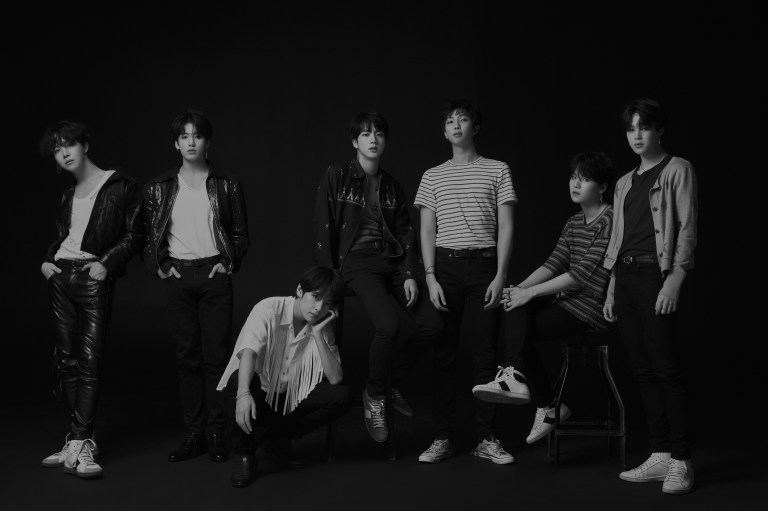
The perceived simplicity of lyrics attributed to the hook-based pop tunes, which are the main drive of K-pop, doesn’t completely deplete the significance of what K-pop stars sing about. In that sense, we have two approaches; firstly, as noticed by Jin and Ryoo (2014), in their analysis of Girls’ Generation’s “Gee” and Kara’s “Jumping” (released in 2009 and 2010, respectively), pop lyrics in Korean idol music portray “the secularism of modernity” (commercialism and individualism) (pp 126-27). On the other hand, one of the biggest changes brought forth by BTS’s unprecedented global popularity was a stronger importance placed on K-pop groups having songs with meaningful lyrics. Both global media and BTS fans have often emphasised the relevance of their lyricism to their popularity — for example, in a 2018 article written by Tamar Herman for Billboard, “[K-pop] songs typically revolve around romance, partying and, on occasion, friendship and daily life.” BTS is presented as being a counterpoint — “the group manages to frequently reference the struggles that young people go through and draw on their own experiences within South Korean youth culture.” She also goes on to highlight that “many of BTS’s fans (…) have said that the boy band’s lyrics have inspired them”, because “Many of BTS’ songs are rife with meaning” (2018).
On the role played by lyrics in the experience of musical pleasure, Nummenmaa et al (2021) mention that the high popularity of vocal music, as opposed to instrumental music, might be explained by the ability that vocals have of communicating emotional states more effectively, as well as from the idea of ‘social stimulation’ evoked by text content (which they extent from literature into music). As they mention, such extension is validated by large-scale analysis which suggest a close link between the emotional meanings of lyrics, and the emotional load of musical features, such as major/minor chords (p 198).
Going beyond the craving for social communication, Nummenmaa et al (2021) also discuss the role of lyrics in how music pieces activate autobiographical memories. This autobiographical element is central to the music appreciation framework brought forth by Thompson et al (2023). In their paper, they describe the central hypothesis of their framework as follows:
Three forms of music appreciation have been identified that may occur simultaneously with varying degrees of prominence: one form involves perceiving and internalizing musical structure; another involves activating networks of personal significance, identity, and autobiographical memories; a third—called source sensitivity—involves identifying and engaging with the causes and contexts of music making, including the personal attributes of musicians, and the sociopolitical, historical, and cultural contexts of music-making. (2023, p. 261, emphasis added)
According to the authors, autobiographical experiences and identity affirmation are forms of appreciation that arise from personal, self-oriented associations, as opposed to forms that arise from structural characteristics of the music (the musical features), and what they call “source sensitivity,” the appreciation that stems from contextual cognition of musical sources. The interplay between these self-oriented and source-oriented forms of appreciation can be well-exemplified, in the K-pop context, by “fan songs,” “idol’s sweet serenade dedicated to their fans” (Kim, 2019). These songs have been part of the K-pop landscape for a long time – for example, SHINee’s song titled “The SHINee World (Doo-bop)” (a reference to the complete name of their fandom, shawols — short for “SHINee world”) was a part of their first album, released in 2008. VIXX (2012) and Seventeen (2015) also had special fan songs in their debut releases — “Starlight,” a b-side in VIXX’s first single album “SUPER HERO”, and “Shining Diamond” in Seventeen’s first mini-album “17 Carat.” Another important aspect is that these fan songs aren’t a one-time event — some groups would go as far as release one special fan song with every mini-album/album.
Much like what Thompson et al (2023) call “Couple-defining songs,” these fan songs trigger positive memories, specifically associated to the perceived relationship between artists and fans, reinforcing and maintaining the feelings of intimacy and cohesion within the relationship (p. 266). Over the years, these songs become triggers for shared memories; in his large-scale review of BTS’s entire discography, Kim Youngdae (2019) describes “2! 3!,” the special fan song in their 2016 ‘Wings’ album, as “one of the best songs of the album, which is both unusual and meaningful [for a song dedicated to fans]” (p. 138). He highlights the lyrics which say “In the shadow behind the stage // I didn’t wanna show you all the pain in the darkness”, to highlight the central message of the song — “Bad memories will be forgotten and only good days are ahead of us.” A connection is intentionally established between the heartwarming song, and the journey that has brought fans and artists until this point, linking their victory over past hardships, and present success, to the support of their fans.
These associations between songs and intimate memories, in the context of the parasocial relationship between idols and fans, sit right at the intersection between self-oriented and source-oriented music appreciation, to the extent that the special personal association fans collectively have to that song is a consequence of the “detailed knowledge of the causal and contextual sources surrounding these songs” (Thompson et al, 2023, p. 266). In other words, the fact that fans know the song was written for them, or about them, or that it was dedicated to them. In his review of BTS’s 2018 album ‘Love Yourself: Tear,’ Kim (2019) describes “Magic Shop,” the special fan song of the album, as “the obvious choice for best track”, to the extent that it elevates “the tight bond between BTS and their fans to a whole new dimension”, due to the “warm sentimentality” and “impeccable quality of songwriting” (p. 198-99).
Intentionality and Source-sensitivity
In an interview with Time Magazine, published in June, 2017, RM, leader of K-pop group BTS, said that he believed the reason why BTS had built such a massive following online was because of their dedication to communicating with their fans through social media. He specifically mentioned his own music-sharing habit, using the hashtag #RMusic, to introduce or recommend songs he liked, and then went on to say “Music transcends language.”
The idea that music is “the universal language of mankind,” expressed in RM’s saying, has been around at least since the 19th century. In their research article about universality and diversity in music, Mehr et al (2019) mention that this idea, albeit regarded as “conventional wisdom,” is very hard to prove — few, if any, universals exist in music.
Even so, their study found that societies’ musical behaviours are mostly similar, and the differences within a society are greater than the differences between societies. For example, all societies considered have songs that are calming (exemplified by lullabies), songs that are exciting (such as dance tunes), and songs that are inspiring (like prayers). After running a test with almost 30,000 subjects, to see if people could accurately identify the category of a song from contextual cues, they found the highest accuracy for dance songs, followed by lullabies, healing songs, and love songs (despite being the lowest, the rate was still higher than chance) (p. 8).
These results are a good indicator of the reason why, in spite of the vagueness behind the idea of music as some sort of “universal language,” it still has enough universalities to make it a powerful communication tool, particularly in the context being considered, which is songs written by artists specifically to address their fans. Even more specifically in the context of K-pop for global audiences, with the language barrier that exists between Korean artists and their international fans.
As Thompson et al (2023) put it, behind the idea of source-sensitivity, there is an important layer of intentionality (on the performer’s end). In that sense, as one of the most straightforward, non-ambiguous channels of communication between artists and fandom, we can argue that fan songs are an important tool to help create the world of intimacy between artist and fans, to the extent that it can be used as a tool to achieve group cohesion. From existing literature, this idea of group cohesion can be considered from two perspectives; one, which has been discussed already, as demonstrated by Greenberg et al (2021), is through the values and personality traits communicated by artists through their persona and lyrics.
However, when bringing forth their Music as Social Bonding (MSB) Theory, Savage et al (2021) discuss the role of music in promoting social cohesion from the observed effects on the brain. In the idea that social bonding is the “ultimate, functional explanation of the evolution of musicality” (p. 14), the study proposes specific hypotheses about neurological proximate mechanisms related to the social effects of music. The authors describe a cycle in which learning to predict musical features activates the brain’s reward system, and synchronises brain activity between people, creating a “neural resonance” that facilitates social bonding. This bonding is thought to be due to “facilitates social bonding through shared experience, joint intentionality, and “self-other merging”” that occurs when people listen to music together. Additionally, the rewarding experience of listening to music may be associated with specific individuals, as co-experiencers (Savage et al, 2021). In that sense, the paper supports the idea that, while musicality did not necessarily originate as a biological adaptation for social bonding, musical abilities might have evolved due to how musical behaviours helped signal decisions to socialise and cooperate (pp 20-21).
This is in line with what is concluded by Nummenmaa et al (2021) — that one of the reasons why music is so rewarding is how it’s linked with interpersonal synchrony and affiliation, which signalise its role in human sociability (p. 200). In their paper, they describe the “neural resonance” as a trick of “simulated synchrony,” giving the illusion of being in sync with other people, which, associated to opioid release, promote the feeling of social contact (and are also known to elevate pain thresholds, as noted by Savage et al (2021)).
It is important not to forget that these neurobiological mechanisms are simply another side of the social mechanisms being described so far. Nummenmaa et al (2021) mention studies that have found that, the more emotionally salient the autobiographical memories recalled when listening to music, the more activity was seen in the mPFC, the brain region that is involved in social cognition (p. 199). This system is believed to be centrally involved in social bonding through the connecting role of retrieving and sharing personal memories, another evidence suggesting how music and lyrics support social attachment functions (2021).
Conclusion
Five studies on the role of music in social bonding were analysed in this review. By focusing on fan songs, we were able to consider their effect on what fans think about themselves as members of their fan community, and what they think about their own idols. We found indicators that these songs might serve as important communication tools between an artist and their fans, creating and maintaining intra-group cohesion. This can be done by attracting certain types of people through value-signalling, and by inducing changes in the members themselves through processes of group assimilation.
This review also showed opportunities for future research. For example, future studies could measure different brain responses of fans to specific songs according to how they are categorised in the artist’s discography. This would include not only fan songs, but also the distinction between title tracks and B-sides. There is also some opportunity to study the extent to which lyrics of fan songs influence the social imagination and the lexicon of fans as members of their fan communities. Another possibility is a study analysing different samples of fan songs, testing for musical features and lyrics, controlling for fandom size. This would look for patterns that might be more predictive of efficient communication of intention between artists and fans. A final point, which was only superficially explored in this review, is the aspect of language in K-pop fandom. This includes the role of translation, more specifically the work of fan translators, in helping manage the collective understanding of messages shared through lyrics in the context of global fandom.
Overall, this review shows that studies in cognitive musicology offer rich insight into the specific functions that songs can play inside music fandom. In the context of fandom studies, which has been mostly ethnography-driven over the years, we provide directions that could take studies on the dynamics of fan attachment beyond self-reported fan perceptions. This is based on the well-established cognitive understanding of how music affects the brain, or at least, evidence-abundant suggestions of how music influences social bonding.
References
Derbaix, Maud & Korchia, Michaël. (2019). Individual celebration of pop music icons: A study of music fans relationships with their object of fandom and associated practices. Journal of Consumer Behaviour. 18. 10.1002/cb.1751.
Fiske, John. 1992. “The Cultural Economy of Fandom.” In The Adoring Audience: Fan Culture and Popular Media, edited by Lisa A. Lewis, 256. New York: Routledge.
Galbraith, P. W. (2016). “The Labor of Love: On the Convergence of Fan and Corporate Interests in Contemporary Idol Culture in Japan”. In Media Convergence in Japan, edited by Patrick W. Galbraith and Jason G. Karlin: 232-64. Tokyo: Kinema Club.
Greenberg, D. M., Matz, S. C., Schwartz, H. A., & Fricke, K. R. (2021). The self-congruity effect of music. Journal of Personality and Social Psychology, 121(1), 137–150. https://doi.org/10.1037/pspp0000293
Hills, Matt. Fan Cultures. London: Routledge, 2002.
Jin, Dal Yong, and Woongjae Ryoo. 2014. “Critical Interpretation of Hybrid K-Pop: The Global-Local Paradigm of English Mixing in Lyrics.” Popular Music and Society 37 (2): 113–31.
Kim, J. (2017). K- Popping: Korean Women, K-Pop, and Fandom. UC Riverside.
Kim, Youngdae. 2019. BTS The Review: A Comprehensive Look at the Music of BTS. First Edition. Seoul: RH Korea Co., Ltd.
Mehr, S. A., Singh, M., Knox, D., Ketter, D. M., Pickens-Jones, D., Atwood, S., … & Glowacki, L. (2019). Universality and diversity in human song. Science, 366(6468), eaax0868.
Nummenmaa, Lauri & Vesa, Putkinen & Sams, Mikko. (2021). Social pleasures of music. Current Opinion in Behavioral Sciences. 39. 196-202. 10.1016/j.cobeha.2021.03.026.
Savage, P. E., Loui, P., Tarr, B., Schachner, A., Glowacki, L., Mithen, S., & Fitch, W. T. (2021). Music as a coevolved system for social bonding. Behavioral and Brain Sciences, 44.
Small, C. (1999). “Musicking — the meanings of performing and listening.” A lecture, Music Education Research, 1:1, 9-22, DOI: 10.1080/1461380990010102
Thompson, W. F., Bullot, N. J., & Margulis, E. H. (2023). The psychological basis of music appreciation: Structure, self, source. Psychological Review, 130(1), 260–284.
News Articles:
Bruner, R. (2017, June 28). Rap Monster of Breakout K-Pop Band BTS on Fans, Fame and Viral Popularity. Time. https://time.com/4833807/rap-monster-bts-interview/
Herman, T. (2018, May 7). BTS’ Most Political Lyrics: A Guide to Their Social Commentary on South Korean Society. Billboard. Billboard.
https://www.billboard.com/music/music-news/bts-lyrics-social-commentary-political-8098832/
Photo by Anthony DELANOIX on Unsplash

 Corvo Correio | the Raven Post